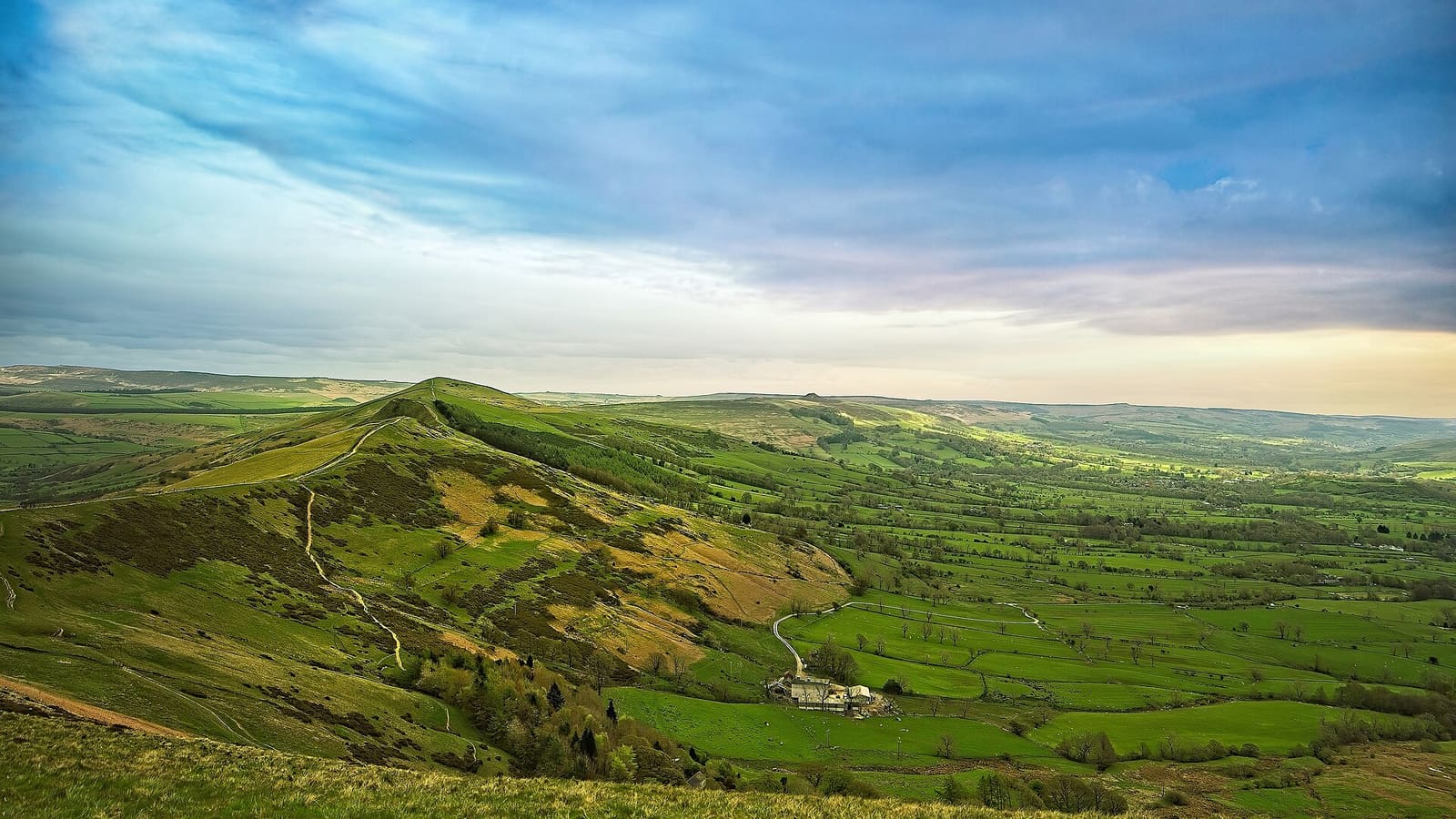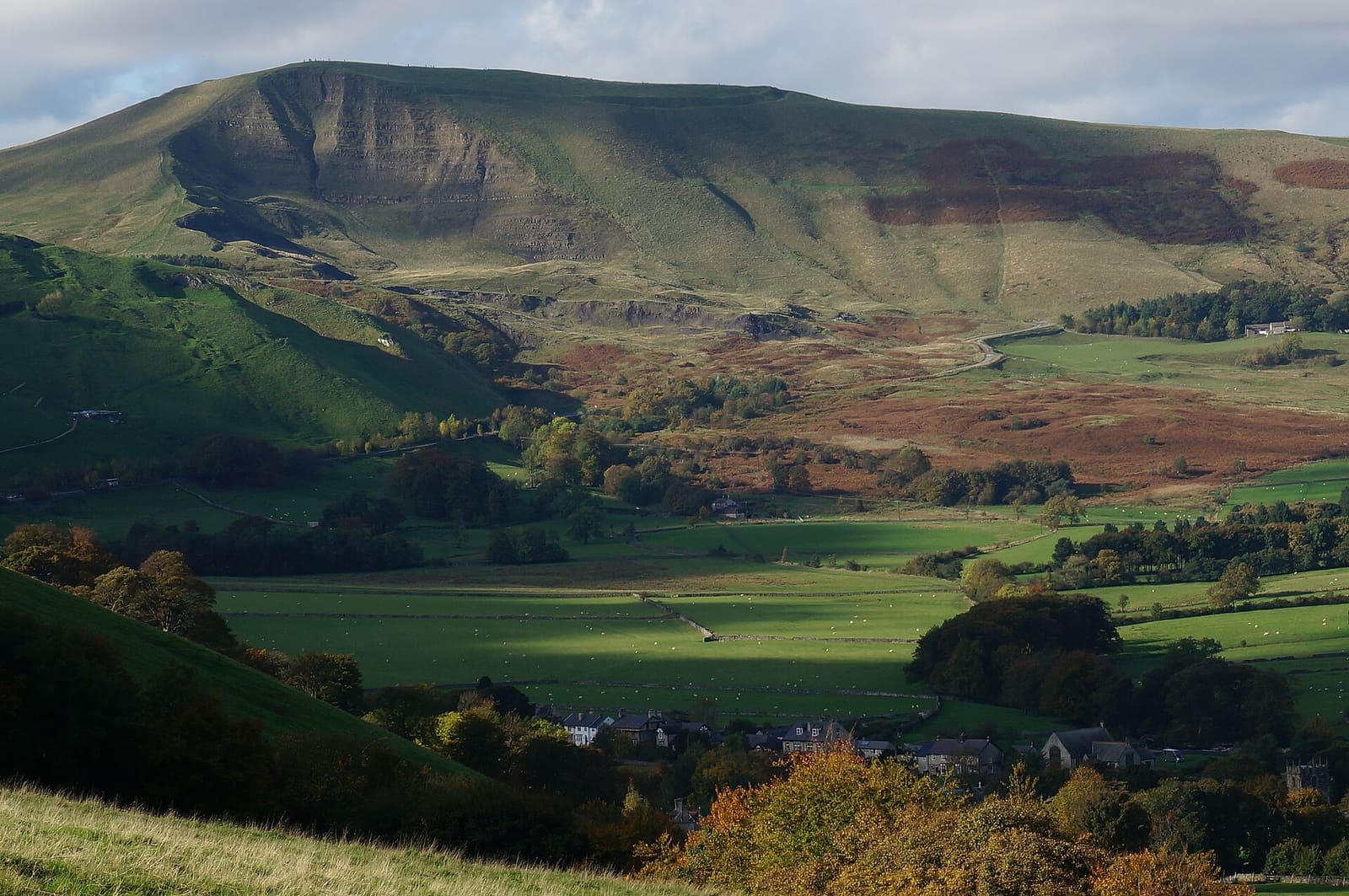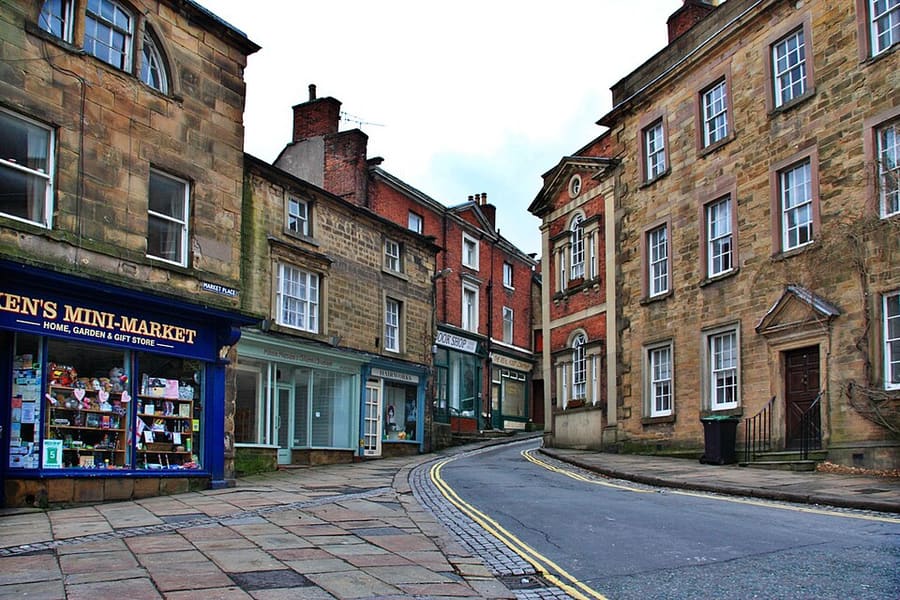

Castleton and the Great Ridge
- Castleton, Hope Valley & Edale — a show cave, Peveril Castle and the walk from Mam Tor over Hollins Cross to Lose Hill
- Hathersage, Longshaw & Eyam — Padley Gorge from Grindleford station and Stanage Edge
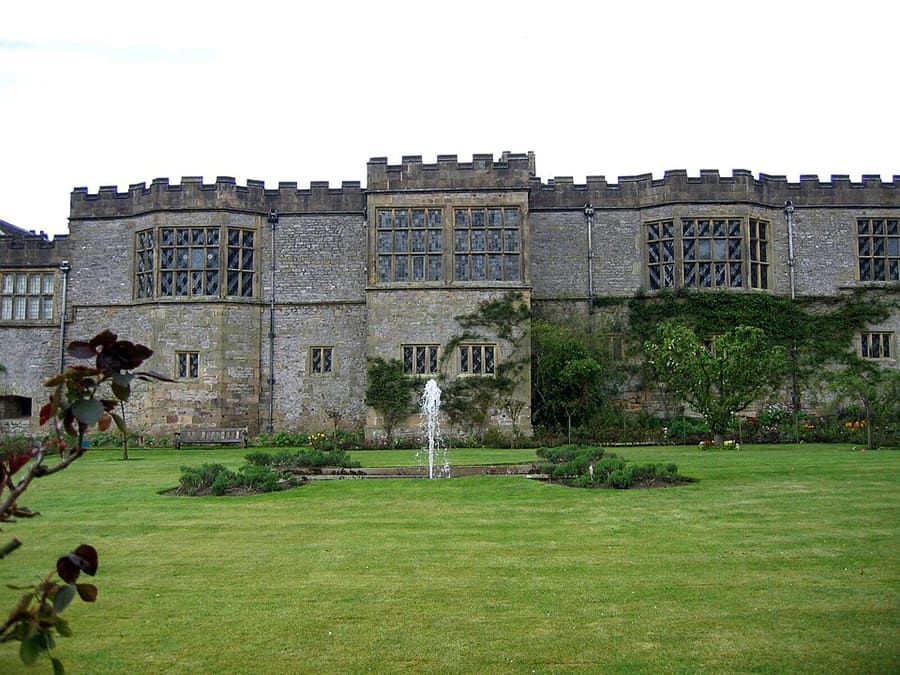
England's first national park: limestone dales, gritstone edges, spa towns and mill villages in Derbyshire and its neighbors
The Peak District is an upland area at the southern end of the Pennines, mostly in Derbyshire but reaching into Cheshire, Greater Manchester, Staffordshire and Yorkshire. It divides into the Dark Peak, moorland dominated by gritstone, and the White Peak, a limestone plateau with valleys and gorges. Kinder Scout, at 2087 feet (636 meters), is the highest point. Most of the area lies within the Peak District National Park, a protected landscape designated in 1951.
This guide covers six bases: Buxton and the northern Peak, Castleton, the Hope Valley and Edale, Bakewell with Haddon Hall and the Monsal Trail, Matlock Bath and the Derwent Valley, Dovedale and Ashbourne, and Hathersage with Longshaw and Eyam. Matlock Bath, Matlock, Ashbourne and Buxton are gateway towns on or just outside the park boundary. Manchester has its own guide on this site and is the usual starting point from the north-west.
Areas
Each area has its own mini guide with 82 sights, places to eat and drink, and where to stay across the city.
A Georgian spa town with an opera house, a show cave and the Goyt Valley on its doorstep
Open the mini guide →
Show caves, a Norman castle and the start of the Pennine Way below Kinder Scout
Open the mini guide →
A market town on the Wye with Haddon Hall, Chatsworth nearby and the Monsal Trail
Open the mini guide →
A gorge village with a cable car, and Arkwright's mills in a World Heritage valley
Open the mini guide →
The River Dove's stepping stones, rail trails and the market town of Ashbourne
Open the mini guide →
Gritstone edges, Padley Gorge and the Eyam plague village on the eastern side of the Peak
Open the mini guide →Sights
A sight from each area. Every area guide lists the rest, with directions and official links.
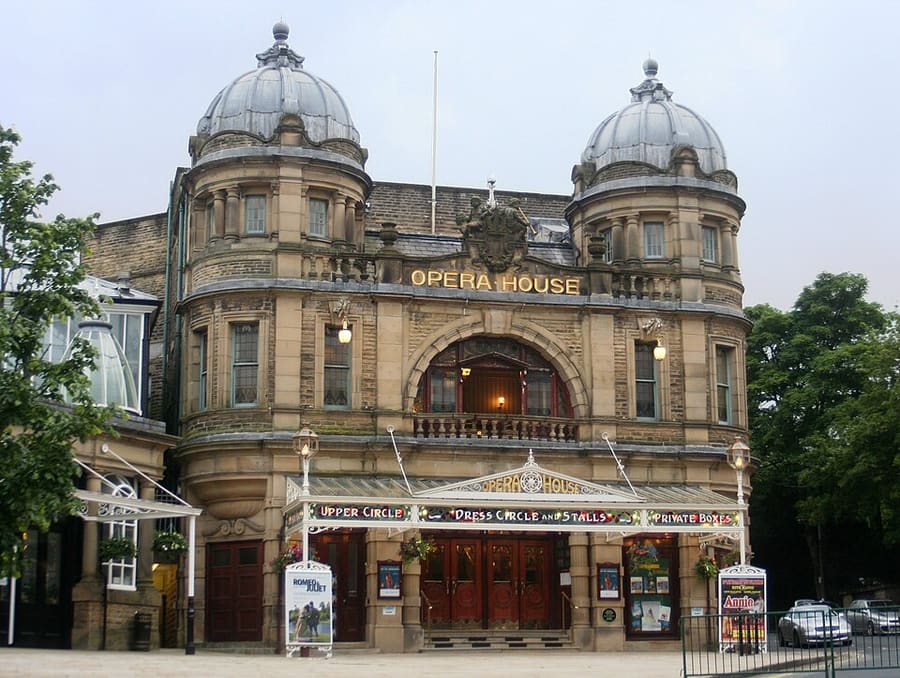
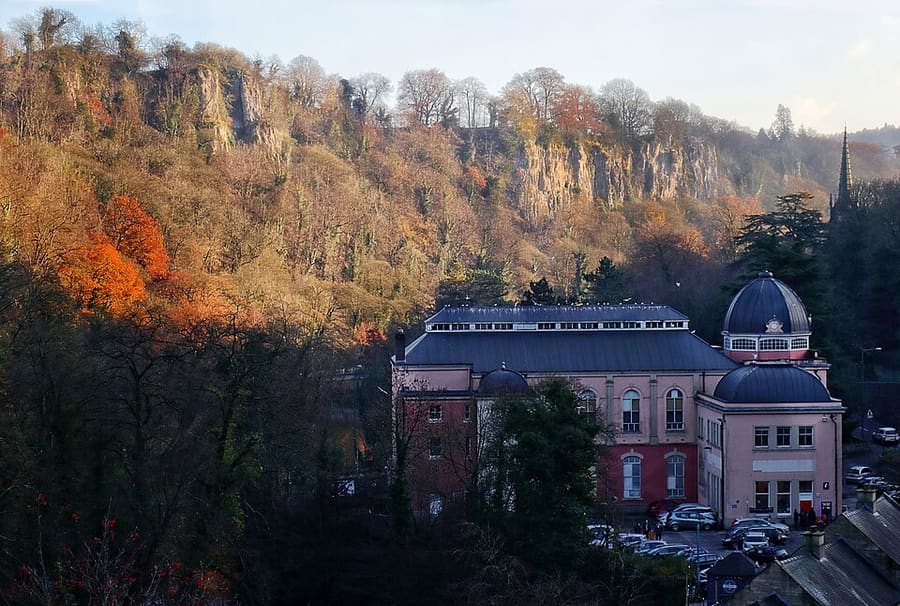
Theater in The Square with 902 seats, home to the Buxton Festival and the International Gilbert and Sullivan Festival.
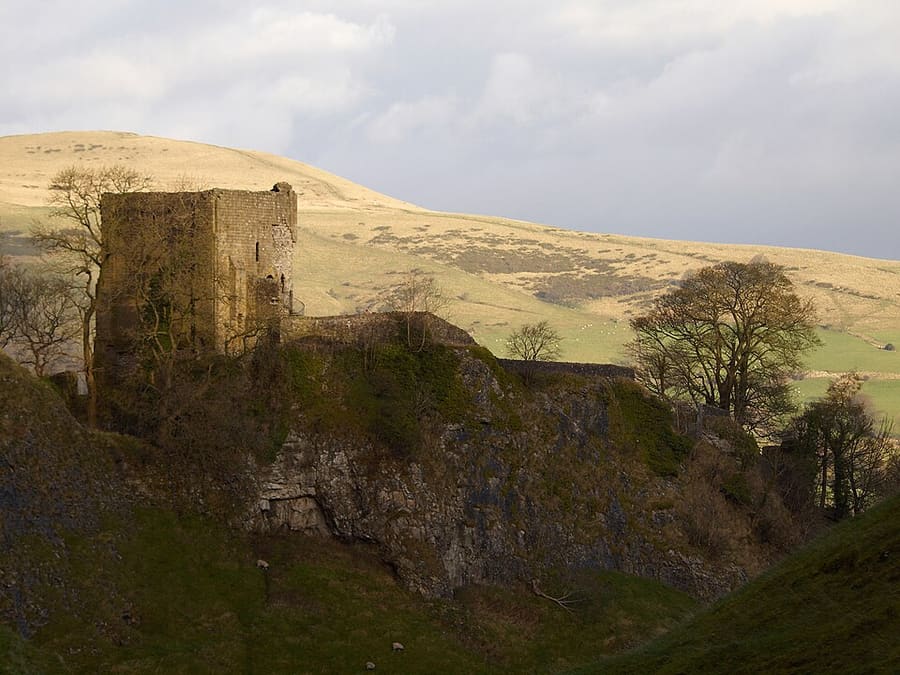
Ruined 11th-century castle above Castleton, founded by William Peverel between the Norman Conquest and the Domesday Survey.
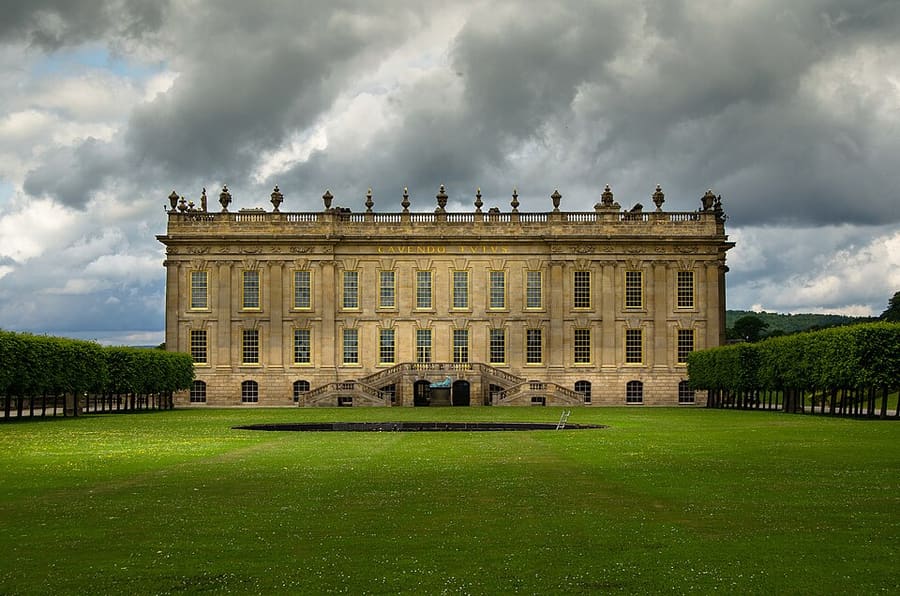
Seat of the Duke of Devonshire, home of the Cavendish family since 1549, beside the River Derwent.
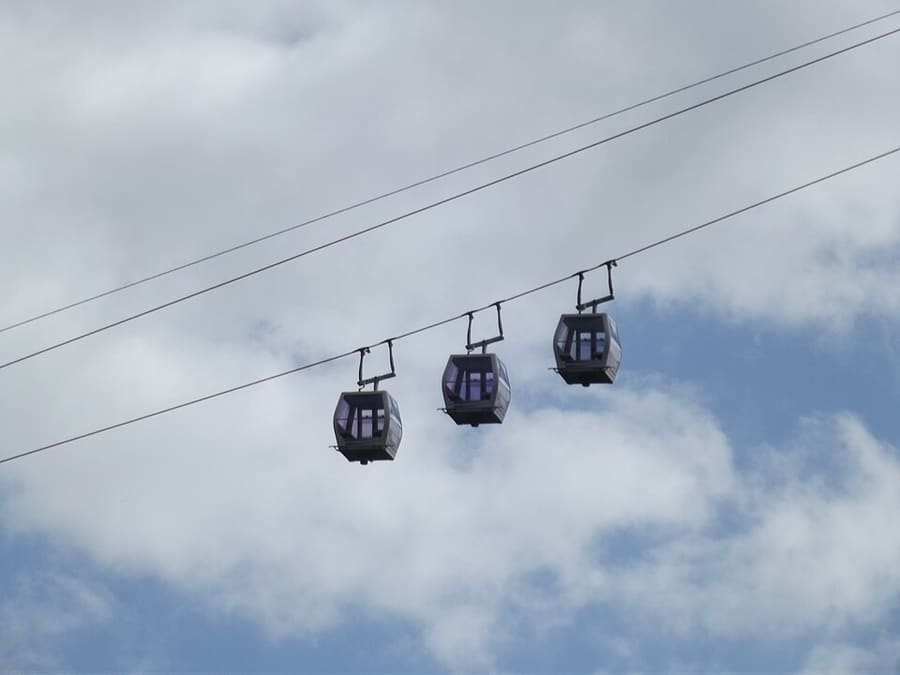
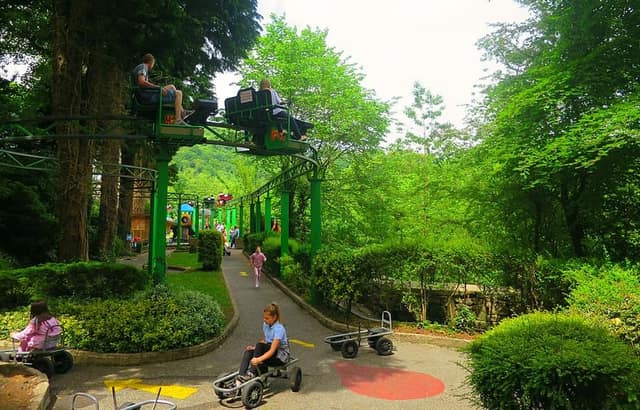
Hilltop park on Masson Hill reached by cable car, with cavern and mine tours; open since Victorian times.
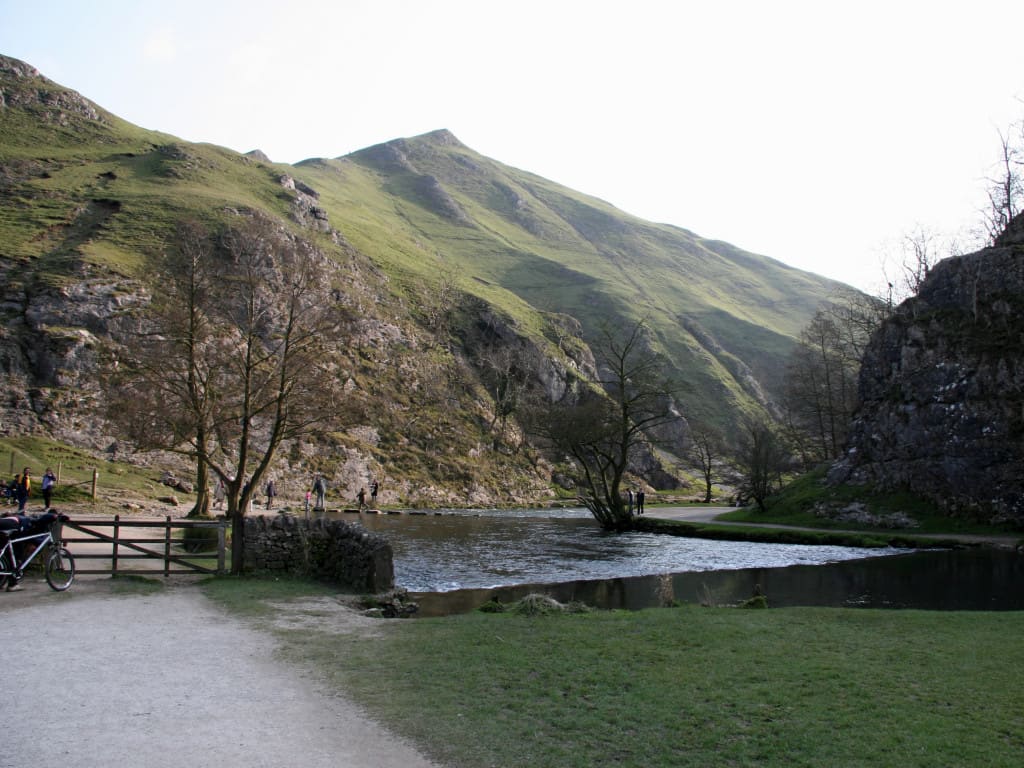
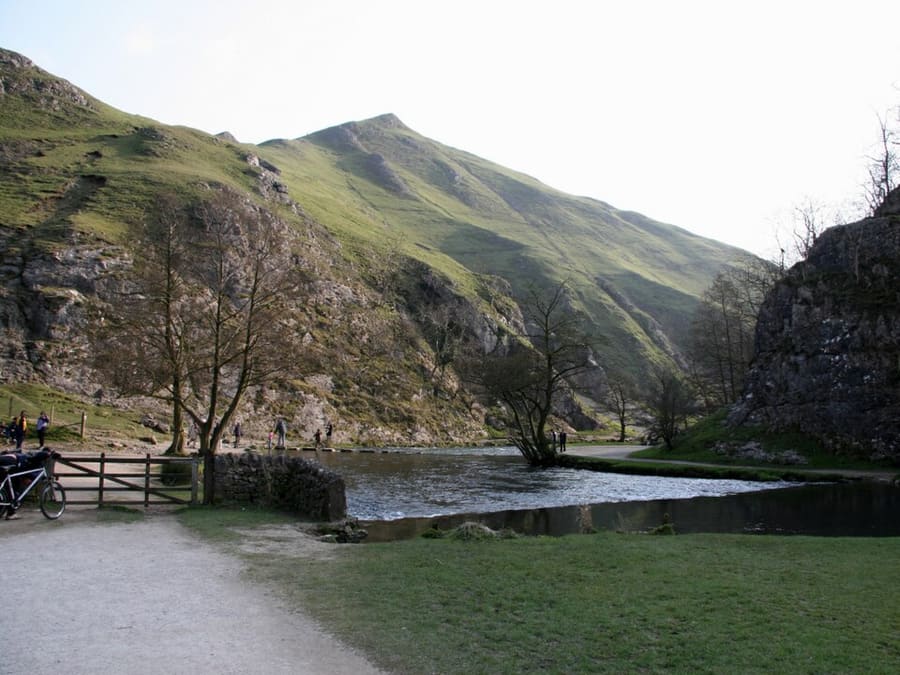
Valley of just over three miles cut by the River Dove, owned by the National Trust, with stepping stones in the wooded ravine.
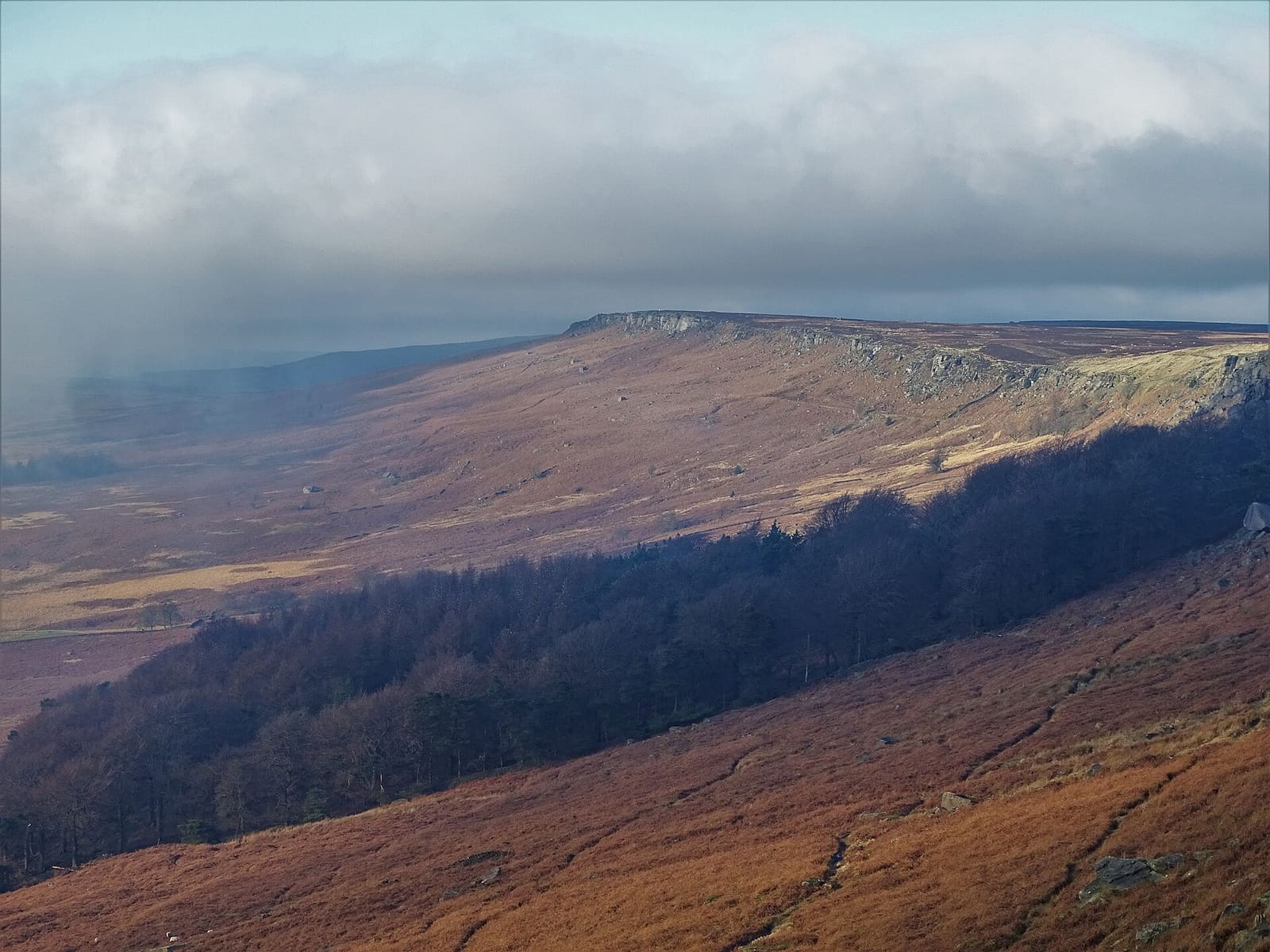
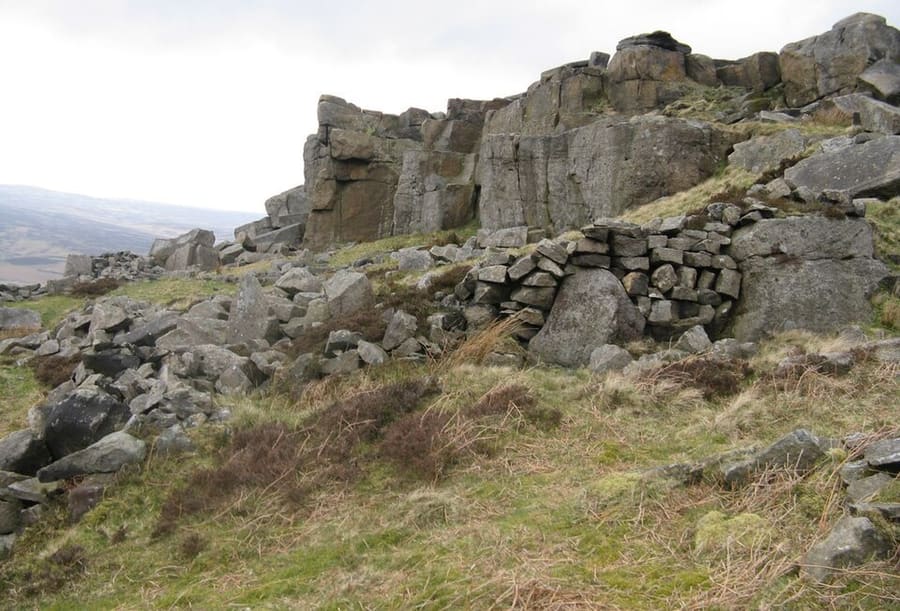
Gritstone escarpment north of Hathersage, famous for climbing; its highest point, High Neb, is 1503 feet (458 meters).
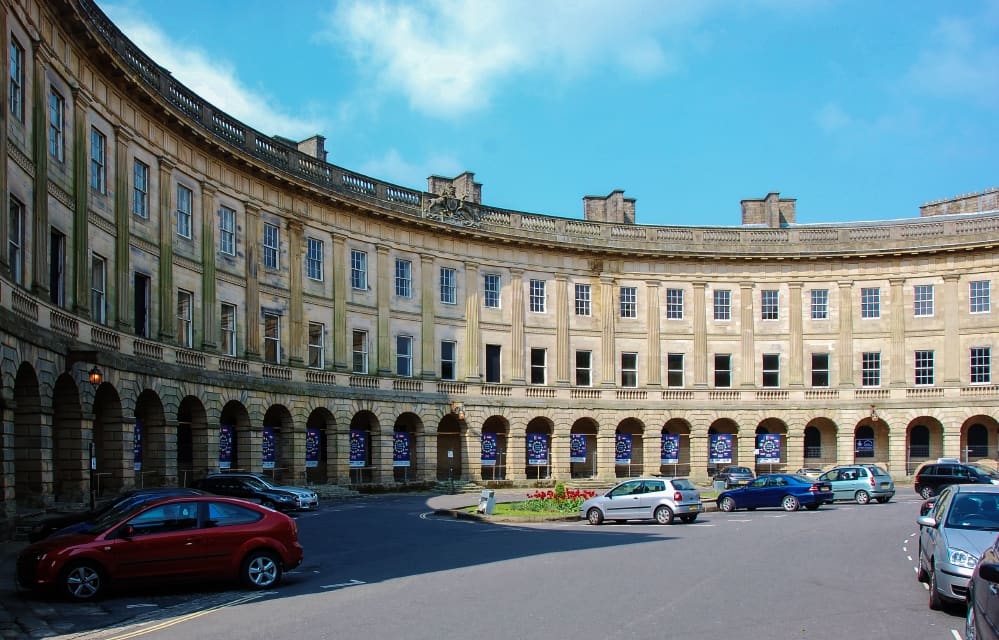
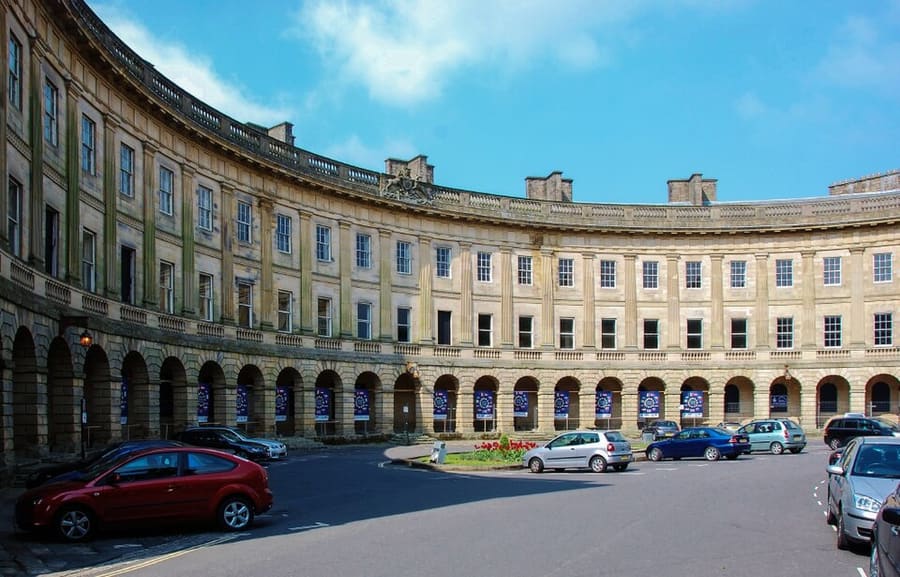
Grade I listed crescent designed by John Carr of York and built for the 5th Duke of Devonshire between 1780 and 1789.
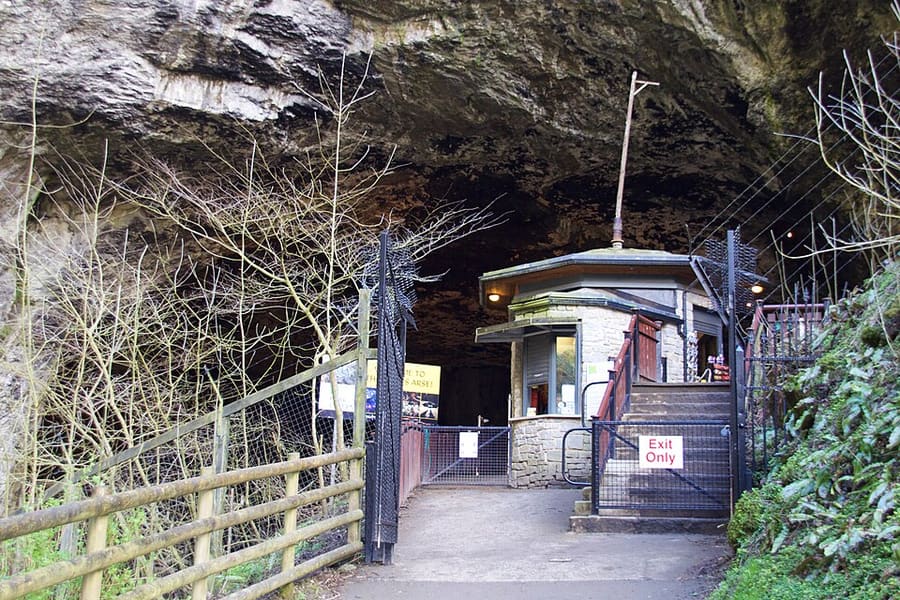
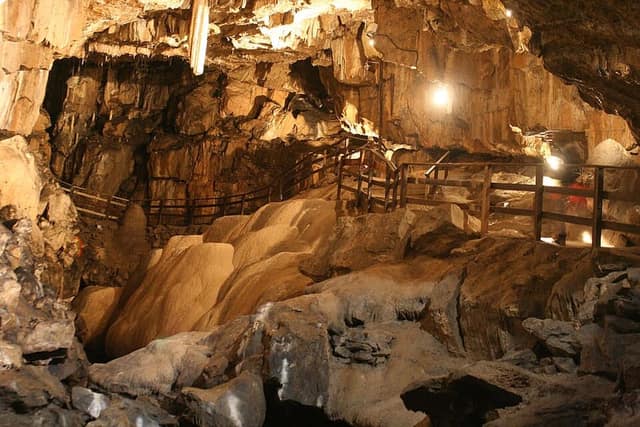
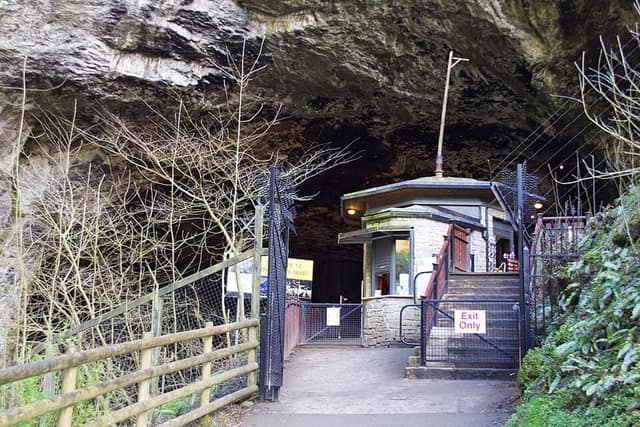
Show cave known as the Devil's Arse, with the largest natural cave entrance in Britain.
1 / 12Animal attractions, railways, science centres, beaches and caves from our the Peak District guide, grouped by type. We hold no age ratings or child prices: check each place’s own site for age limits, height rules and family tickets.
Gulliver's KingdomTheme park, Matlock Bath, Matlock & the Derwent Valley
Peak RailHeritage railway, Matlock Bath, Matlock & the Derwent Valley
Poole's CavernShow cave, Buxton & the Northern Peak
Peak CavernShow cave, Castleton, Hope Valley & Edale
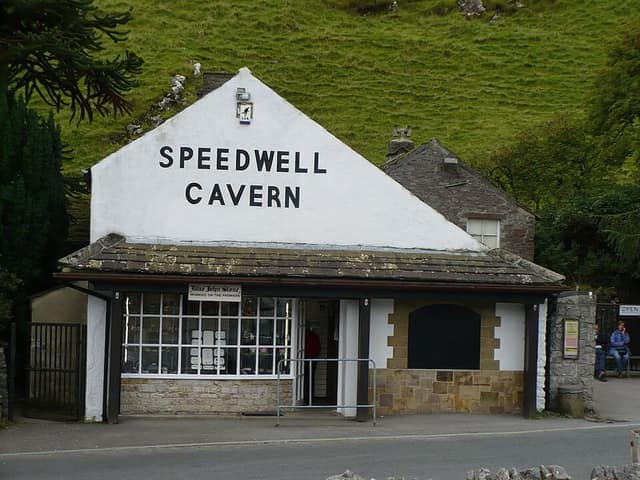
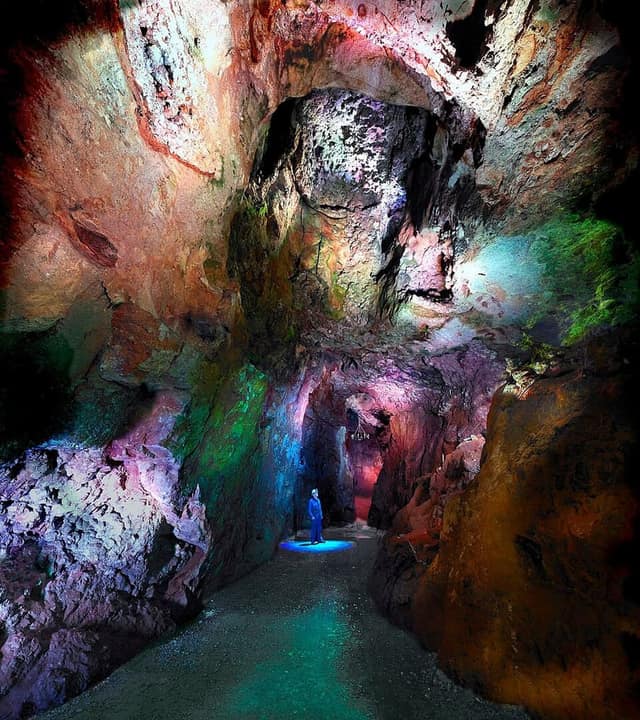
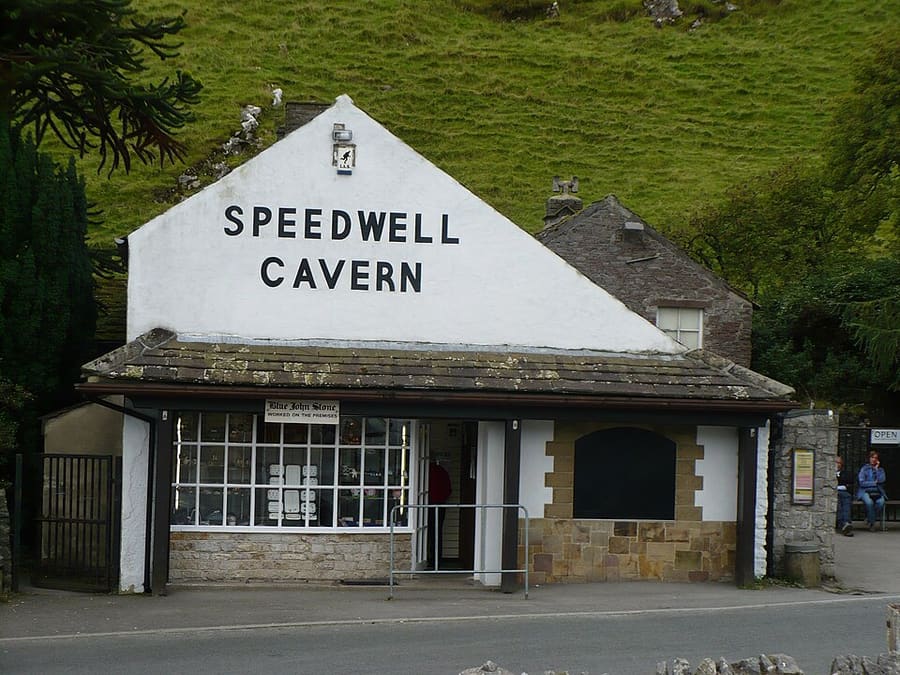
Speedwell CavernShow cave, Castleton, Hope Valley & Edale
Blue John CavernShow cave, Castleton, Hope Valley & Edale
Treak Cliff CavernShow cave, Castleton, Hope Valley & Edale
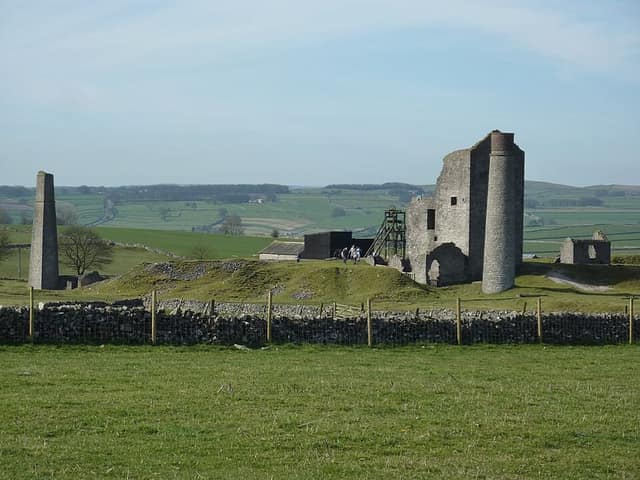
Magpie MineLead mine, Bakewell, Haddon & Monsal
Great Masson CavernCave, Matlock Bath, Matlock & the Derwent Valley
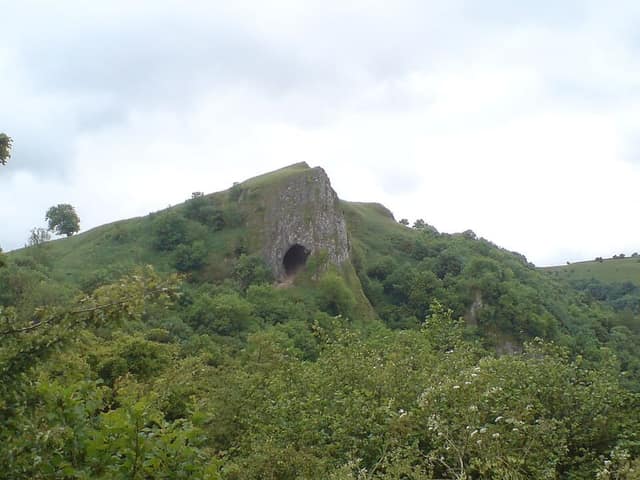
Thor's CaveCave, Dovedale, Ashbourne & the White Peak SouthPractical help: travelling with children and where to stay in the Peak District.
Theater
One theatre across 1 area: see where each one is, how to get there and where to find what is on.
Where it is, what it programmes and its step-free access.
Open the directory →One link to each venue's own program page, plus seasonal highlights.
See what's on →Buxton's opera house on Water Street, with touring drama, comedy, music and an annual pantomime.
Venue page →Itineraries
Short routes that stitch the areas together.
Getting there
The Peak District sits between Manchester and Sheffield in the north and Derby in the south. Visit Peak District recommends public transport where possible, and several lines and bus routes reach the park. Journey times below are the ones its pages and Northern's pages state; always check operators for current times.
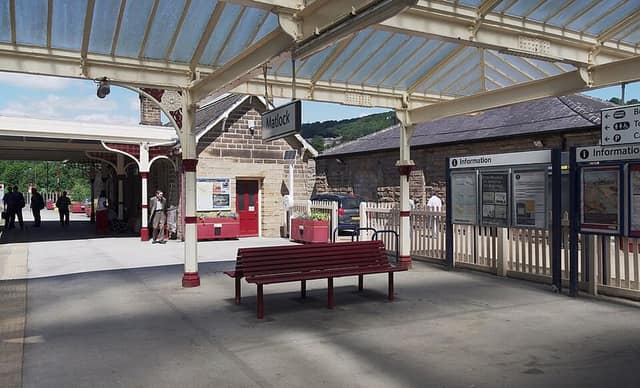
Visit Peak District says trains from London St Pancras International reach Derby in less than 2 hours, then run on to Chesterfield and Sheffield, while trains from London Euston run to Stoke-on-Trent, Macclesfield, Stockport and Manchester Piccadilly. Northern runs the Hope Valley line from Manchester to Sheffield, calling at Grindleford, Hathersage, Bamford, Hope and Edale, and lines to Buxton and Glossop. East Midlands Railway runs the Derwent Valley Line to Matlock, serving Cromford. Northern gives an average of 43 minutes from Manchester Piccadilly to Edale and 1 hour 1 minute to Buxton.
Visit Peak District lists the Stagecoach Gold X17 from Sheffield and Chesterfield to Matlock Bath, Cromford and Wirksworth, Trentbarton's 6.1 from Belper to Wirksworth, Matlock Bath, Matlock and Bakewell, and High Peak routes from Buxton (61, the 62 Peak Pathfinder and the 442 to Ashbourne). A summer Peak Sightseer open-top bus calls at Castleton, Chatsworth, Bakewell, Bamford, Padley Gorge, Hathersage and the Monsal Trail. Buses from the stations at Buxton and Matlock continue to Bakewell and White Peak villages.
Visit Peak District says the M1 and M6 give fast access from the north and south, and that the M62, M42, M60, M56, M67 and M18 can also be used. It asks visitors to use the parking lots provided and to keep roads clear for farm vehicles and the emergency services. The area has a number of electric charging points; check locations in advance on Zap-Map.
Stations in this guide: Edale, Hope, Bamford, Hathersage and Grindleford (Hope Valley line), Buxton, Matlock Bath, Cromford and Matlock. Bakewell, Castleton and Ashbourne have no railway station. Fares, schedules and engineering closures change, so check Northern, East Midlands Railway and National Rail before you travel.
The Peak Sightseer open-top bus links Castleton, Chatsworth, Bakewell, Bamford, Padley Gorge, Hathersage and the Monsal Trail, and a day ticket allows unlimited hop-on, hop-off travel. It runs in the summer season, so check the dates.
Visit Peak District publishes walks from train stations in the Peak District, and several rail trails (the Monsal Trail, the Tissington Trail and the High Peak Trail) follow former railway lines.
Visit Peak District has an Accessibility Finder for businesses and places; check each venue directly for step-free access.
Regional buses and trains
Best time to go
Opening seasons vary by attraction in the Peak District, and summer-only services such as the Peak Sightseer bus do not run all year. Check each venue's own site before you go.
The Heights of Abraham's website gives an open season starting in late March, and cable-car and cavern visits can be planned from then.
The Peak Sightseer open-top bus runs in the summer season, linking Castleton, Chatsworth, Bakewell, Hathersage and the Monsal Trail.
Some seasonal attractions close for the winter in early November, for example the Masson Mills visitor center, so check before you travel.
Haddon Hall holds a Christmas artisan market each year, and many pubs, hotels and walking routes stay open; check venue sites for winter hours.
Haddon Hall's own website gives these dates for the Christmas artisan market; the hall is otherwise closed to normal visits between events, so check the Hall's pages.
Haddon Hall: Mercatum →Day trips
Ideas for a day away from the Peak District. Check the operators for times and tickets.

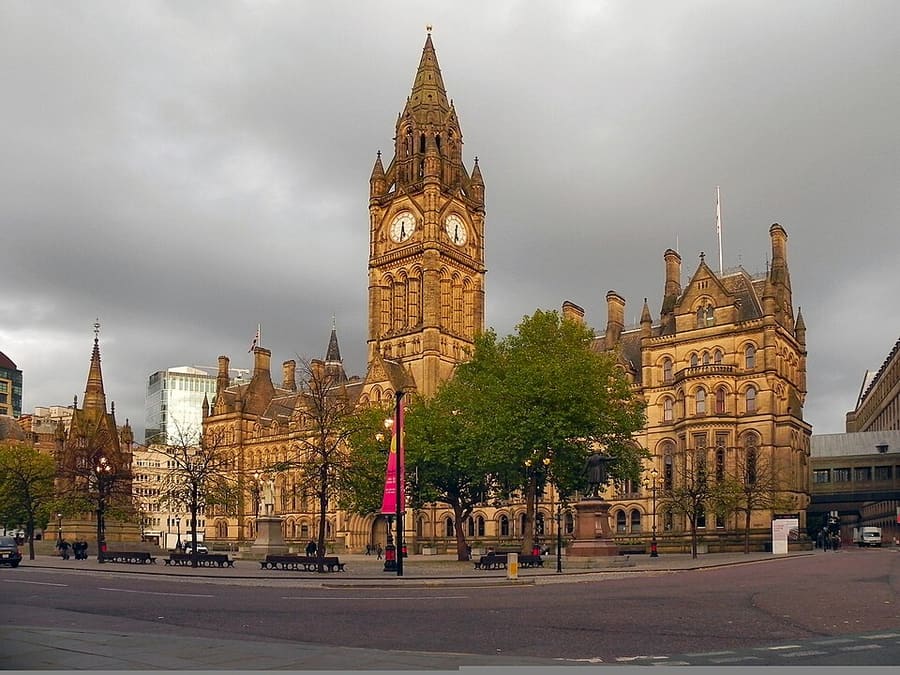
Manchester has its own guide on this site, and Northern's Hope Valley line links Manchester Piccadilly with Edale and Hathersage.
Manchester guide →
Market town served by the Stagecoach X17 and Trentbarton 6.1, home of the National Stone Centre.
National Stone Centre →FAQ
Three to five days lets you see two or three of the areas in this guide at an easy pace. Add time for longer walks on the gritstone edges and the rail trails.
Yes, for the main bases. Northern's Hope Valley line stops at Edale, Hope, Bamford, Hathersage and Grindleford, trains run to Buxton and Matlock, and buses such as the X17, the 6.1 and the summer Peak Sightseer link the towns. Smaller villages have fewer services, so check schedules.
They are gateway towns on or just outside the park boundary. Willersley Castle at Cromford, for example, is described as outside the National Park.
Edale is an average of 43 minutes from Manchester Piccadilly on Northern's Hope Valley line, and Buxton is an average of 1 hour 1 minute. Manchester has its own guide on this site.
The Dark Peak is moorland dominated by gritstone, forming an arc to the north, east and west. The White Peak is a limestone area with valleys and gorges across the center and south.
Nearby places
Our closest other guides, by straight-line distance between centres. Road and rail distances are longer: check a journey planner.
Photos from Wikimedia Commons, used under the licences shown. All photo credits
Plan it properly
Keep exploring