 English (UK)
 English (US)
 Français
 Deutsch
 Español
 Italiano
 Nederlands
 简体中文

Check the official page. License, insurance and charging rules change and depend on your situation. We link to GOV.UK and the operators and do not give legal advice. Charges are quoted only as each official page stated them on 2026-10-25. For public transport instead, see getting around by region.
Driving on the left
Traffic in Britain keeps to the left. The Highway Code (rule 160) says to keep to the left unless signs or markings indicate otherwise.1 The Highway Code applies in England, Scotland and Wales, and its rules marked MUST are legal requirements.2 Northern Ireland has its own guidance on nidirect, and drives on the left too.3
Vehicles in Britain usually have the driver's seat on the right.3 If you bring a left-hand-drive car, nidirect says to adjust the headlights for driving on the left.3
Licenses for visitors
GOV.UK has a checker for whether you can drive in Great Britain (England, Scotland and Wales) on a non-GB license. The start page asks whether you are a resident, a visitor or a student and the rules sit behind the tool, so use the checker for your own license.5
A police FAQ describes the visitor rule: with a valid full license you can drive vehicles up to 3.5 tonnes with up to eight passenger seats for up to 12 months from the date you came to Great Britain. Driving beyond the time limit is an offense and the vehicle could be seized.6
International driving permits. Neither the GOV.UK start page nor the police FAQ mentions international driving permits. We therefore make no statement about whether you need one: the GOV.UK checker is the place to find out, and your hire company may have its own rules (ask before you book).5,6
Northern Ireland. nidirect says you can use your national license if you have reached the minimum age (17 for a car), and that a provisional (learner) license issued abroad is not valid.3
Insurance
nidirect says to carry your license and proof of insurance whenever you drive, and that you must not drive a vehicle from abroad in Northern Ireland without adequate motor insurance. If you take a rental car from Northern Ireland into the Republic of Ireland, check the cover applies in both.3,4 We did not find a GOV.UK page setting out the insurance rules for visitors in Great Britain, so for a car you bring yourself, ask your insurer before you travel.
With a rental car, GOV.UK explains the terms to understand: the excess is the most you would pay if the car is damaged, and standard collision damage waiver usually excludes things such as tires and glass.7
Hiring a car
- Documents and age. GOV.UK's hiring guidance does not cover age limits or documents.7 These are set by each hire company, so read the company's terms and ask before you book. We state no age or document list because we found no official one.
- Automatic or manual. We found no official source on which is more common or available. If you want an automatic, confirm it when you book and in writing.
- Deposit and fuel. GOV.UK says the deposit is held on your credit card as security, so you cannot spend that amount while it is held, and some companies require you to buy fuel from them at inflated prices or set mileage limits with extra charges.7
- At pick-up. GOV.UK advises inspecting the car for dents, scratches or defects, taking photos or video, reporting any defect before you leave and making sure it is noted on the signed pre-rental form. Keep a copy.7
- Prices. We list none. Compare companies directly.
- More detail. Excess insurance, pick-up checks, disputes and what to ask the hire company: car hire and EV charging.

Road rules that surprise visitors
Roundabouts
At a roundabout you give priority to traffic approaching from your right, unless signs, markings or traffic lights direct otherwise (rule 185). For the first exit signal left and approach in the left lane; to go right or full circle signal right and use the right lane; signal left after passing the exit before yours (rule 186). Mini-roundabouts: pass around the central markings and avoid U-turns (rule 188).1 Traffic goes clockwise.4
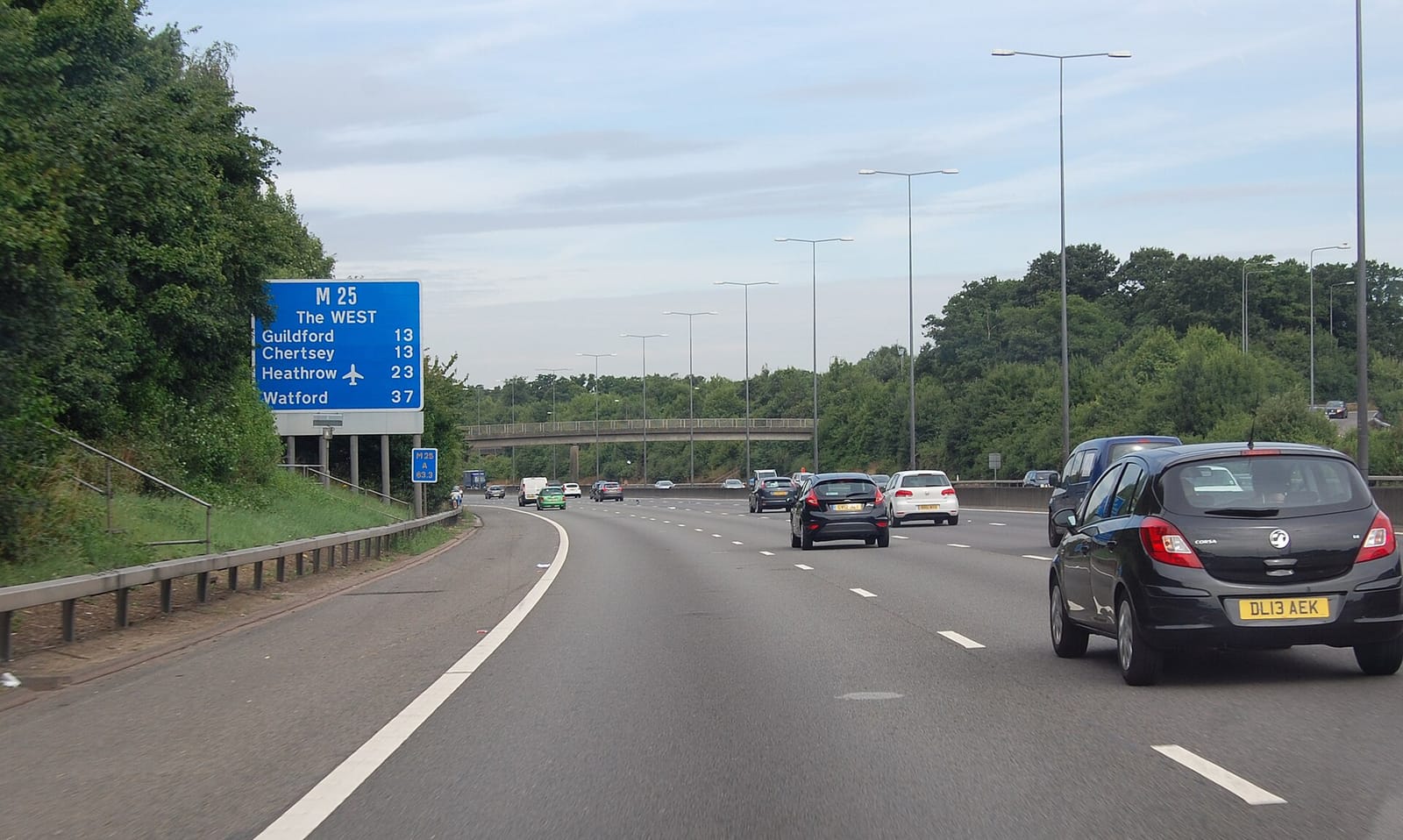
Speed limits are in miles per hour
Signs show mph, not km/h. In Northern Ireland the same applies, but the Republic of Ireland uses km/h.11,3 The limits below are GOV.UK's national limits for cars.8
| Road type | Limit for cars |
|---|---|
| Built-up areas (street lights) | 30 mph (30 miles (48 km)/h) in England, Scotland and Northern Ireland; 20 mph (20 miles (32 km)/h) in Wales |
| Single carriageways | 60 mph (60 miles (96 km)/h) |
| Divided highway | 70 mph (70 miles (112 km)/h) |
| Highway | 70 mph (70 miles (112 km)/h) |
GOV.UK also lists lower limits for cars towing caravans or trailers, and says councils can set local limits, which must be signed (such as 20 mph near schools). It says the limit is the absolute maximum and not a guarantee that driving at that speed is safe in all conditions.8 The Highway Code (rule 124) says a 30 mph limit (20 mph in Wales) generally applies to roads with street lights unless signs show otherwise.9
Single-track roads and passing places
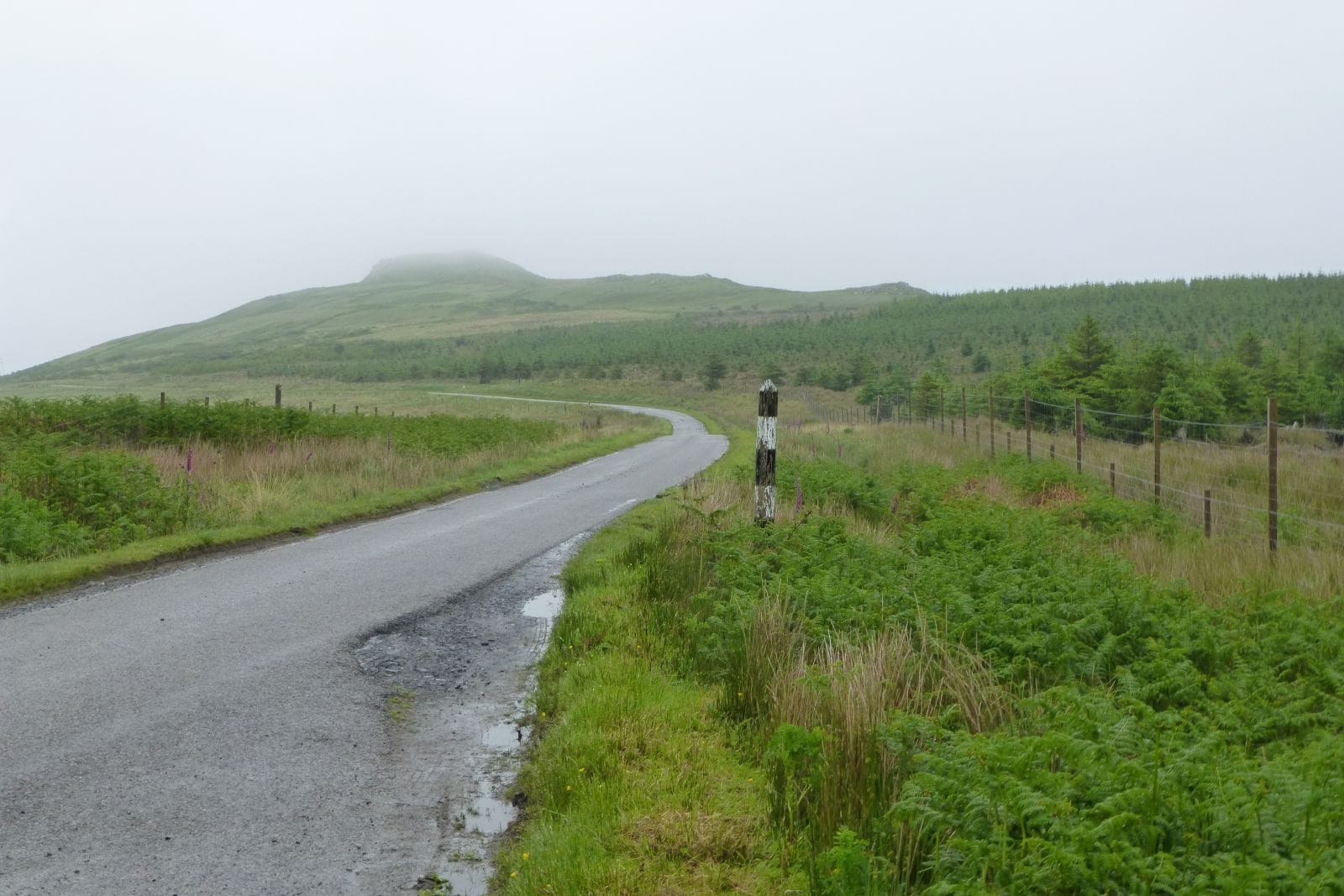
Single-track roads are only wide enough for one vehicle and have passing places. The Highway Code (rule 155) says that if a vehicle is coming toward you, pull into a passing place on your left or wait opposite one on your right, and give way to uphill traffic where you can. Rule 156 says do not park in passing places.9 The Highland Council gave the same advice in a March 2023 notice.10 VisitScotland adds that rural fuel stations are few, so fill up early, and asks drivers to watch for farm animals and wildlife.11
- Scottish Highlands and islands. See driving in the Highlands, which also covers ferry vehicle spaces.
- Cornwall. Visit Cornwall warns that sat navs may send drivers onto narrow lanes with high hedges and few places to reverse, and of heavy traffic in peak season.12 See Cornwall.
- Lake District. The National Park Authority says GPS can mislead on small country roads and offers a park-and-explore ticket combining parking with bus travel.13 See the Lakes.
- Wales. The Eryri National Park Authority says parking lots fill between April and September and asks visitors not to park in residential areas or on road verges.14 See Wales.
Parking and fines
The Highway Code says waiting or parking is prohibited on double yellow lines at any time, and on single yellow lines during the hours shown on nearby signs; red routes also prohibit stopping unless signs say otherwise (rules 238 and 240). It lists places where you must not stop or park, including near school entrances, bus or tram stops, on bends and in front of property entrances (rule 243).15
GOV.UK says you usually have 28 days to pay a council parking penalty charge notice, and some councils reduce the fine if you pay within 14 days. Private parking tickets (for example in supermarket parking lots) have no set government deadlines, so check the ticket. Scotland and Northern Ireland have different rules for paying and challenging tickets.16 Unpaid London congestion, low emission zone and Dart Charge fees can also lead to penalty charge notices.16
Low emission and clean air zones
Several cities restrict or charge older, more polluting vehicles. A rental car is often new enough, but not always, and a car you bring from abroad may not be checkable online: GOV.UK and mygov.scot both say their vehicle checkers cannot check vehicles registered outside the UK.27,20 Amounts are as each official page stated on 2026-10-25; follow the link to see today's figure.
| Zone | When | Cars | Amount | Visitors with foreign plates | Official page |
|---|---|---|---|---|---|
| London Ultra Low Emission Zone (ULEZ) Emissions charge 17 | 24 hours a day, every day except Christmas Day. Covers all London boroughs. | A daily charge applies to cars that do not meet the ULEZ standard and are not exempt. | £12.50 a day, as TfL states | TfL says non-UK vehicles are covered. Its page links to the standards and registration rules: read them before you drive in. | Official page for London Ultra Low Emission Zone (ULEZ) (opens in new tab) |
| London Congestion Charge Congestion charge 18 | 07:00 to 18:00 Monday to Friday; 12:00 to 18:00 on Saturdays, Sundays and bank holidays. No charge from Christmas Day to New Year's Day bank holiday inclusive. | A daily charge for driving in the zone in those hours. The ULEZ charge is separate, and you may owe both. | £18 if paid on the day or in advance; £21 if paid by midnight of the third day after, as TfL states | The zone boundary is not described on TfL's page: use its postcode checker. | Official page for London Congestion Charge (opens in new tab) |
| Edinburgh Low Emission Zone Emissions restriction (fine, not a daily charge) 21,19,20 | 24 hours a day, 365 days a year. Fines issued since Jun 1, 2024. | Cars must be gas Euro 4 or higher, or diesel Euro 6 or higher, unless exempt. You cannot prepay to avoid a fine. | No daily charge. Penalty amounts are on the council's penalty page, not the page we read | The online checker does not cover vehicles registered outside the UK. mygov.scot says to check the vehicle manual, the manufacturer or your national vehicle authority. | Official page for Edinburgh Low Emission Zone (opens in new tab) |
| Glasgow Low Emission Zone Emissions restriction (fine, not a daily charge) 19,20,36,22 | 24 hours a day, 7 days a week (Scotland's LEZ rules, mygov.scot). Glasgow's own page blocked automated access, so check its start date and boundary on the council site. | Cars must be gas Euro 4 or higher, or diesel Euro 6 or higher, unless exempt. Visit Glasgow says non-compliant vehicles face a penalty charge. | No daily charge. Penalty amounts: check the council | The online checker does not cover vehicles registered outside the UK. Check the manual, the manufacturer or your national vehicle authority. | Official page for Glasgow Low Emission Zone (opens in new tab) |
| Bristol Clean Air Zone Emissions charge 23,27 | 24 hours a day, every day. One charge per 24 hours. | Private cars that do not meet the standard pay. Not charged: gas Euro 4 to 6 (roughly 2006 on) and Euro 6 diesel (roughly end of 2015 on). | £9 a day for a private car, as the Clean Air for Bristol site states | The gov.uk checker cannot check vehicles registered outside the UK, and the site does not say how the zone treats them: ask the council. | Official page for Bristol Clean Air Zone (opens in new tab) |
| Bath Clean Air Zone Emissions charge (not for cars) 24,37 | Visit Bath says charges apply every day, midnight to midnight. | Cars and motorbikes are not charged, whatever their emissions. Commercial vehicles, including taxis and private hire vehicles, pay. | No charge for private cars | No charge for a visitor's own or rental car on the council's wording. Check the council page for exemptions and for how taxis are treated. | Official page for Bath Clean Air Zone (opens in new tab) |
| Oxford Zero Emission Zone (pilot) Emissions charge (pilot) 38,25 | 7 am to 7 pm, every day of the year. Vehicles parked in the zone that do not move are not charged. | A daily charge by band. It is a pilot and bans no vehicles. | £0 zero emission; £2 ultra-low (under 75 g/km CO2); £4 gas Euro 4 or diesel Euro 6; £10 all others, as the county council states | Check the zone map and the vehicle checker on the council's linked pages. | Official page for Oxford Zero Emission Zone (pilot) (opens in new tab) |
| Oxford traffic filters (trial) Traffic restriction (trial) 26 | Hours are on the council's map page, not on the page we read. | Six traffic filters are on trial. Exemptions, permits and fines are on linked pages we did not read. | Not stated on the page we read | Check the filter map and the rules for visitors and rental cars before you drive into Oxford. | Official page for Oxford traffic filters (trial) (opens in new tab) |
GOV.UK lists charging Clean Air Zones in Bath, Birmingham, Bradford, Bristol, Portsmouth, Sheffield and Tyneside. Only Bath and Bristol are in our guides. If your route passes through another, use the gov.uk checker; it cannot check vehicles registered outside the UK. Aberdeen and Dundee also have Low Emission Zones. 27,19
London, re-checked on Nov 1, 2026. TfL’s pages still gave the ULEZ as £12.50 a day and the Congestion Charge as £18 (paid on the day or in advance) or £21 (paid by midnight of the third day after). TfL says owners of non-UK registered vehicles must meet the ULEZ standards or pay, and must register the vehicle with TfL even if it meets them. Use TfL’s vehicle checker (opens in new tab) for a UK-registered hire car.17,18
Glasgow City Council's page blocked automated access on 2026-10-25, so we link it without reading it; the Glasgow row relies on mygov.scot and Visit Glasgow.
Destinations with a zone: London, Edinburgh, Glasgow, Bristol, Bath and Oxford.
Toll roads and crossings
The cases to know:
- Dartford Crossing (Dart Charge) (M25, east of London, between Kent and Essex). GOV.UK says you pay online, by mail, by phone or at a Payzone store, by midnight the day after you cross, either as a one-off payment, with a pay-as-you-go account or from a pre-paid account. The charge usually applies between 6am and 10pm, including weekends and bank holidays. Unpaid charges can lead to a Penalty Charge Notice. The amount for a car is on the gov.uk Charges page. 28 Official page for Dartford Crossing (Dart Charge) (opens in new tab)
- M6toll (A toll highway around Birmingham). M6toll is operated privately. Its home page links to a pricing page and describes accounts (Lite and Breeze) and a customer portal for settling a payment notice. We could not read prices or payment methods on the page we fetched, so check m6toll.co.uk before you go. 29 Official page for M6toll (opens in new tab)
- Severn crossings (M4 and M48, England to Wales) (Between Bristol and South Wales). The Welsh Government says tolls have been removed from both the Severn Bridge and the Prince of Wales Bridge and that toll-free journeys are in operation (page published December 2018, updated July 2019). We found no current charge. 30 Official page for Severn crossings (M4 and M48, England to Wales) (opens in new tab)
- Northern Ireland (All roads). Discover Northern Ireland says Northern Ireland has no tolls, though major highway in the Republic of Ireland do. 4 Official page for Northern Ireland (opens in new tab)

Electric car charging
We show no live charger data. Two places to look:
- Zapmap (opens in new tab) presents a UK-wide map of charge points, filters by power and availability, a route planner and an app that handles payment for charging.31
- ChargePlace Scotland (opens in new tab), provided by Transport Scotland, is Scotland's public network; its page lists payment by contactless, RFID or a mobile app. VisitScotland advises planning charging stops before you set off in rural areas.32,11 Its page did not say how visitors can use it, so check before relying on it.
- Paying and prices. GOV.UK’s guidance on the Public Charge Point Regulations 2023 says new public charge points of 8 kW and above, and existing ones of 50 kW and above, must take contactless; the maximum price must be shown in pence per kWh before you start; and every public charge point must show a free 24/7 helpline.34 More in car hire and EV charging.
- Cables and plugs. We found no official statement of connector types, so ask your hire company which cable comes with the car and which charge points suit it.
Breakdowns
On a highway, the Highway Code (rule 277) says to leave at the next exit or pull into a service area if you can; otherwise move to the left, onto the hard shoulder or an emergency area, and stop as far left as you can with hazard lights on. Leave the vehicle only if it is safe, using the side furthest from traffic. If you cannot get clear of the vehicle and traffic, stay in with your seat belt on, and call 999. Use the free roadside emergency telephone for advice and assistance.33
For a rental car, call the number in the rental paperwork. We do not link breakdown clubs: they are commercial services, not official bodies.
Gas and diesel
VisitScotland says unleaded and diesel are available.11 Check the pump label and your hire car's fuel type before you fill up (the filler flap or the paperwork usually says), and ask the hire company if you are unsure. We give no fuel prices. GOV.UK’s Fuel Finder guidance says that from Feb 2, 2026 fuel retailers must report price changes within 30 minutes.35
Driving notes by destination
- London: driving notes (zone to check)
- Aberdeen and Aberdeenshire: driving notes
- Anglesey: driving notes
- Bath: driving notes (zone to check)
- Birmingham: driving notes
- Blackpool and the Lancashire coast: driving notes
- Brighton & Hove: driving notes
- Bristol: driving notes (zone to check)
- Cambridge: driving notes
- Canterbury & Kent: driving notes
- Cardiff: driving notes
- Cornwall: driving notes
- Coventry: driving notes
- Devon: driving notes
- Edinburgh: driving notes (zone to check)
- Glasgow: driving notes (zone to check)
- Gloucester: driving notes
- Hereford: driving notes
- Ironbridge Gorge: driving notes
- Islay and Jura: driving notes
- Isle of Arran: driving notes
- Isle of Bute: driving notes
- Isles of Scilly: driving notes
- Leeds: driving notes
- Leicester: driving notes
- Lincoln: driving notes
- Lindisfarne (Holy Island): driving notes
- Liverpool: driving notes
- Llangollen and Pontcysyllte: driving notes
- Lundy: driving notes
- Manchester: driving notes
- Mull and Iona: driving notes
- Newcastle and Gateshead: driving notes
- Norfolk and the Broads: driving notes
- North Coast 500: driving notes
- Northern Ireland: driving notes
- Nottingham: driving notes
- Orkney: driving notes
- Oxford: driving notes (zone to check)
- Portsmouth and Southampton: driving notes
- Salisbury & Stonehenge: driving notes
- Sheffield: driving notes
- Shetland: driving notes
- Shrewsbury: driving notes
- St Andrews and Fife: driving notes
- Stirling and the Trossachs: driving notes
- Stratford & Warwickshire: driving notes
- The Cotswolds: driving notes
- The Jurassic Coast: driving notes
- The Lake District: driving notes
- The New Forest: driving notes
- The Outer Hebrides: driving notes
- The Peak District: driving notes
- The Scottish Highlands: driving notes
- The South Downs: driving notes
- Wales: driving notes
- Windsor: driving notes
- Worcester: driving notes
- York: driving notes
- Yorkshire: driving notes
Related: getting around by region, getting between regions, arrival and first time in Britain.
Questions people ask
Which side of the road do you drive on in Britain?
On the left. The Highway Code (rule 160) says to keep to the left unless signs or markings say otherwise, and at roundabouts you give priority to traffic approaching from your right.
Can I drive in Britain on my own license?
It depends on your license, so use the GOV.UK checker for non-GB licenses. A police FAQ says a visitor with a valid full license can drive vehicles up to 3.5 tonnes with up to eight passenger seats for up to 12 months from arriving in Great Britain. Northern Ireland has its own page on nidirect.
What are the speed limits in Britain?
Limits are in miles per hour. For cars, GOV.UK gives 30 mph in built-up areas in England, Scotland and Northern Ireland (20 mph in Wales), 60 mph on single carriageways, and 70 mph on divided highway and highway, unless signs show a different limit.
What do I do on a single-track road?
If you meet an oncoming vehicle, pull into a passing place on your left or wait opposite one on your right, as the Highway Code (rule 155) and the Highland Council say. Do not park in passing places.
Do I have to pay to drive in London, Bristol or Oxford?
Possibly. London has the ULEZ and the Congestion Charge, Bristol has a Clean Air Zone that charges cars not meeting the standard, and Oxford has a Zero Emission Zone pilot. Edinburgh and Glasgow have Low Emission Zones that fine non-compliant vehicles. See the table on this page and check the official page for your date and vehicle.