 English (UK)
 English (US)
 Français
 Deutsch
 Español
 Italiano
 Nederlands
 简体中文
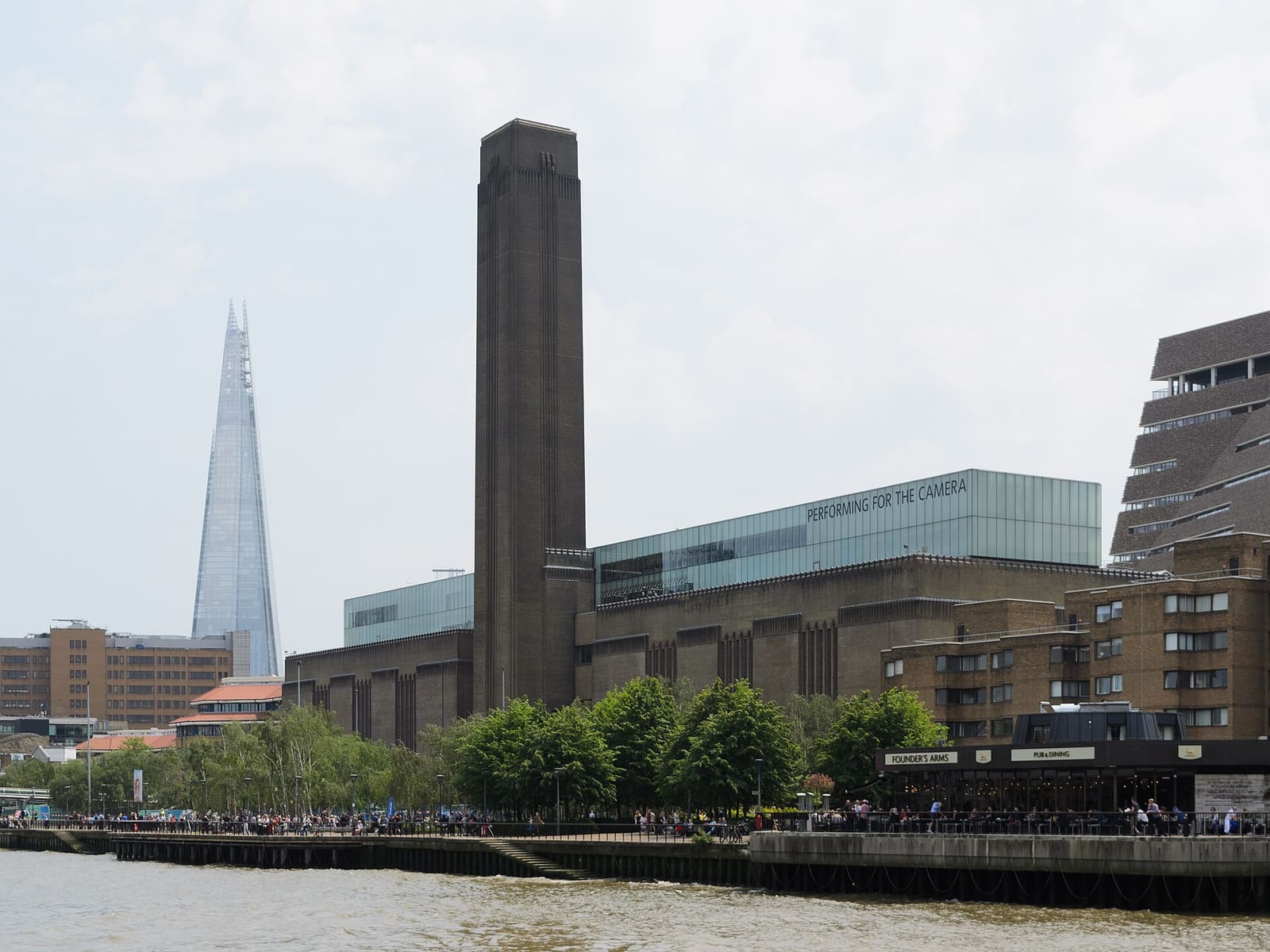
South Bank
Thames Path: Westminster to Tower Bridge
Parliament, the London Eye and the whole South Bank, ending at Tower Bridge.
- Distance 6.5 km · 4.0 miles
- Walking time 1 h 25 min Allow 1 h 30 min for stops
- Stops9 Westminster to Tower Hill
- Terrain Flat
- Step-freeCheck routeNot verified for this walk
Take this walk offline
The route
Cross Westminster Bridge and follow the river on the south bank: the London Eye, the Southbank Centre and National Theatre, Tate Modern, Shakespeare's Globe, Borough Market and HMS Belfast, ending at Tower Bridge. The riverside path is flat and mostly pedestrian.
The interactive map needs JavaScript. The stops are listed below.
Stops
- Start: Westminster
- End: Tower Hill
Distance and times come from a pedestrian route between the stops. Allow extra time for stops, and check for temporary closures.
Route and map data © OpenStreetMap contributors (ODbL). Walking routes by the FOSSGIS OSRM service, saved 2026-10-18. Spotted a mistake? Fix the map.
Saved. Plan your days in My trip
Google Maps chooses its own footpaths between the stops, so its line may differ slightly from the map above. The GPX file has our route and every stop as waypoints, for use in a walking or hiking app.
9 stops, in order
Each caption is a short fact; check opening times and tickets on the official site before you go.
-

Stop 1 · Attraction
Palace of Westminster
The Houses of Parliament and the Elizabeth Tower (Big Ben).
880 m to the next stop
-

Stop 2 · Attraction
London Eye
Giant observation wheel on the South Bank, open to the public since 2000.
440 m to the next stop
-

Stop 3 · Attraction
Southbank Centre
Arts complex beside the river, including the Royal Festival Hall.
390 m to the next stop
-

Stop 4 · Attraction
National Theatre
Concrete theater complex on the river bank.
0.8 miles (1.3 km) to the next stop
-

Stop 5 · Museum
Tate Modern
Museum of modern and contemporary art in the former Bankside Power Station.
370 m to the next stop
-
Stop 6 · Attraction
Shakespeare's Globe
Reconstruction of Shakespeare's open-air playhouse.
690 m to the next stop
-

Stop 7 · Market
Borough Market
Food market in the arches beside Southwark Cathedral.
750 m to the next stop
-

Stop 8 · Museum
HMS Belfast
Second World War cruiser moored in the river, now a museum ship.
600 m to the next stop
-
Stop 9 · Landmark
Tower Bridge
Bascule and suspension bridge over the Thames, completed in 1894.
660 m to Tower Hill station
Read the guide
A short note for each stop, written to be read or recorded as an audio walk. Audio is not available for this walk yet.
Introduction
Read the guide
This walk follows the south bank of the Thames from Westminster station to Tower Hill station. You start with the Houses of Parliament, then pass the London Eye, the Southbank Centre, the National Theatre, Tate Modern and Shakespeare's Globe. Borough Market and HMS Belfast come next, and the walk ends at Tower Bridge. The riverside path is flat and mostly pedestrian, so you can take it slowly.
Stop 1: Palace of Westminster
Read the guide
Westminster Hall, the oldest surviving part of the palace, was built in the late eleventh century under William the Second. In 1834 a fire destroyed both Houses of Parliament, but the hall was saved and built into the replacement. Charles Barry designed the new palace in the Gothic Revival style, with Augustus Pugin adding details, and construction took about thirty years from 1840. In 2012 the clock tower was renamed the Elizabeth Tower, for Queen Elizabeth the Second's Diamond Jubilee. Big Ben is strictly the great bell inside. Next stop: London Eye.
Sources for this stop
Stop 2: London Eye
Read the guide
The London Eye was designed by David Marks and Julia Barfield of Marks Barfield. It was conceived to mark the start of the third millennium, and was first called the Millennium Wheel. It was opened ceremonially on the last night of 1999 and welcomed the public in March 2000. It stands one hundred and thirty-five meters tall, with thirty-two enclosed capsules that each hold up to twenty-five people. One full turn takes about half an hour. Next stop: Southbank Centre.
Sources for this stop
Stop 3: Southbank Centre
Read the guide
The Royal Festival Hall opened in 1951 for the Festival of Britain, and it is the only building from that festival that survives. The Hayward Gallery followed in 1968. Together with the Queen Elizabeth Hall, the Purcell Room and the National Poetry Library, they make up the Southbank Centre. The Royal Festival Hall seats about two thousand seven hundred people. The Southbank Centre is run by a registered charity, and it is described as the largest arts center in the United Kingdom. Next stop: National Theatre.
Sources for this stop
Stop 4: National Theatre
Read the guide
The National Theater company was founded in 1963 by Laurence Olivier, and it was based at the Old Vic until 1976. The South Bank building was designed by Denys Lasdun and Peter Softley, and it opened in stages in 1976 and 1977. It holds three theaters: the Olivier, the Lyttelton and the Dorfman, which was first called the Cottesloe. The building is often cited as an example of brutalist architecture in England, and it has been listed at grade two star since 1994. Next stop: Tate Modern.
Sources for this stop
Stop 5: Tate Modern
Read the guide
Tate Modern fills the former Bankside Power Station, designed by Giles Gilbert Scott and built in two stages between 1947 and 1963. Tate decided in 1992 that it had outgrown its Millbank site. An international competition drew one hundred and forty-eight entries, and the Swiss firm Herzog and de Meuron won. Work began in 1995, and the gallery opened to the public in May 2000. The old generator hall is now the Turbine Hall. A tower extension opened in 2016 and is now called the Blavatnik Building. Next stop: Shakespeare's Globe.
Stop 6: Shakespeare's Globe
Read the guide
The first Globe was built in 1599 by the Lord Chamberlain's Men and burned down in 1613. The American actor and director Sam Wanamaker set up a trust in the early 1970s to rebuild it. He died in 1993, before the work was finished. The new Globe officially opened in 1997, close to the original site. Its thatched roof needed special permission, because London has had a law against thatched buildings since the Great Fire of 1666. An indoor, candle-lit theater, the Sam Wanamaker Playhouse, opened in 2014. Next stop: Borough Market.
Stop 7: Borough Market
Read the guide
Borough Market says it has around a thousand years of history, from traders gathering near London Bridge. In the 1750s the market on the high street was closed, and in 1756 it reopened on its current site. It is run by a charitable trust for its community, with volunteer trustees. The present buildings were designed in 1851 by Henry Rose, with additions in the 1860s, and railway viaducts run over the market. It began reinventing itself as a retail food market in 1998. Next stop: HMS Belfast.
Stop 8: HMS Belfast
Read the guide
HMS Belfast was launched in 1938 and served in the Second World War, including the D-Day landings and the Arctic convoys. She also served in the Korean War. In 1971 she was moored here on the Thames and opened as a museum, and she is now run by the Imperial War Museums. The ship has nine decks, and about nine hundred and fifty people served aboard her. She carried her own chapel, radio station and bakery. Next stop: Tower Bridge.
Sources for this stop
Stop 9: Tower Bridge
Read the guide
Tower Bridge was built between 1886 and 1894 and formally opened by the Prince and Princess of Wales on June 30, 1894. Horace Jones designed it, and John Wolfe Barry was the engineer. Jones died a year into construction. The roadways in the middle elevator to let tall ships through. Steam powered the original pumping engines, but today they run on oil and electricity. The bridge was first painted a brown the builders called bright chocolate, and was repainted red, white and blue in 1977. It is often confused with London Bridge, which is further upstream. The walk ends at Tower Hill station.
Sources for this stop
Written for Britlens from the sources listed under each stop. Check opening times and access on the official sites before you go.
Getting there and back
Both ends of the walk are at stations. Check live times and any planned works before you travel.
- Borough Market is a short step inland from the river. Check its trading days before you plan a lunch stop.
- Step-free access has not been checked for this walk. Check the route and station access before you go.
- Opening times, prices (in pounds sterling) and closures change: check before you visit.
More walks
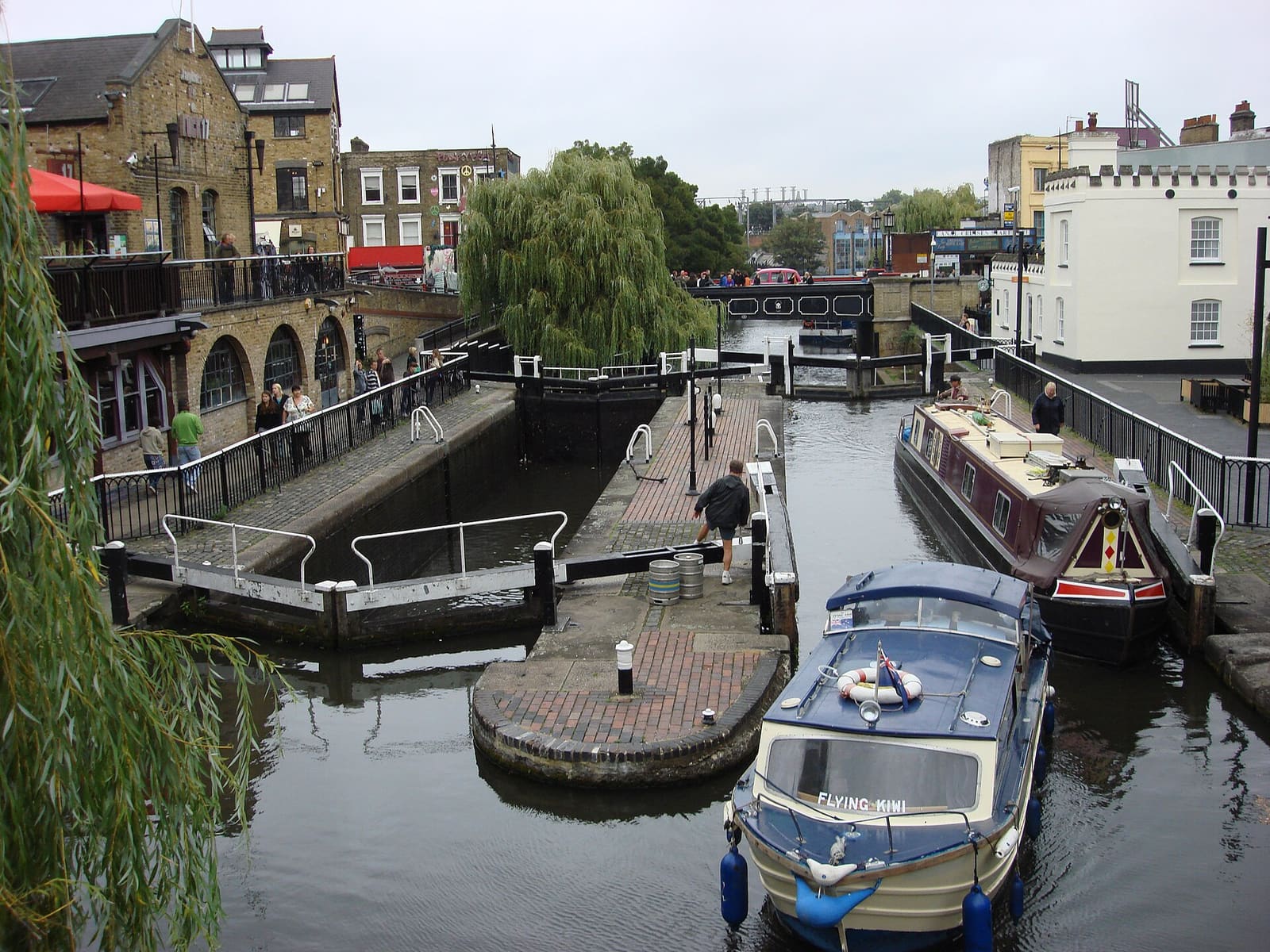 Camden, Primrose Hill and Little Venice
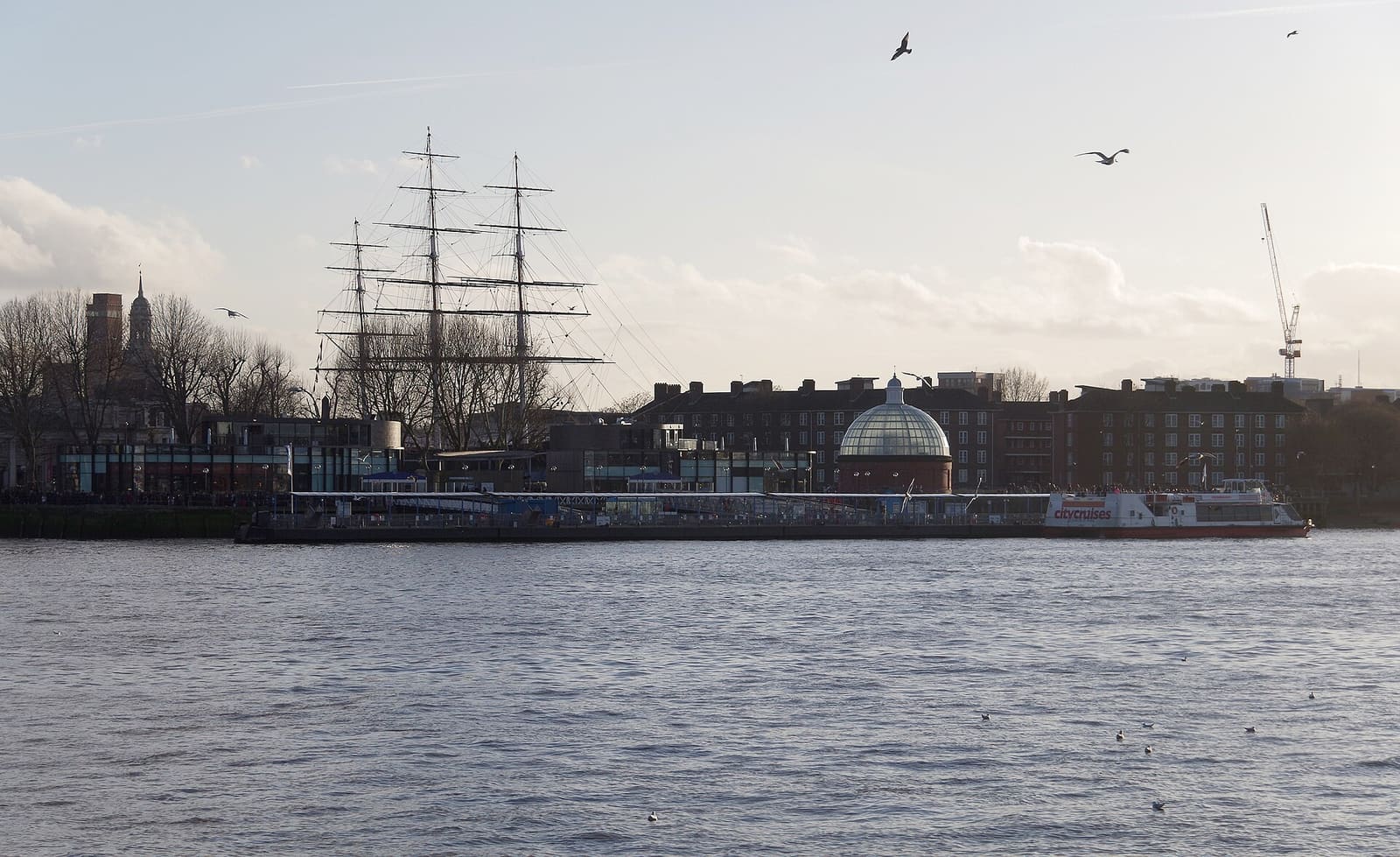 Greenwich: Park, Observatory and Riverside
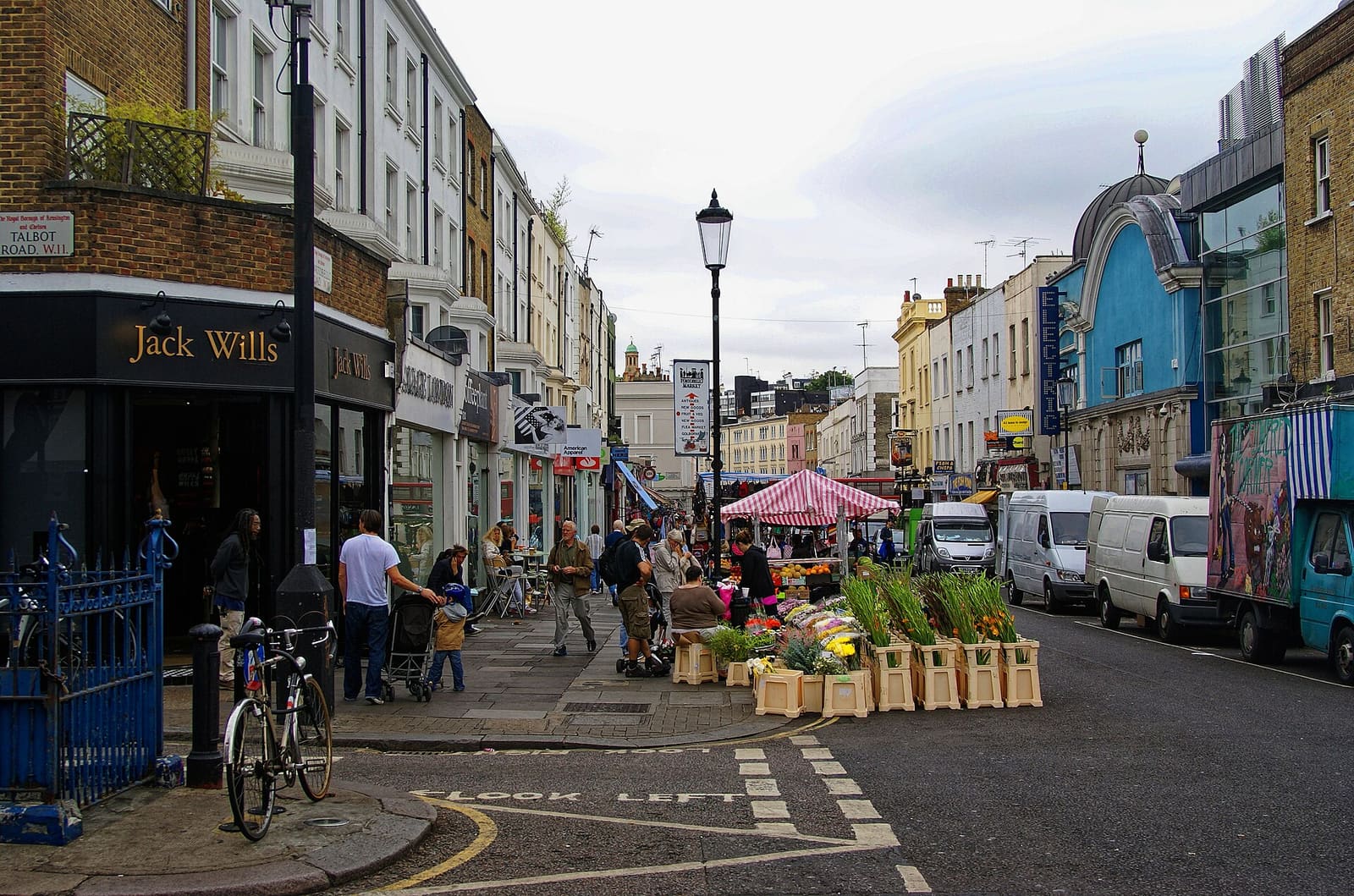 Notting Hill, Portobello and Holland Park
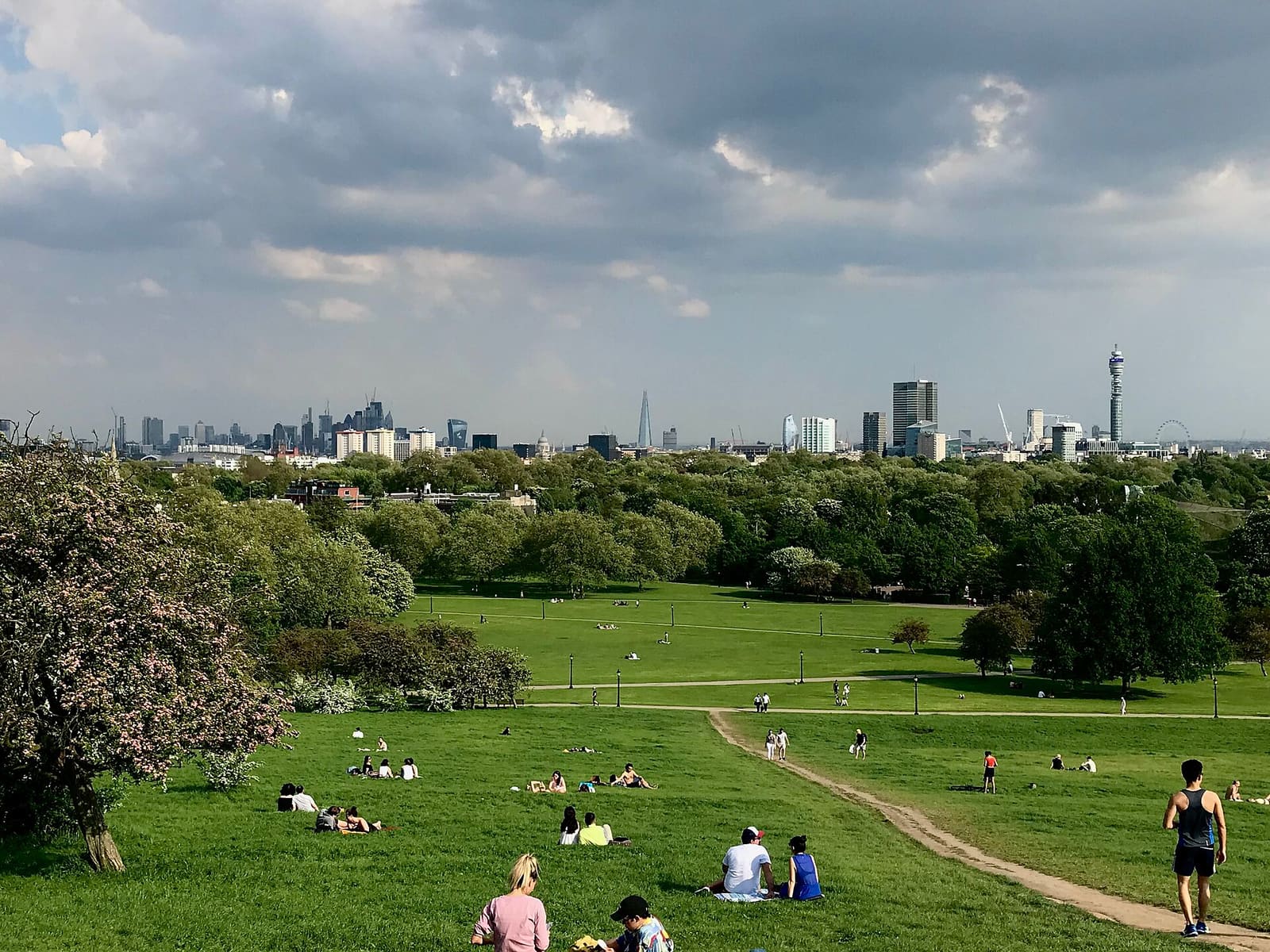 Hampstead Heath and Kenwood
Photos are credited on the photo credits page. Route and map data © OpenStreetMap contributors.