 English (UK)
 English (US)
 Français
 Deutsch
 Español
 Italiano
 Nederlands
 简体中文
Tor
Haytor
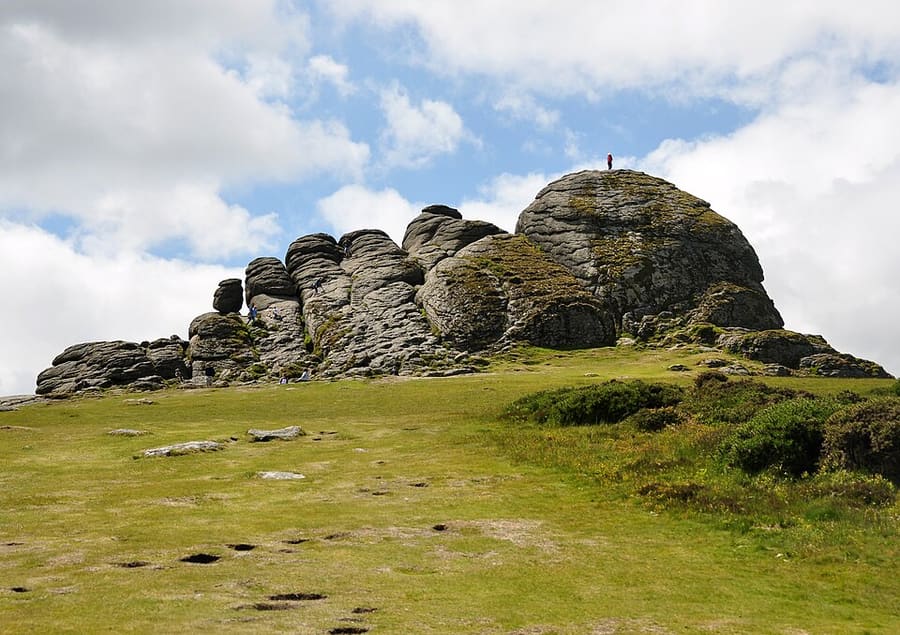
Granite tor on the eastern edge of Dartmoor, also known as Haytor Rocks.
A mini guide to
Granite tors, clapper bridges, Bronze Age sites and moorland villages in a national park
 1 / 10
Welcome to the area
Dartmoor is an upland area of southern Devon that has been a national park since 1951 and covers 954 square kilometres. Its granite moorland is topped by exposed rock outcrops called tors, such as Haytor and Hound Tor, and the highest point is High Willhays at 621 metres. The public has wide access rights, but parts of the moor have been used as military firing ranges for over 200 years.
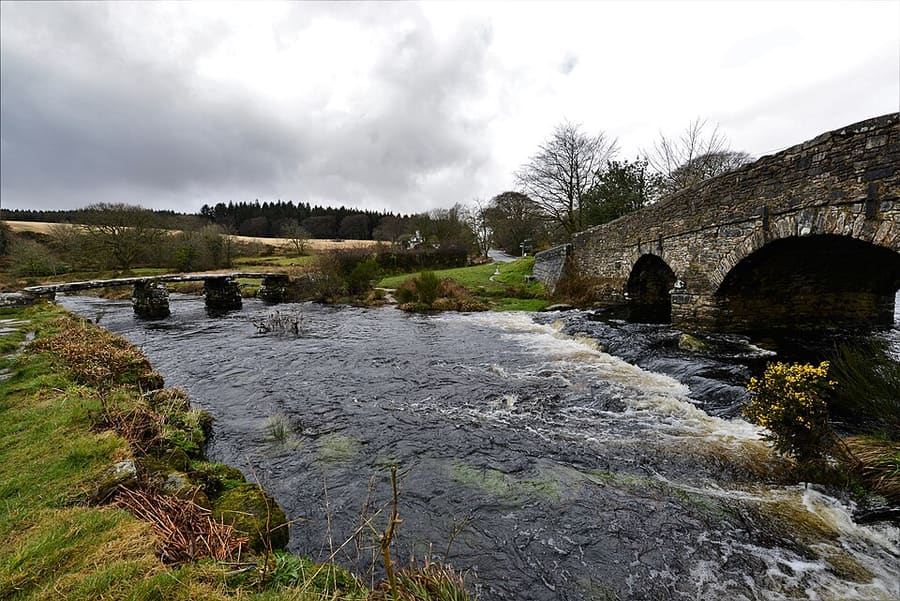
The moor is rich in prehistoric remains, from the 24 hut circles of Grimspound to the Bronze Age monuments near Merrivale. Postbridge has a medieval clapper bridge over the East Dart, and Wistman's Wood is one of a few remaining high-altitude oakwoods. Around the edges are Okehampton, Tavistock, Moretonhampstead, Chagford and Ashburton, with Castle Drogo, Lydford Gorge and Buckfast Abbey nearby.
Highlights
If you only have a few hours, these are good places to begin.
Granite tor on the eastern edge of Dartmoor, also known as Haytor Rocks.
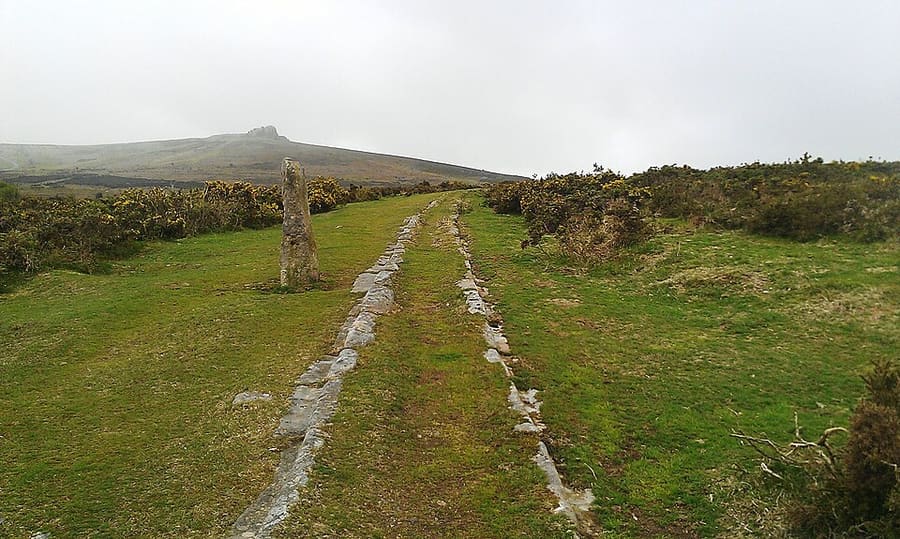
Tramway of 1820 with rails cut from granite, built to carry stone from the Haytor quarries to the Stover Canal.
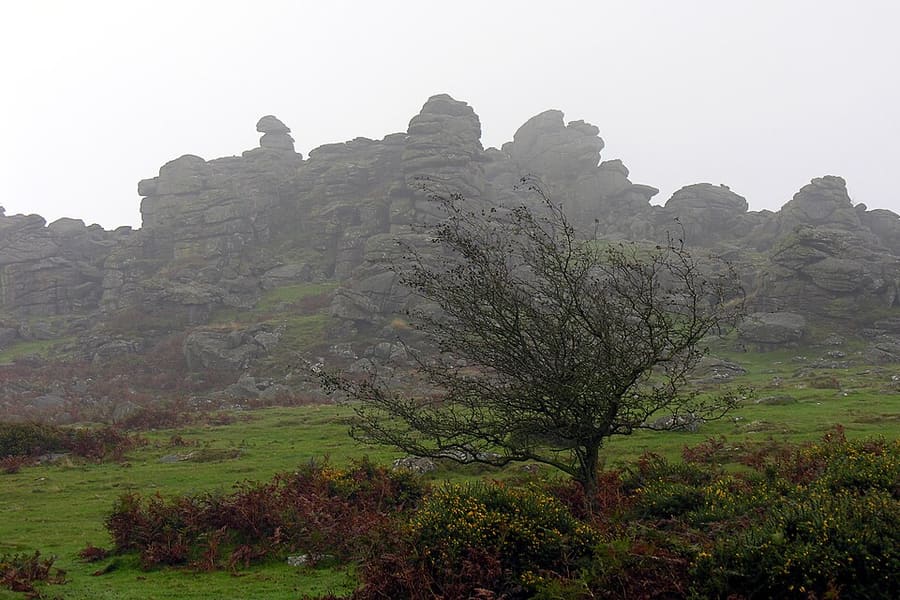
Weathered granite tor with the ruins of a medieval village nearby, cared for by the national park for English Heritage.
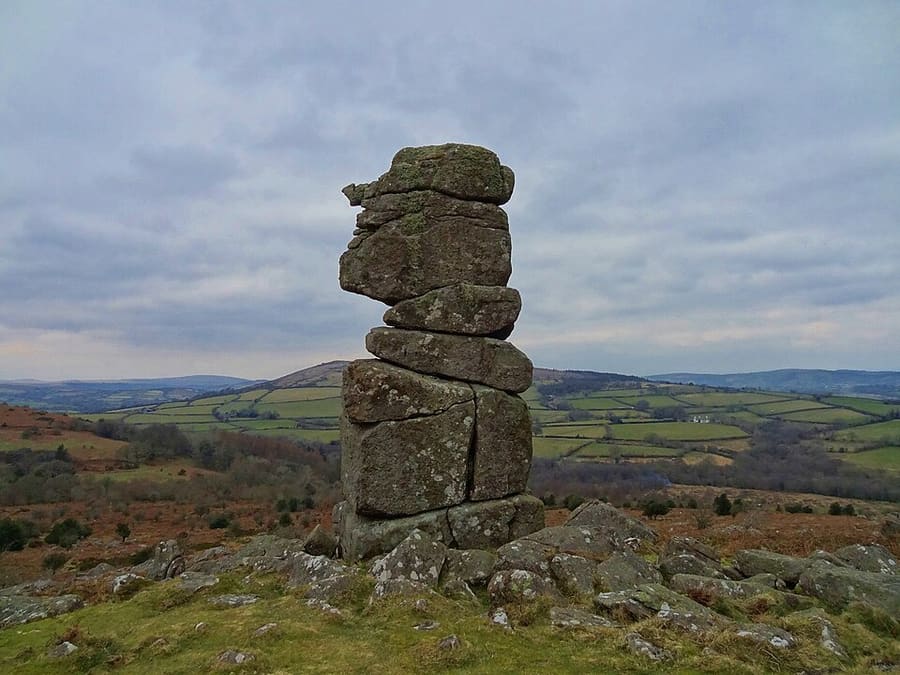
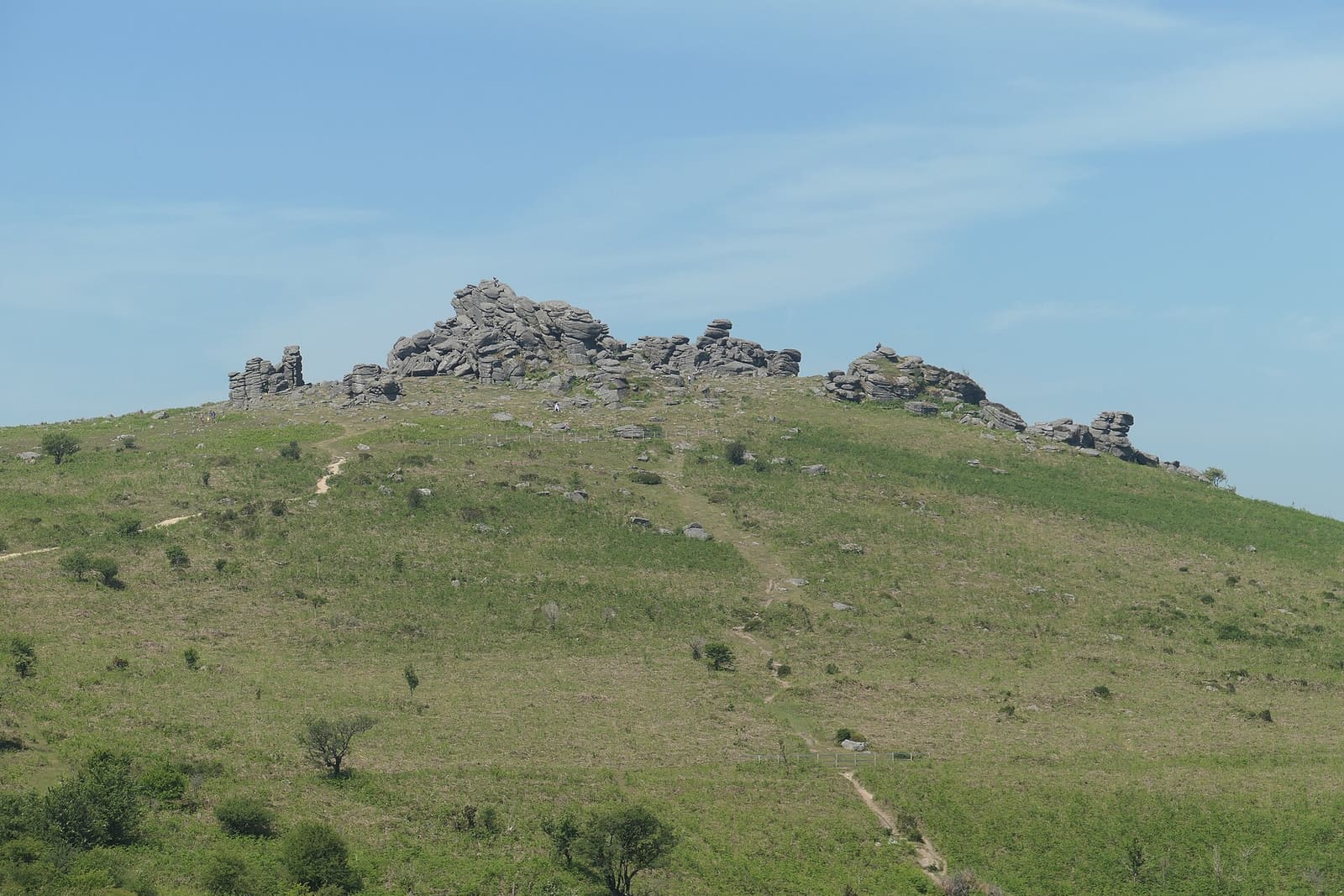
Stack of weathered granite about 6.6 metres high on Hayne Down, near Manaton.
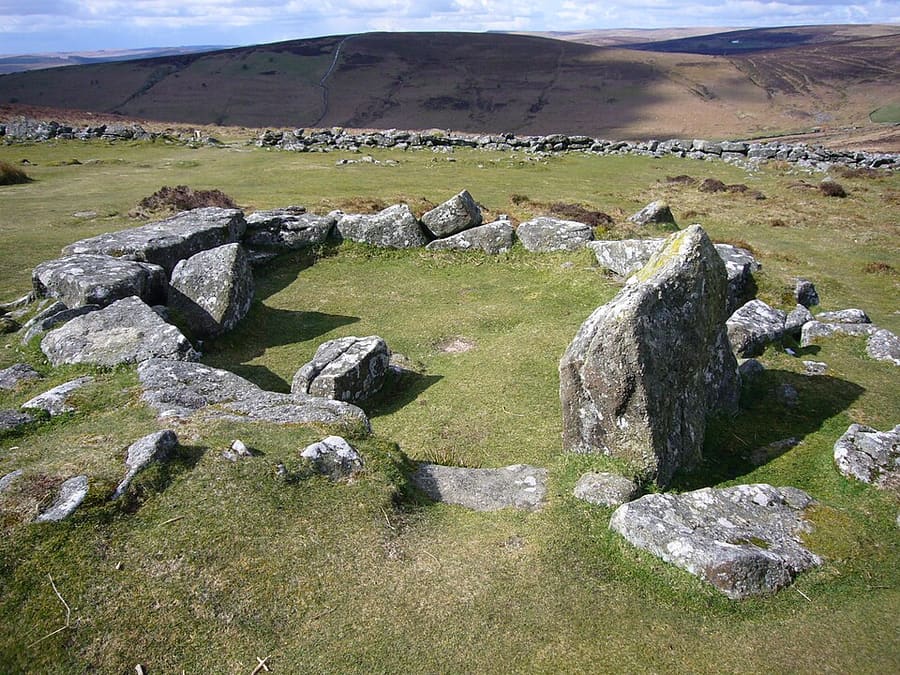
Bronze Age settlement of 24 hut circles inside a low stone wall; a scheduled monument since 1928.
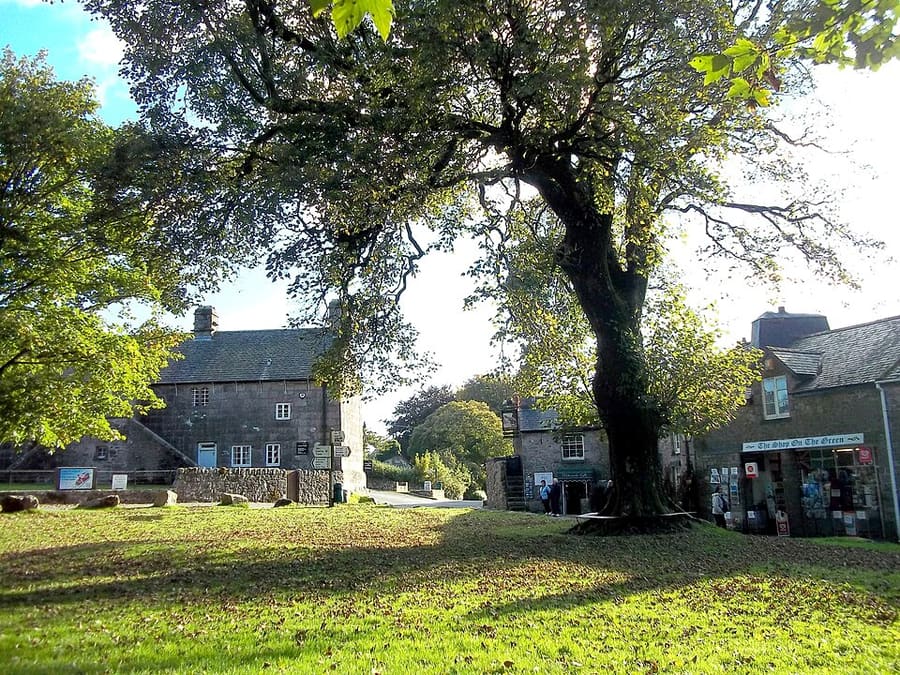
Moorland village whose church is called the Cathedral of the Moors for its tall tower; home of Widecombe Fair.
Find your way
The map shows Dartmoor and the streets around it. The Getting there page lists nearby stops and stations.
Insider tips
Parts of the northern moor are military ranges with restricted access, so check before planning a walk there.
Near Haytor, the 1820 tramway used shaped granite blocks as rails to carry stone to the Stover Canal.
Castle Drogo stands above the Teign Gorge, and the 17th-century packhorse bridge at Fingle is downstream.
The fair in Widecombe-in-the-Moor is held on the second Tuesday of September.
Tips from the Britlens editors
Devon
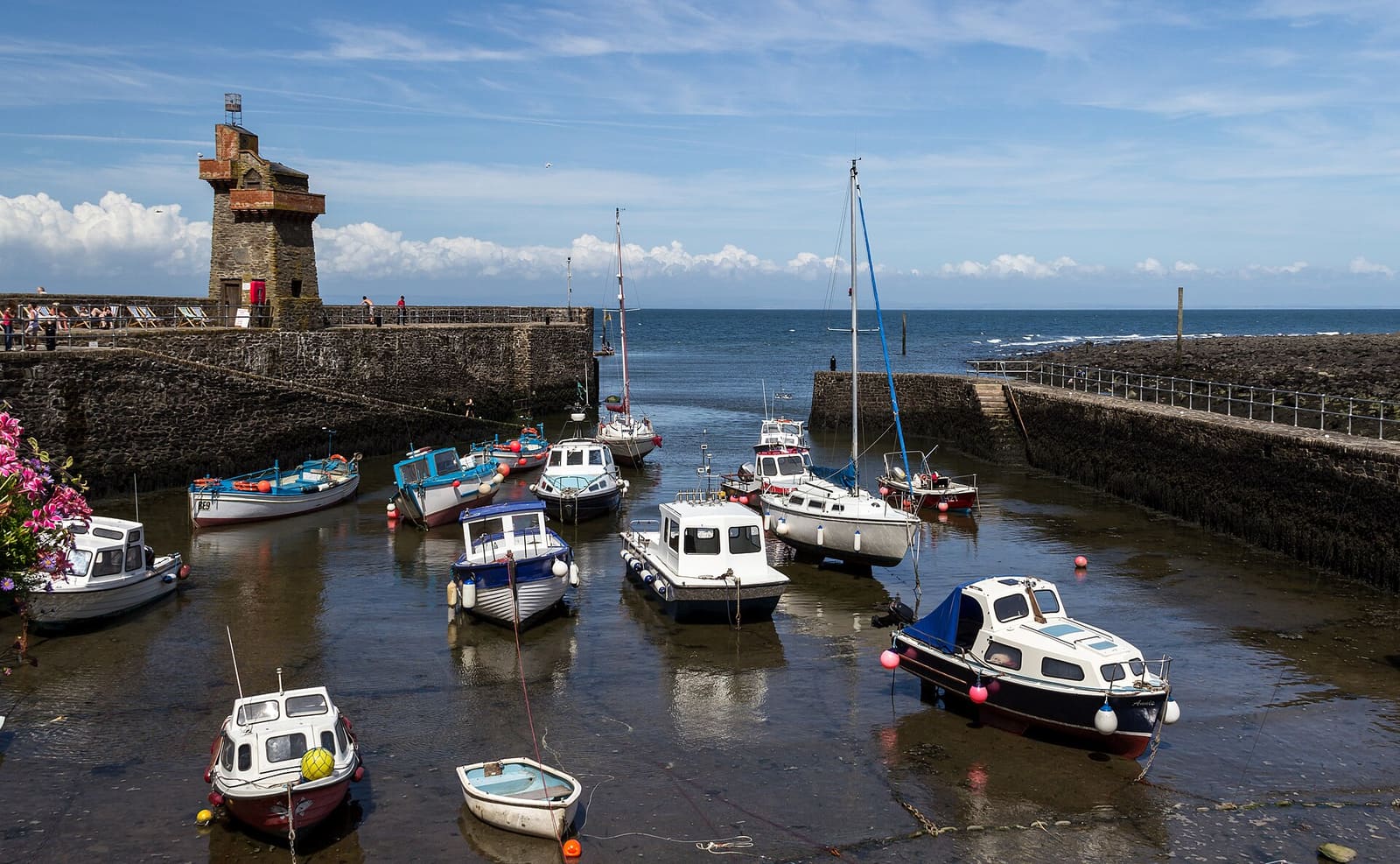
A cliff railway, wooded gorges and high moorland where Exmoor meets the sea
Open the mini guide →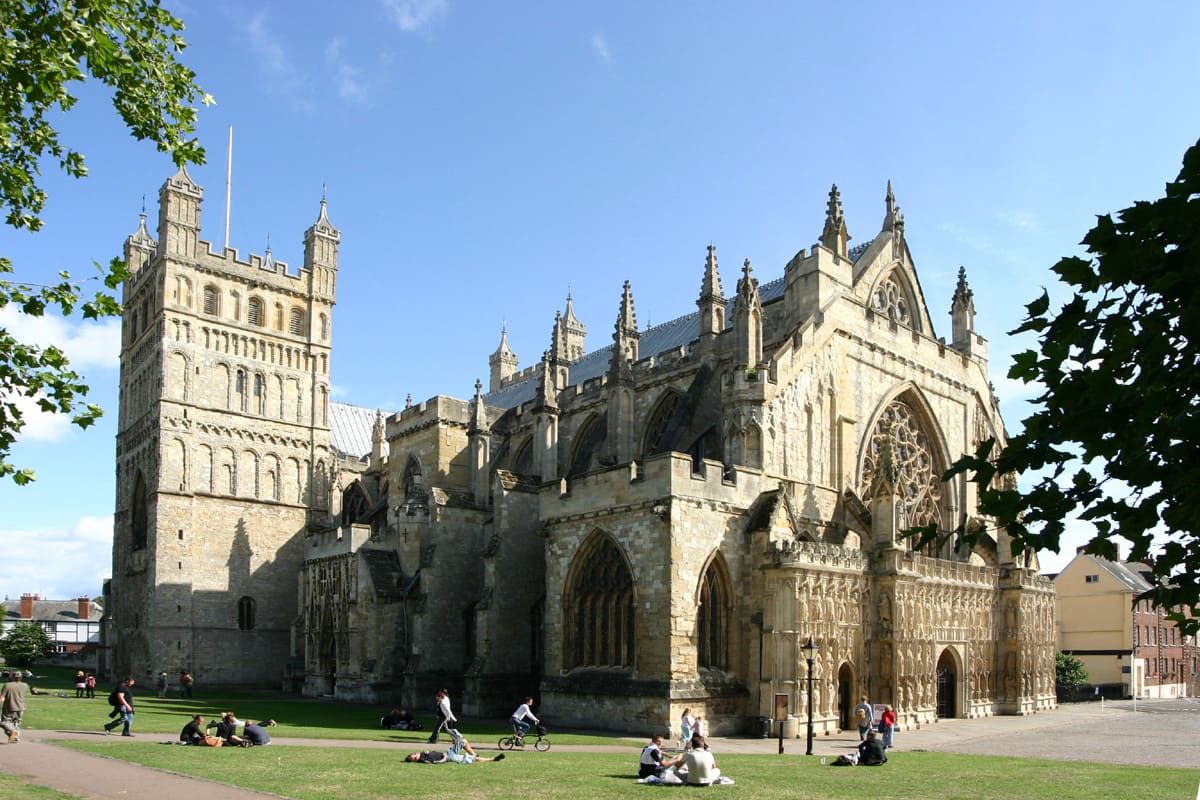
Cathedral city on the Exe with Roman walls, medieval passages and a historic quayside
Open the mini guide →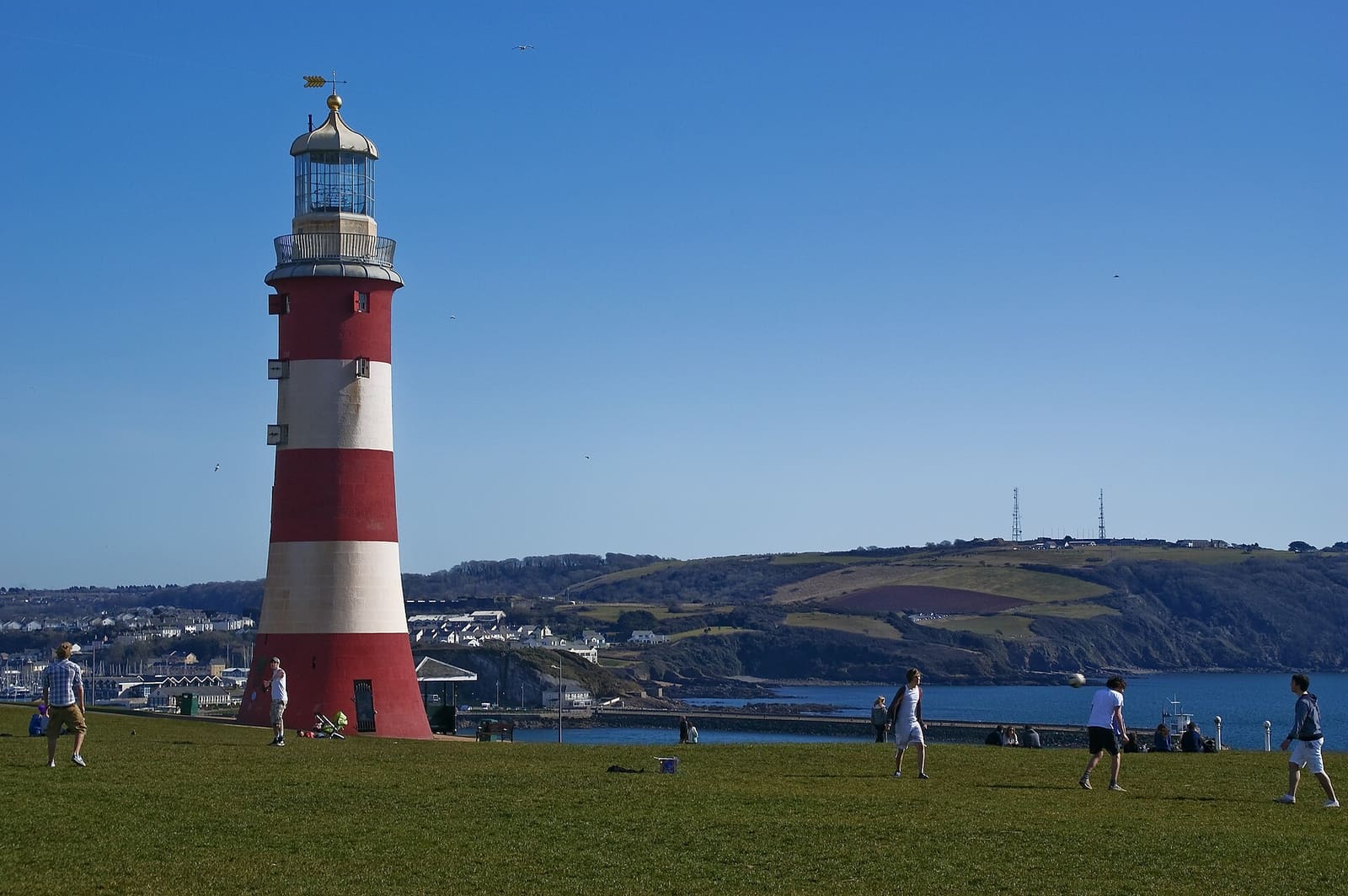
Waterfront city of the Hoe, the Barbican and the Mayflower Steps
Open the mini guide →Photos from Wikimedia Commons, used under the licences shown. All photo credits
Keep exploring Devon