 English (UK)
 English (US)
 Français
 Deutsch
 Español
 Italiano
 Nederlands
 简体中文

Respellings come from the sources. We print a pronunciation only where one of the pages numbered below prints it. For other words, listen to a local, or a phrasebook audio guide.
Welsh in Wales
The Welsh Language (Wales) Measure 2011 states that the Welsh language has official status in Wales.1 In practice, Visit Conwy tells visitors that you will see Welsh on bilingual signs everywhere, and that in Conwy County over a quarter of the population speaks Welsh, so you will also hear it in streets, towns and villages, alongside English.2
The same page says the language "shouldn't cause you any problems or confusion", and that even a few words are worth the effort.2 Wikivoyage adds that locals will not be offended by genuine attempts at place names once you have heard how to say them.6
The country is Cymru in Welsh, which comes from the plural of Cymro, "a Welshman", and the language is Cymraeg.3
Greetings and thanks
| Welsh | English |
|---|---|
| CroesoPrinted pronunciation: CROY-so | welcome2,5 |
| Croeso i Gymru | welcome to Wales2 |
| Bore daPrinted pronunciation: BOR-eh dah | good morning2,5 |
| Prynhawn da | good afternoon2 |
| Nos daPrinted pronunciation: NOHS dah | good night2,5 |
| DiolchPrinted pronunciation: DEE-ol'ch | thanks2,5 |
| Iechyd daPrinted pronunciation: YEKH-id dah | good health, cheers2,5 |
| Shwmae or S'mae | hello (Shwmae in the south, S'mae in the north)2,5 |
The sounds "ll" and "dd"
Visit Conwy explains the two sounds visitors ask about most. For "ll", as in Llandudno, place the tongue behind the top row of teeth and breathe out, or hiss, past the teeth. "Dd", as in mynydd, is equivalent to the "th" sound in English.2

Words on signs
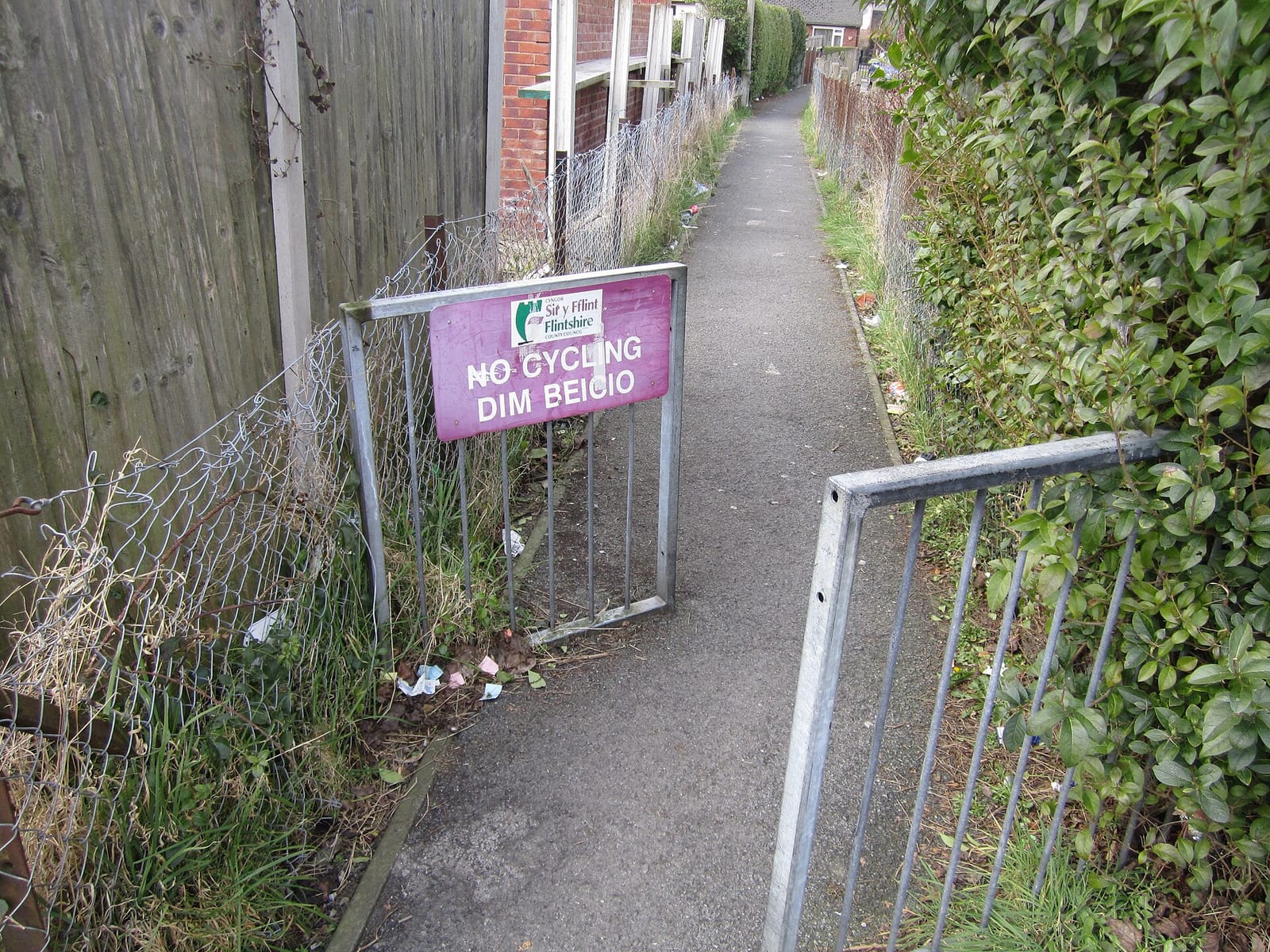
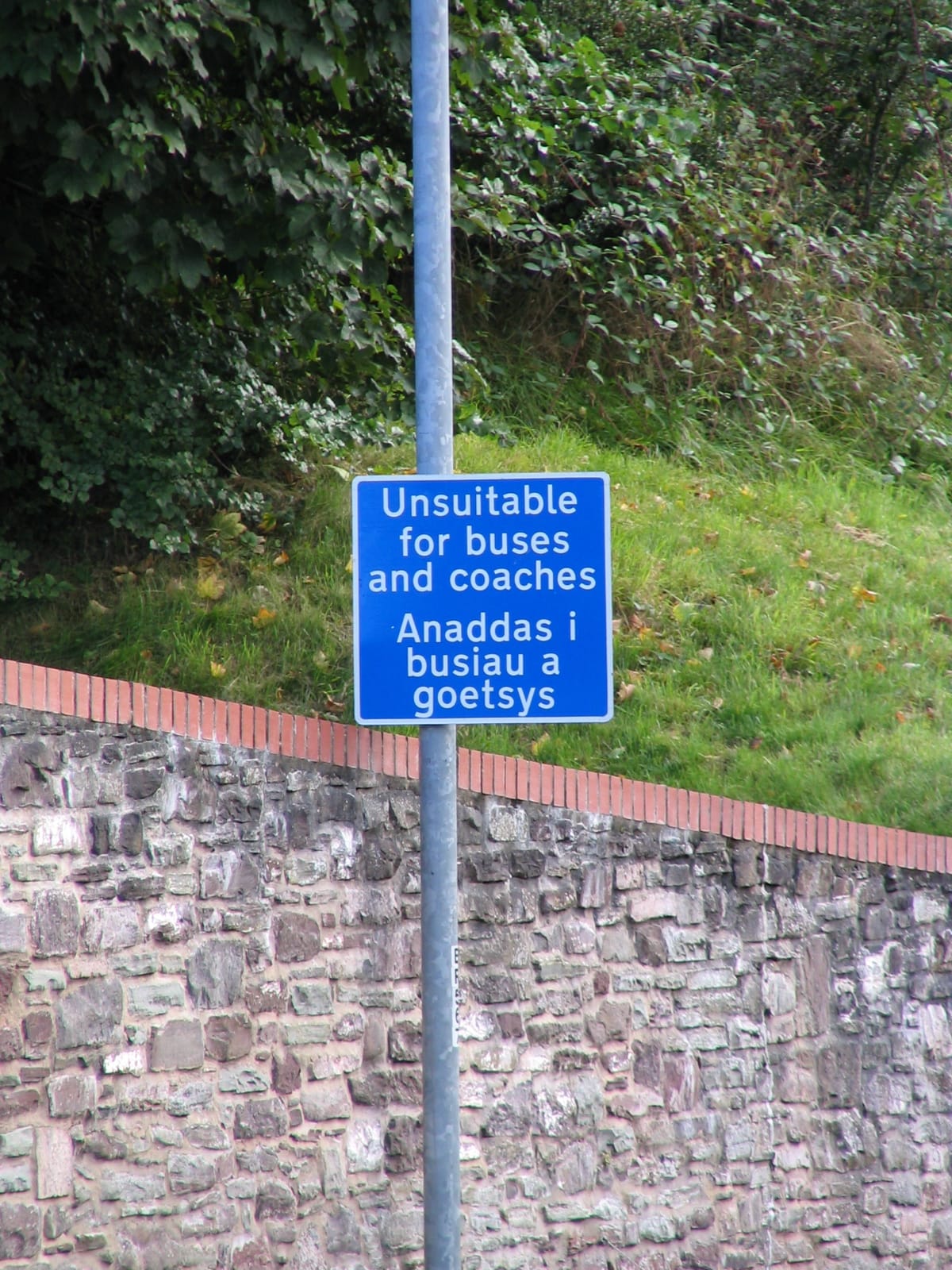
Wikivoyage notes that road signs in Wales are bilingual.6 These are words from its Welsh phrasebook that you may see on roads, shops and stations.5
| Welsh | English |
|---|---|
| ar agorPrinted pronunciation: ar AH-gor | open5 |
| ar gauPrinted pronunciation: ar gye | closed5 |
| fforddPrinted pronunciation: fordh | road5 |
| trafforddPrinted pronunciation: TRA-fordh | motorway5 |
| maes parcioPrinted pronunciation: mice PARK-yo | car park5 |
| gwasanaethauPrinted pronunciation: gwas-ah-NAY-thye | services5 |
| gorsaf | station. The phrasebook notes that 'gorsaf' is the base form you see on signs5 |
| tŷ bachPrinted pronunciation: tee bahch | toilet5 |
What Aber, Llan and Pont mean
Welsh place names often describe the spot. Dr Dylan Foster Evans of Cardiff University, writing for Wales.com, the Welsh Government's international site, says the meanings are often transparent to Welsh speakers.3 Most place names in Wales are in Welsh, though some come from English, French, Irish, Flemish, Latin, Norse or the older British language.3
| Element | Meaning |
|---|---|
| aber | mouth of a river, estuary. Abertawe is the aber of the River Tawe; Abergele is the mouth of the River Gele3,2 |
| llan | church or enclosure; a place with a church or religious settlement, as in Llanrwst or Llandudno3,2,4 |
| pont, bont | bridge3,2 |
| caer | fort. Cardiff (Caerdydd) is the fort on the river Taff3 |
| rhyd | ford3 |
| cwm | valley or cirque2 |
| afon | river2 |
| llyn | lake2 |
| mynydd, fynydd | mountain or moorland2 |
| bryn | hill2 |
| bwlch | pass2 |
| pentre | village or homestead2 |
| dinas | fort or city2 |
| bach, fach | small2 |
| mawr, fawr | great, big2 |
Putting it together: Llanrhian near St Davids is "church or settlement of St Rhian", and Abercastle is the "bay by the castle".4 Wales.com notes that the English name Swansea is not "the sea of swans": it has Norse origins, while Welsh Abertawe is the aber of the River Tawe.3
Note that a name can have a Welsh form and an English form, and both are in use. Tenby, for example, is Dinbych-y-pysgod in Welsh, which Wales.com translates as "Dinbych of the fish".3 You may see either or both on a sign, a map or a timetable.

Pembrokeshire names with a printed pronunciation
The Pembrokeshire Coast National Park Authority prints how some local names are pronounced. It describes the park's names as dividing broadly into Welsh names and Anglo-Norman English names.4
| Name | Meaning |
|---|---|
| AbereiddyPrinted pronunciation: aber-eye-thee | mouth of the River Eiddi4 |
| CaerfarchellPrinted pronunciation: Kya-far-cech | Marchell's fort4 |
| Dinas CrossPrinted pronunciation: deenas | Dinas means fort4 |
| Felindre FarchogPrinted pronunciation: velindra-varch-og | mill of the lord (or knight)4 |
| CressellyPrinted pronunciation: cress-elly | Croes-elli4 |
The long village name
The village on Anglesey with the very long name is real, but Wales.com says the name was extended in the 19th century as a publicity stunt, to draw visitors to a town on the new railway line.3
Related
Browse our Wales guide for places and towns, read about Scottish Gaelic and Scots, or return to language and etiquette.