 English (UK)
 English (US)
 Français
 Deutsch
 Español
 Italiano
 Nederlands
 简体中文

Emergency numbers
| Number | What it is for |
|---|---|
| 999 or 112 | Emergencies. Both reach the same service: the call handler asks which service you need (police, ambulance, fire or coastguard).1,2 GOV.UK says calls to 999 are free.3 If you have hearing or speech difficulties you can text 999, but only if you have registered with emergencySMS first.45 The NHS says 999 is for life-threatening emergencies, and that calling 999 does not always send an ambulance.6 |
| 101 | Police, when it is not an emergency. GOV.UK says you can call 101 to report something that is not an emergency, give information or make an enquiry, that calls to 101 are free, and that you can also report online in England and Wales, Scotland or Northern Ireland.3 |
| 111, England | Urgent medical help or advice that is not life-threatening, or when you are unsure which service you need.6 111 online is for people aged 5 and over; call 111 for a child under 5.7 |
| 111, Scotland (NHS 24) | NHS 24 says to phone 111 for free if you think you need A&E but it is not life or limb threatening, or your GP, pharmacy or dental practice is closed.8 |
| NHS 111 Wales | Symptom checker, out-of-hours guidance and advice on accessing medicines at 111.wales.nhs.uk. The page we read did not print a phone number.9 |
| Northern Ireland | The nidirect page for visitors does not mention an 111 service. Use 999 for emergencies and nidirect for other care.10 |
The NHS and who pays
The NHS is run separately in each nation, and the NHS England visitor pages say they cover England only; rules may differ in Wales, Northern Ireland and Scotland.11 Read the pages for the nation you are in. The points below come from the NHS England pages unless stated.
- Free to everyone: A&E (but not emergency treatment once you are admitted to hospital), most family planning services, treatment for most infectious diseases including sexually transmitted infections, and treatment of conditions caused by torture, female genital mutilation, domestic violence or sexual violence.11
- Visitors under 6 months who are not ordinarily resident: may be charged 150% of the national NHS rate for hospital treatment. You may also pay for some services, such as eye tests, dental treatment and prescriptions.11
- Visitors from outside the EEA: the NHS says to cover the whole visit with personal medical or travel insurance, that you will generally need to pay the estimated cost in advance (afterwards if waiting would delay urgent treatment), and that unpaid NHS debts of £500 or more, outstanding for at least 2 months, are reported to the Home Office.12
- Longer visas: visitors on visas longer than 6 months who have paid the immigration health surcharge, or are exempt, get free hospital treatment, apart from NHS-funded assisted conception. Prescription and dental charges still apply. We do not state the surcharge amount; check GOV.UK.11
- Northern Ireland: nidirect says visitors will not pay for treatment in an emergency department, but admission and other treatment may be charged, and visitors are generally not eligible for free non-emergency care.10
- GP registration: short-term visitors staying more than 24 hours but less than 3 months can register as temporary patients, if the practice agrees. GP treatment is free, but registration does not by itself entitle you to free hospital treatment.11
This is a summary of the pages, not advice on whether you will be charged. Exemptions exist for particular groups.13
Pharmacies and urgent care
For minor illness or injury, the NHS says to go to a walk-in centre, minor injuries unit or urgent treatment centre, or ask a pharmacist.11 Pharmacists can give advice on illnesses such as coughs, colds and sore throats, suggest medicines that do not need a prescription, and for some listed conditions supply prescription medicine without a GP appointment. The NHS advises contacting the pharmacy before you go to confirm.15
NHS England has a find a pharmacy tool that takes a town, city or postcode in England.16 In Wales, the NHS 111 Wales site says a pharmacy is the best place to start for a common ailment.9 For medicines you bring with you, see travelling with medicines.
Travel insurance, EHIC and GHIC
The NHS says visitors staying less than 6 months should have personal medical insurance for the visit.11 It says an EHIC covers some treatment for illness or emergencies but not all costs, so adequate insurance is advised.13 Without a valid EHIC, PRC or S2, visitors from the EU, Norway, Iceland, Liechtenstein and Switzerland may be charged.11
The UK Global Health Insurance Card (GHIC) is a different thing: it is for people who are resident in the UK and are travelling abroad. The NHS says it is not a replacement for travel insurance.14 If you live outside the UK you will not use a GHIC here; check what your own country's card or insurance covers.

Everyday safety
Wikivoyage says Britain's transport network does not generally have any major safety issues, and suggests texting the British Transport Police on 61016 to report suspicious items on the rail network.5
Crowds and theft. We could not read official police advice on pickpocketing (police.uk returned HTTP 403), so we give no statistics and name no hot-spots.22 The usual precautions in any busy place apply: keep bags closed and in view, and keep your phone and wallet out of back pockets. This is common sense, not a sourced fact. To report a crime that is not an emergency, call 101.3
Mountains, coast and weather
- Weather: the Met Office issues yellow, amber and red warnings. Red means dangerous weather is expected and you should take action now; amber means an increased likelihood of impacts that could disrupt your plans. You can follow warnings in its app or by email.17 Check before a hill walk or coast path. Our walks and when to visit pages say more.
- Mountains: Mountain Rescue England and Wales is a charity supporting 48 volunteer rescue teams across England and Wales.18 Its getting help page says that in an accident you should note the location and the casualty's details, dial 999 or 112 and ask for the police, then mountain rescue, and stay where you are until the team contacts you.4
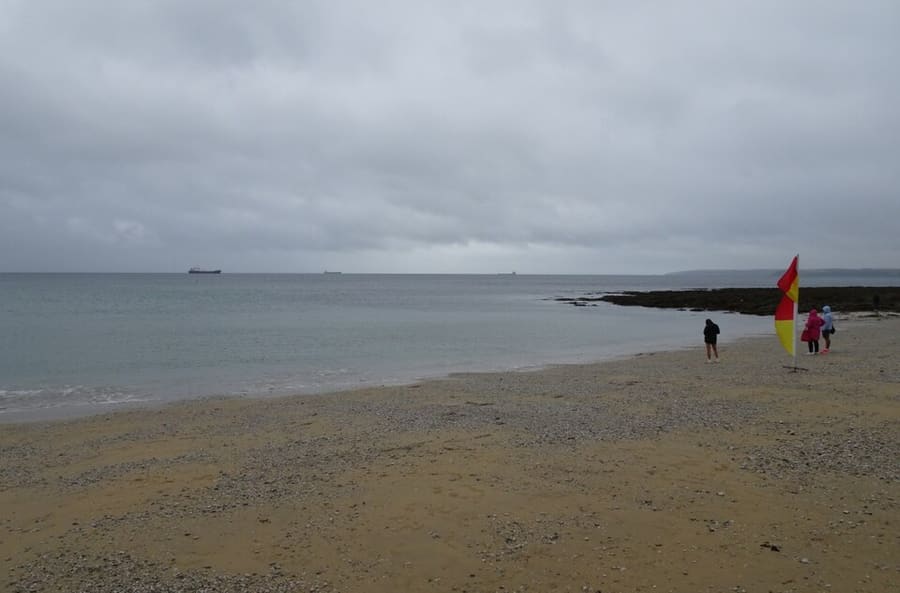
- Coast: HM Coastguard's safety tips say to choose a lifeguarded beach and swim between the flags, to float rather than struggle if you are caught in a rip current, and, if you see an emergency at the coast, to call 999 and ask for the Coastguard.19 The RNLI publishes more water and beach safety advice at rnli.org/safety. Its site refused automated access, so we have not read it and state nothing from it.20
Scams and lost passports
Scams. For reporting fraud, Action Fraud's site is the one to try, but it refused automated access (HTTP 403), so we have not read it and say nothing about what it covers: actionfraud.police.uk (opens in new tab).21 For visa and ETA scams, GOV.UK itself warns that other websites may charge more and says to avoid websites that imitate government services: see ETA.
A lost or stolen passport. Start with your own country's embassy or high commission. GOV.UK publishes a London diplomatic list and a list of consular offices outside London, in file form.23 We do not give replacement times or fees, because they are set by each country.

Taxis
In London, Transport for London's advice is to always book your minicab, and its licence checker lets you confirm whether a private hire driver, vehicle or operator is licensed.24 Our transport guide covers the rest of London travel.
Women and LGBT+ travellers
We found no official guidance written for visitors on these topics that we could read, so we point to organisations that publish their own details instead. In an emergency, call 999.
- Victim Support is an independent charity supporting victims of crime in England and Wales. It says its Supportline (08 08 16 89 111) and live chat are free and run 24 hours a day. For Scotland it refers people to Victim Support Scotland.25
- Galop is the LGBT+ anti-abuse charity. Its helpline (0800 999 5428) is open to LGBTQ+ people in the UK who have experienced abuse or violence; its hours are listed on its site, and it is closed at weekends.26
- Wikivoyage, a community-written guide, says homosexuality is very widely accepted by the British public and that almost all discrimination and hate speech relating to sexual orientation is illegal.5 Treat that as background, not legal advice.
London air quality and the ULEZ
The Ultra Low Emission Zone operates across all London boroughs and does not include the M25. It applies to non-UK vehicles too, and Transport for London has a vehicle checker that tells you whether you need to pay.27 If you are hiring a car in London, check the car first. We do not state the charge, which can change. We did not read an air-quality source, so we give no pollution figures.
Next steps
- First time in Britain and essentials.
- Entry requirements and the four nations.
- Guides by region: Aberdeen and Aberdeenshire, Anglesey, Bath, Birmingham, Blackpool and the Lancashire coast, Brighton & Hove, Bristol, Cambridge, Canterbury & Kent, Cardiff, Cornwall, Coventry, Devon, Edinburgh, Glasgow, Gloucester, Hereford, Ironbridge Gorge, Islay and Jura, Isle of Arran, Isle of Bute, Isles of Scilly, Leeds, Leicester, Lincoln, Lindisfarne (Holy Island), Liverpool, Llangollen and Pontcysyllte, Lundy, Manchester, Mull and Iona, Newcastle and Gateshead, Norfolk and the Broads, North Coast 500, Northern Ireland, Nottingham, Orkney, Oxford, Portsmouth and Southampton, Salisbury & Stonehenge, Sheffield, Shetland, Shrewsbury, St Andrews and Fife, Stirling and the Trossachs, Stratford & Warwickshire, The Cotswolds, The Jurassic Coast, The Lake District, The New Forest, The Outer Hebrides, The Peak District, The Scottish Highlands, The South Downs, Wales, Windsor, Worcester, York, Yorkshire. Also London.