 English (UK)
 English (US)
 Français
 Deutsch
 Español
 Italiano
 Nederlands
 简体中文
Britlens practical guide
Packing checklist for Britain
Choose a month and a region for weather-based suggestions, tick things off, then save, print or share the list. Your list stays in your browser unless you share a link.
Facts last checked 25 Oct 2026. Britlens is independent: see our editorial policy.

Your checklist
Suggested for your month and region
Documents and money
Phone and power
Health and day bag
Weather and the outdoors
Your own items

How the suggestions work
For each region we use the Met Office’s 1991-2020 monthly averages from one named station,[3] the same figures as our when to go guides. The rules are plain: a warm coat when typical highs are under 10°C, a warm jacket under 15°C, light layers under 20°C, a proper waterproof in the wettest months, and sun protection from May to September. These are averages, not a forecast, so check the weather nearer the time. London is not in our climate data yet: see when to visit London.
Your list is saved only in your browser’s local storage, if the browser allows it. A share link carries the list inside the link itself (after the #), so it is not sent to our server.
Plugs and voltage
The UK uses the Type G plug (BS 1363) on a 230 V, 50 Hz supply.[1][2] An adapter changes the plug shape only. Check the label on each charger: “100–240 V” means it is built for 230 V, and a device without that range needs a voltage converter or should stay at home.
Hills, coast and midges
The basic list above is for towns and cities. If your plans go further, add these.
Walking in the hills
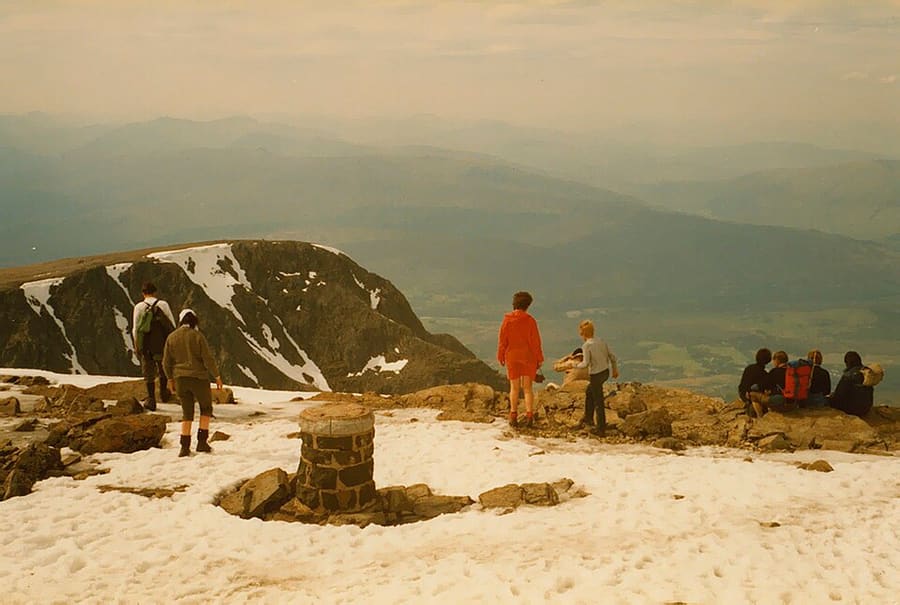
AdventureSmart UK’s hill walking kit list includes walking boots or shoes that fit well, a waterproof jacket and over-trousers, warm spare layers, a hat and gloves, a map and compass, a torch, a fully charged phone and portable charger in a dry bag, food, a hot drink and a first aid kit.[4] Check the forecast before you set out, and see outdoor safety.
The coast
HM Coastguard’s advice is to choose a lifeguarded beach and swim between the flags, to float if you are caught in a rip current, and to call 999 and ask for the Coastguard if you see someone in trouble at the coast.[6] Pack something warm for after a swim, even in summer.
Midges and ticks in Scotland
VisitScotland says midges are active from May to October, peaking in mid-summer, mainly in the west Highlands, the islands and damp rural areas, and that activity changes with wind and humidity. It suggests midge repellent, a head net where there are lots of midges, and lightweight long layers.[5] It also advises checking yourself and your clothing for ticks after time in grass, woodland or moorland, because some ticks can transmit Lyme disease.[5] See our Highlands guide.
Clothes and shoe sizes
UK clothing and shoe sizes differ from US and European ones. We have not found an official conversion table to cite, so we do not print one: check the size chart on the retailer’s own website, or try things on in the shop.

Phones and connectivity
Roaming, UK SIM and eSIM choices, Wi-Fi and rural coverage are explained in phones, SIM cards and Wi-Fi. Coverage varies by place; Ofcom’s checker shows predicted coverage by postcode.[8] If you need an ETA or visa, start at gov.uk/eta.[7] For money, see money in Britain.
Sources
Fetched and read on 25 Oct 2026. Rules, fees and coverage change: check the source before you rely on it.
- Mains electricity by country (opens in new tab), Wikipedia
- AC power plugs and sockets: BS 1363 (Type G) (opens in new tab), Wikipedia
- Location-specific long-term averages, 1991-2020 (opens in new tab), Met Office
- Hill walking kit list (opens in new tab), AdventureSmart UK (read 1 Nov 2026)
- Midges and ticks in Scotland (opens in new tab), VisitScotland (read 1 Nov 2026)
- HM Coastguard beach safety tips (news release, 30 June 2025) (opens in new tab), GOV.UK (Maritime and Coastguard Agency; read 1 Nov 2026)
- Get an electronic travel authorisation (ETA) to visit the UK (opens in new tab), GOV.UK
- Broadband and mobile coverage checker (opens in new tab), Ofcom