 English (UK)
 English (US)
 Français
 Deutsch
 Español
 Italiano
 Nederlands
 简体中文
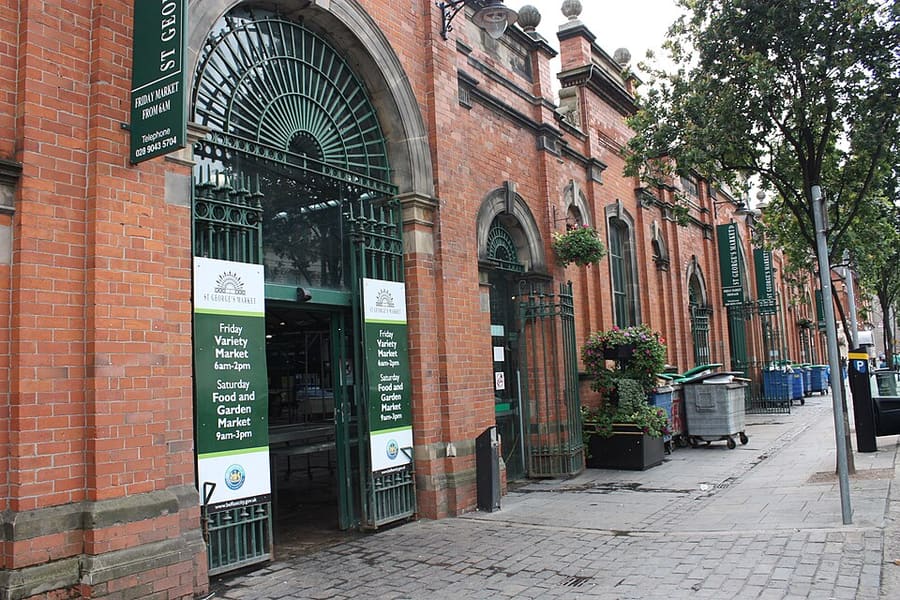

Neutral by design. Language and names in Northern Ireland are tied to identity. We describe what official sources say and what people call places, and we take no side.
Official status
The Identity and Language (Northern Ireland) Act 2022 is a UK Act of Parliament. Part 1 deals with national and cultural identity and language, with sections on the Irish language, and on the Ulster Scots and the Ulster British tradition.1
On Irish, the Act says its purpose is to provide official recognition of the status of the Irish language in Northern Ireland, including by providing for an Irish Language Commissioner and for standards of best practice for public authorities. It adds that nothing in this part affects the status of the English language.2
On Ulster Scots, the Act provides for a Commissioner for the Ulster Scots and the Ulster British tradition, whose principal aim is to enhance and develop the language, arts and literature associated with Ulster Scots.3
Which provisions are in force can change. Check the legislation.gov.uk page for the Act (opens in new tab) for the current position. We did not read Foras na Gaeilge's website, which redirected our automated request, or the Ulster-Scots Agency's main website, which was showing a maintenance page when we fetched it.
What you will see and hear
Wikivoyage says Irish is spoken in some areas of Northern Ireland, particularly near the border, and is less common than in the Republic. It also says that Scots, known in Northern Ireland as Ulster-Scots, can be heard in parts of the region, and that it is mostly intelligible to English speakers.4
The Discover Ulster-Scots site, run by the Ulster-Scots Agency, describes Ulster as shaped by three peoples, the Irish, the Scots and the English, and says everyone in Ulster speaks English, with Irish and Ulster-Scots as two minority languages.6 You may also notice the lake word lough where Scotland would say loch.4
For everyday Irish phrases, Wikivoyage's Irish phrasebook prints respellings such as "DEE-a GHWIT" for Dia dhuit (hello) and "GUH ROH MAH ug-ut" for Go raibh maith agat (thank you). We do not add our own pronunciation.8

Irish place-name elements
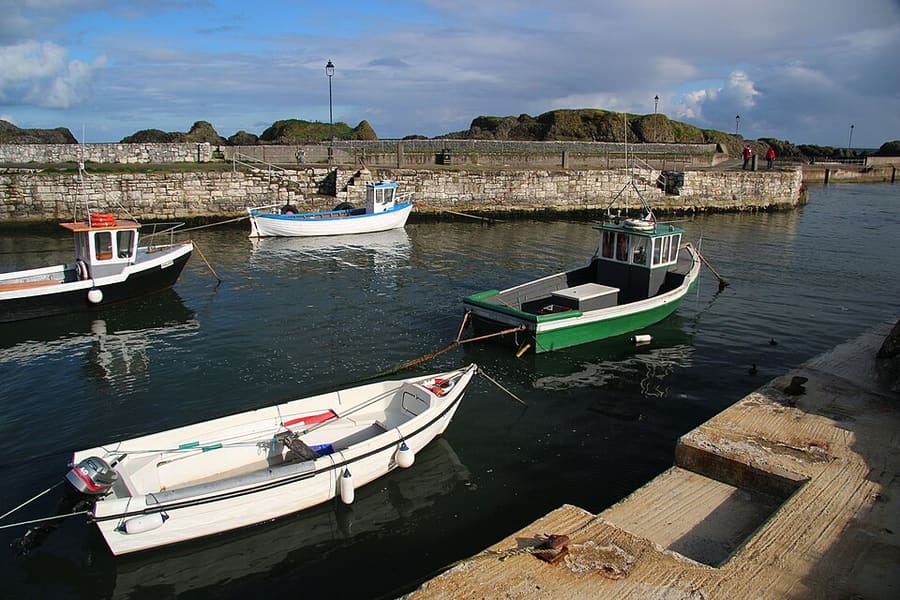
Many names in Northern Ireland are anglicised forms of Irish names. The table below shows common spellings and the Irish word behind them, from Wikipedia's article on Irish place names.7
| Spelling on maps | Meaning |
|---|---|
| bally, bal, bel | from baile, homestead or settlement. Examples in the source: Ballymena, Ballymoney, Ballycastle7 |
| kil, kill | from cill, churchyard or graveyard. Examples: Kildare, Kilkenny7 |
| derry | from doire, grove or oak-grove7 |
| drum, drom | from druim, back or ridge. Examples: Dromore, Drumcondra7 |
| knock | from cnoc, hill7 |
| lough | from loch, lake7 |
| carrick, carrig, craig | from carraig, rock or rocky outcrop. Examples: Carrickfergus, Craigarogan7 |
| ard | high, height, hill7 |
| rath | from ráth, earthen ringfort7 |
| more | from mór, big or great7 |
The examples in that source are drawn from across the island of Ireland, so not every town named in the table is in Northern Ireland.
Ulster-Scots elements in names
In Belfast, the Discover Ulster-Scots site points to Scots words inside place names, and says Belfast has over a hundred streets named after places in Scotland, including Braemar, Langholm, Lochinver, Merkland, Selkirk and Stratheden.5
| Element | Meaning |
|---|---|
| brae | hillside. It appears on the slopes of the Cave Hill in north Belfast5 |
| strand | beach. It gives many names in east Belfast, on the shore of the Lagan and Belfast Lough5 |
| burn | small stream, as in Purdysburn, Minnowburn and Wedderburn5 |
| knock | prominent hill, as in 'the Knock' in east Belfast5 |
Note that knock appears in both tables: it is listed as an anglicised form of the Irish cnoc, and in Belfast as an Ulster-Scots term for a prominent hill.75

Derry or Londonderry
Both names are in use. Wikipedia reports that, according to the city's royal charter of 1662, the official name is Londonderry, and that a 2007 High Court decision reaffirmed this. The local council has used Derry in its name since 1984, and it is now Derry City & Strabane District Council.910 The same article reports that Derry is preferred by nationalists and broadly used in the Catholic community and in the Republic of Ireland, while many unionists prefer Londonderry, though in everyday conversation most Protestant residents of the city use Derry. It also notes the nickname "Stroke City", from the dual form Derry/Londonderry.9
How we handle it: we write Derry/Londonderry when we name the city, and we use an organisation's own name when we quote it, such as Derry City & Strabane District Council. In conversation, it is simplest to use the name the person you are talking to uses. Road signs, bus destinations and timetables may show either.
Related
Read the Northern Ireland guide, the four nations overview and our notes on Britain, Great Britain and the UK.