 English (UK)
 English (US)
 Français
 Deutsch
 Español
 Italiano
 Nederlands
 简体中文
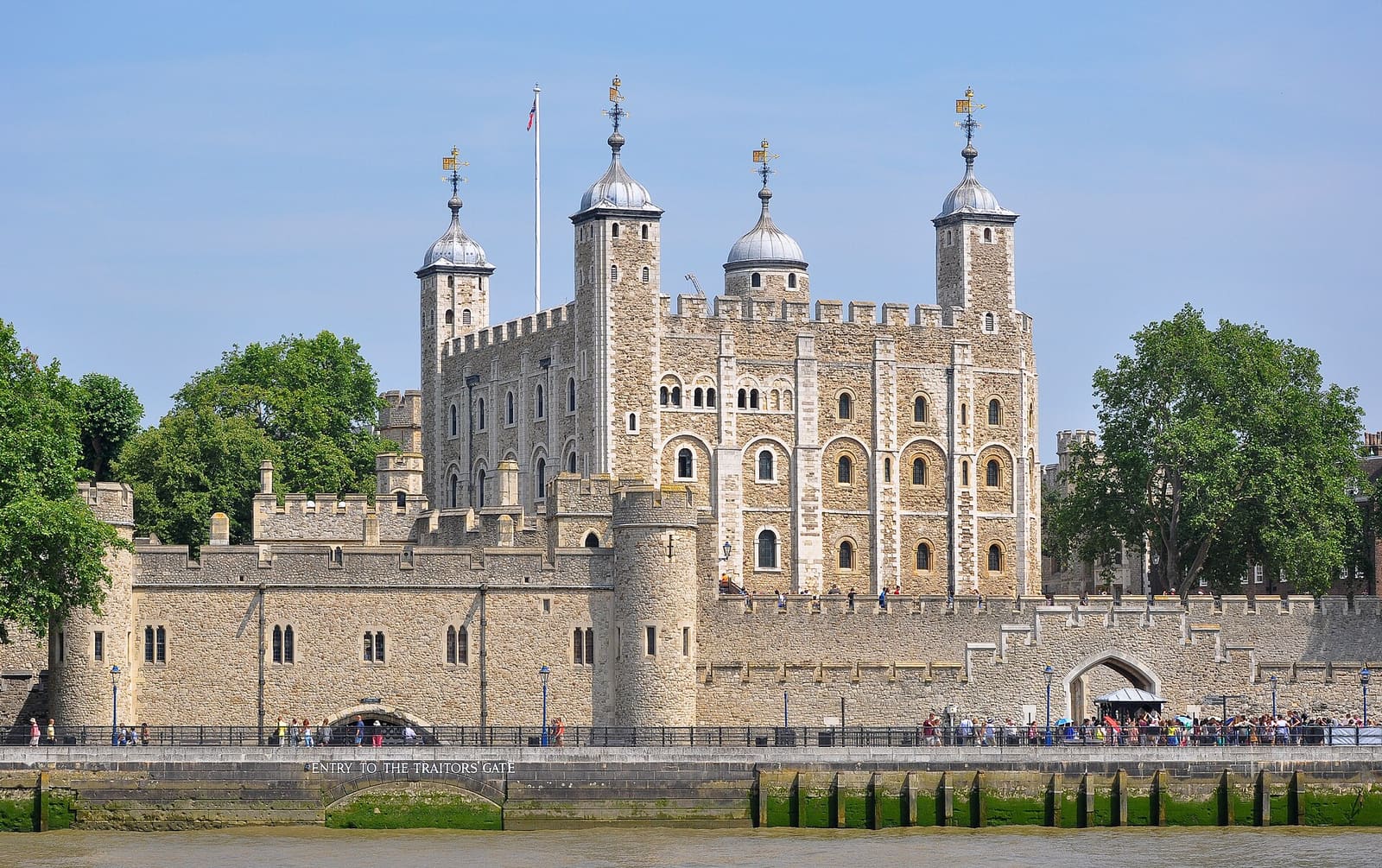
The City & Tower
The City and Roman London
Roman wall, amphitheatre and temple in the Square Mile, ending at St Paul's.
- Distance 3.4 km · 2.1 miles
- Walking time 45 min Allow 1 h 15 min for stops
- Stops7 Tower Hill to St. Paul's
- Terrain FlatOptional steps
- Step-freeCheck routeNot verified for this walk
Take this walk offline
The route
From Tower Hill, follow the traces of Roman Londinium through the City: a stretch of Roman wall beside the station (the Tower of London is next door), a church with a Roman pavement, the Monument, Leadenhall Market, the London Mithraeum and the amphitheatre beneath the Guildhall, finishing at St Paul's Cathedral.
The interactive map needs JavaScript. The stops are listed below.
Stops
- Start: Tower Hill
- End: St. Paul's
Distance and times come from a pedestrian route between the stops. Allow extra time for stops, and check for temporary closures.
Route and map data © OpenStreetMap contributors (ODbL). Walking routes by the FOSSGIS OSRM service, saved 2026-10-18. Spotted a mistake? Fix the map.
Saved. Plan your days in My trip
Google Maps chooses its own footpaths between the stops, so its line may differ slightly from the map above. The GPX file has our route and every stop as waypoints, for use in a walking or hiking app.
7 stops, in order
Each caption is a short fact; check opening times and tickets on the official site before you go.
-
Stop 1 · Roman wall
Roman wall and statue of Trajan
A stretch of the Roman city wall beside Tower Hill station, with a statue of the Emperor Trajan.
270 m to the next stop
-
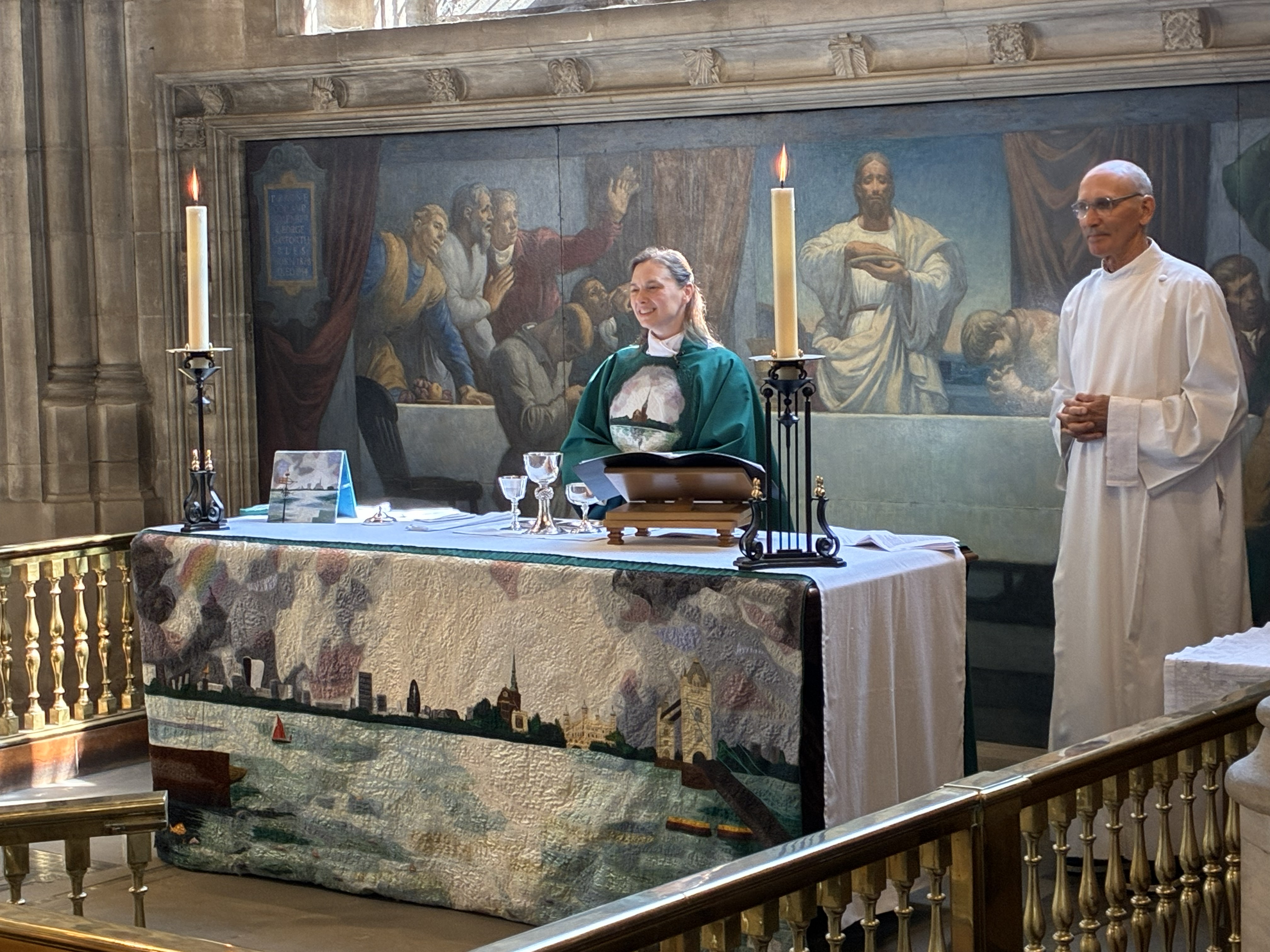
Stop 2 · Historic site
All Hallows-by-the-Tower
Church with a Roman pavement in its crypt museum.
530 m to the next stop
-

Stop 3 · Attraction
The Monument
Column commemorating the Great Fire of 1666.
470 m to the next stop
-

Stop 4 · Market
Leadenhall Market
Victorian covered market on the site of Roman London's forum and basilica.
630 m to the next stop
-

Stop 5 · Historic site
London Mithraeum
Reconstructed Roman temple of Mithras beneath Bloomberg's European headquarters.
470 m to the next stop
-

Stop 6 · Gallery
Guildhall Art Gallery
Gallery with the remains of London's Roman amphitheatre in its lower level.
690 m to the next stop
-
Stop 7 · Cathedral
St Paul's Cathedral
Wren's cathedral on Ludgate Hill.
300 m to St. Paul's station
Read the guide
A short note for each stop, written to be read or recorded as an audio walk. Audio is not available for this walk yet.
Introduction
Read the guide
This walk follows the traces of Roman Londinium through the City. It starts at Tower Hill station, beside a stretch of the Roman wall, and passes a church with a Roman pavement, the Monument, Leadenhall Market and the London Mithraeum. It then reaches the Roman amphitheatre at the Guildhall and ends at St Paul's Cathedral and St Paul's station. Much of the route is on city streets with some steps.
Stop 1: Roman wall and statue of Trajan
Read the guide
Here, beside Tower Hill station, is a stretch of London's Roman wall. An English Heritage plaque says the lower part was built by the Romans around the year two hundred. The whole city wall ran for roughly two miles, enclosing Roman London. In front of it stands a replica statue of the Emperor Trajan. Look closely at the stonework. Next stop: All Hallows-by-the-Tower.
Sources for this stop
Stop 2: All Hallows-by-the-Tower
Read the guide
All Hallows-by-the-Tower is a church with a very long story. Tradition dates its founding to the year six hundred and seventy-five, though recent research questions that, so treat the date with care. In the crypt museum you can see part of a Roman pavement, found many feet below the church in the 1920s. In 1666 the diarist Samuel Pepys climbed the church tower to watch the Great Fire. He called it the saddest sight of desolation. William Penn was baptised here in 1644. Next stop: the Monument.
Sources for this stop
Stop 3: The Monument
Read the guide
The Monument is a stone column that remembers the Great Fire of 1666. It is two hundred and two feet high. The City of London Corporation, which looks after it, says it was designed by Sir Christopher Wren and Dr Robert Hooke. Other accounts give Hooke the larger role. It was built between 1671 and 1677. It stands two hundred and two feet from the spot in Pudding Lane where the fire began. A staircase of three hundred and eleven steps leads to the viewing platform. Next stop: Leadenhall Market.
Stop 4: Leadenhall Market
Read the guide
Leadenhall Market stands on what was the centre of Roman London. A market has been here since the fourteenth century. The name is said to come from Leather-hall, though that is disputed. The painted iron and glass roof you see today was designed in 1881 by Sir Horace Jones, who also designed Billingsgate and Smithfield markets. Look up at the roof as well as at the shopfronts. Next stop: the London Mithraeum.
Sources for this stop
Stop 5: London Mithraeum
Read the guide
The London Mithraeum is a Roman temple to the god Mithras. It was uncovered in September 1954, during building work, on the east bank of the buried River Walbrook. The temple dates from the third century. Later it was moved, taken apart in 1962 and rebuilt nearby. In 2017 Bloomberg reopened it as part of its European headquarters. It now sits about seven metres below street level, a little west of its original position. Next stop: Guildhall Art Gallery.
Sources for this stop
Stop 6: Guildhall Art Gallery
Read the guide
Beneath the Guildhall Art Gallery lie the remains of London's Roman amphitheatre. It was found in 1988, during work for the new gallery. The London Museum says the first amphitheatre was built in the year seventy, with a stone wall and entrances added around a hundred. It may have seated as many as seven thousand people. A curved line of dark stones in Guildhall Yard marks the arena's outer wall. The gallery building was completed in 1999. Next stop: St Paul's Cathedral.
Stop 7: St Paul's Cathedral
Read the guide
St Paul's Cathedral is Sir Christopher Wren's cathedral, built after the Great Fire. The foundation stone was laid in June 1675, and the building is listed as completed in 1710. Parliament declared it officially complete in December 1711. Four earlier cathedrals stood on this site. The present one was the tallest building in London from 1710 until 1963. This is where the walk ends, close to St Paul's station.
Sources for this stop
Written for Britlens from the sources listed under each stop. Check opening times and access on the official sites before you go.
Getting there and back
Both ends of the walk are at stations. Check live times and any planned works before you travel.
- The City is busiest on weekday lunchtimes and much quieter at weekends, when many shops and cafés close. The Monument has a staircase of 311 steps for those who want to climb it.
- Step-free access has not been checked for this walk. Check the route and station access before you go.
- Opening times, prices and closures change: check before you visit.
More walks
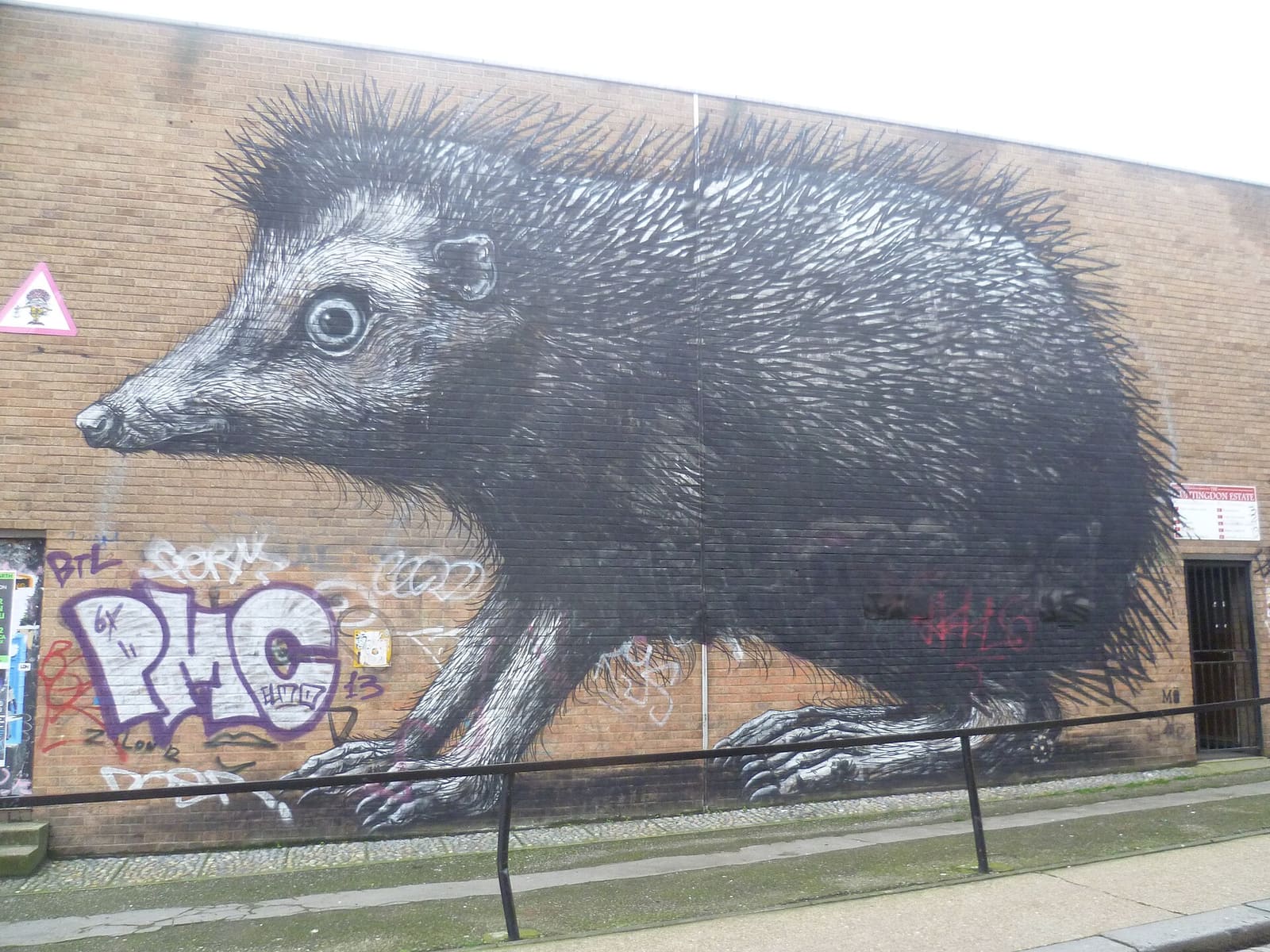 Shoreditch Street Art and Brick Lane
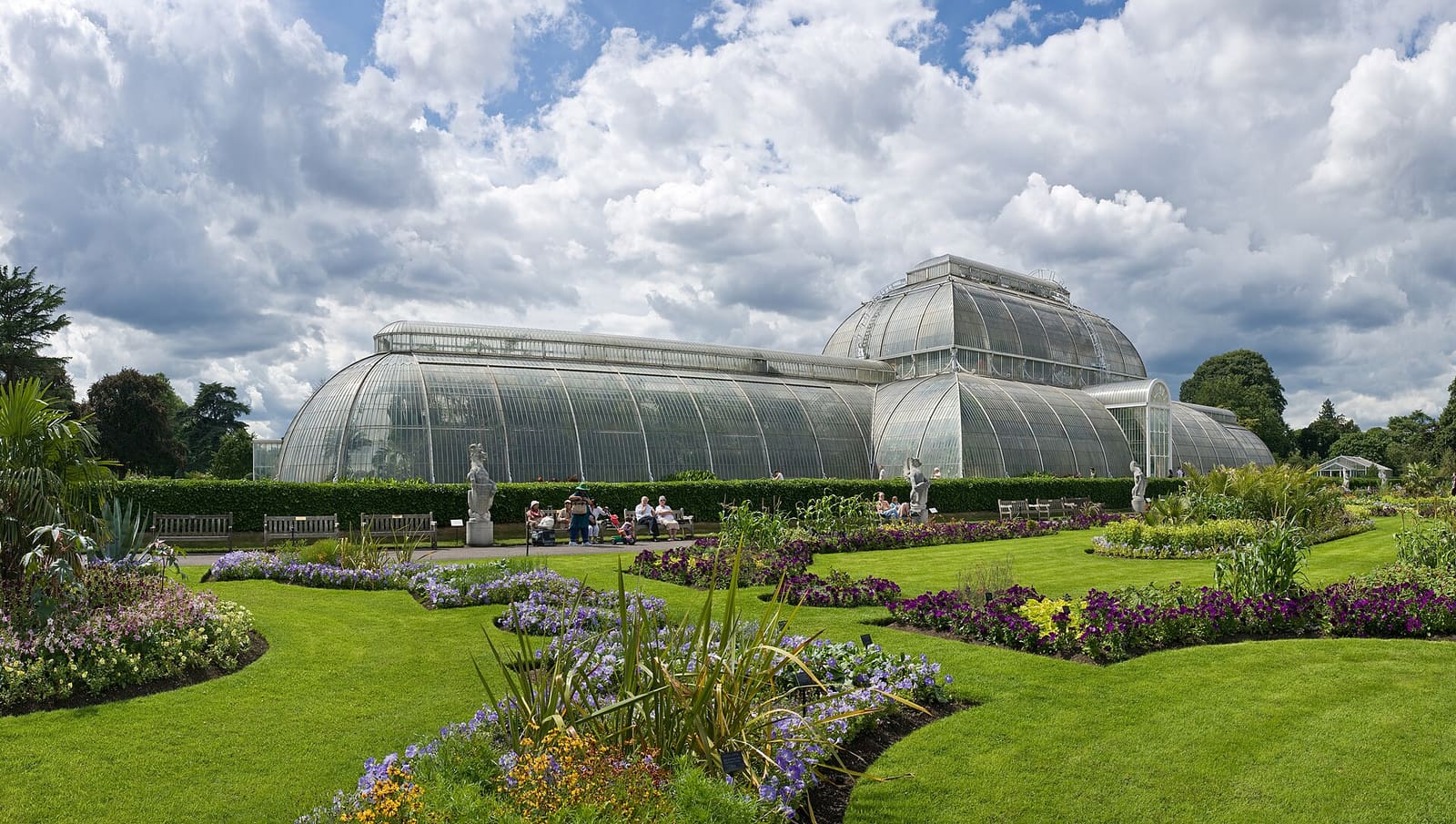 Kew to Richmond along the Thames
 Bloomsbury Literary Walk
 Hyde Park and Kensington Gardens
Photos are credited on the photo credits page. Route and map data © OpenStreetMap contributors.