
When to go

The Jurassic Coast: month by month

Average temperature, rainfall, sunshine and daylight for each month, what to pack, and the bank holidays that can change crowds and prices. Averages are Met Office 1991-2020 figures, not a forecast.

The Jurassic Coast guide · Rainy-day ideas in the Jurassic Coast

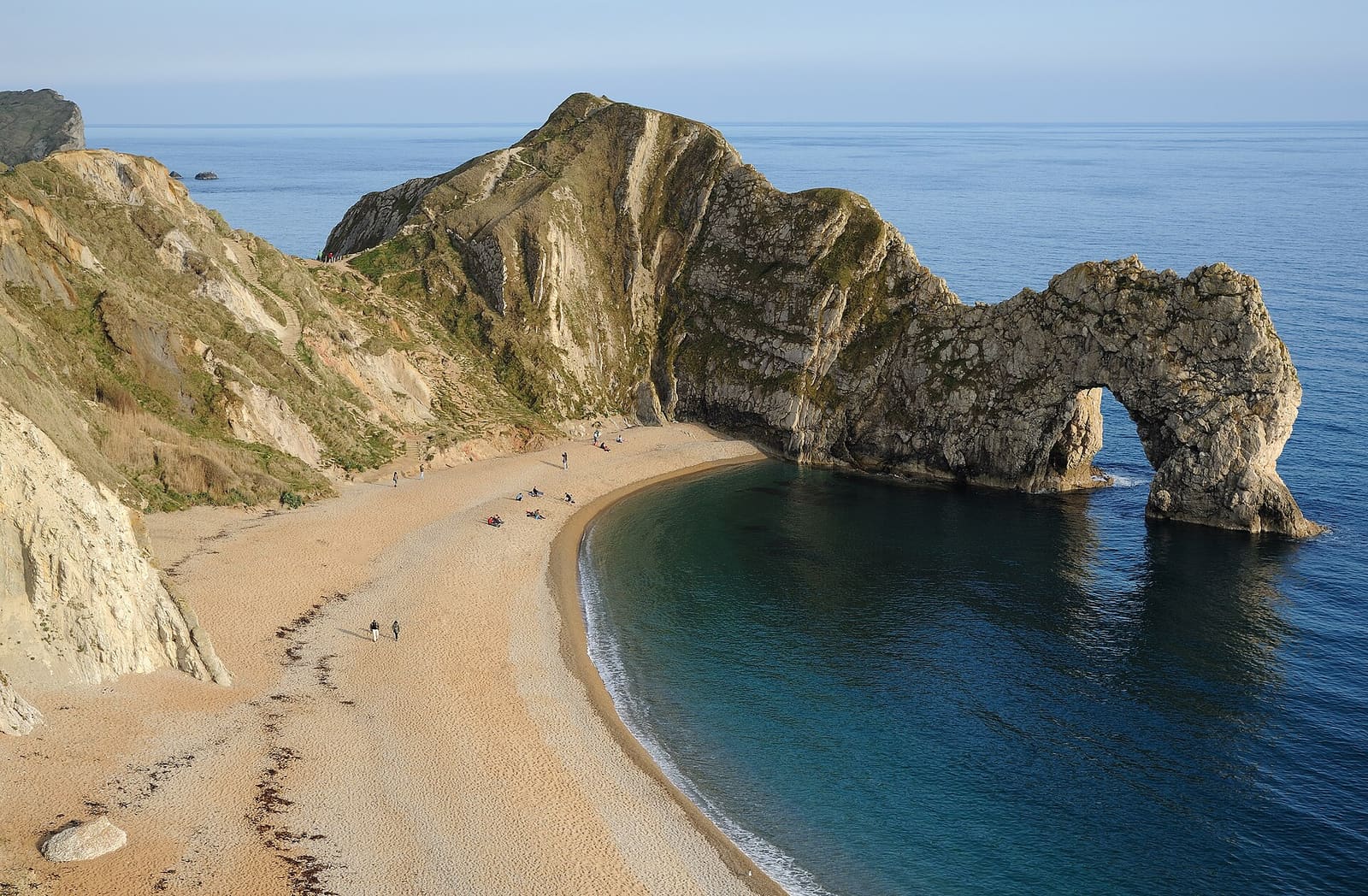
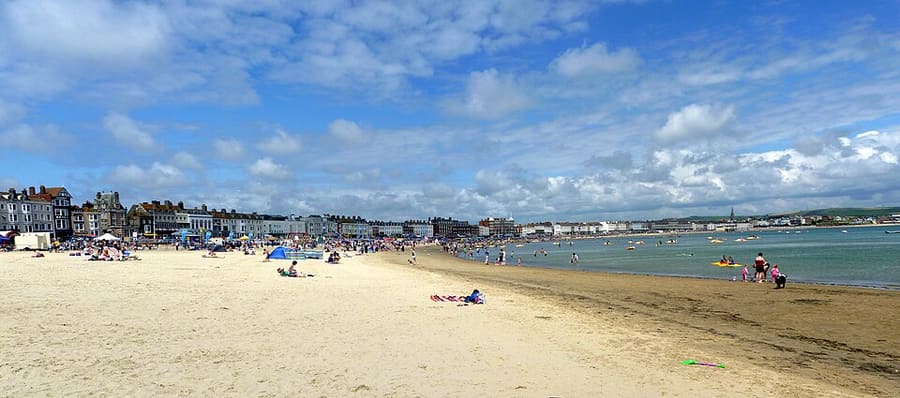
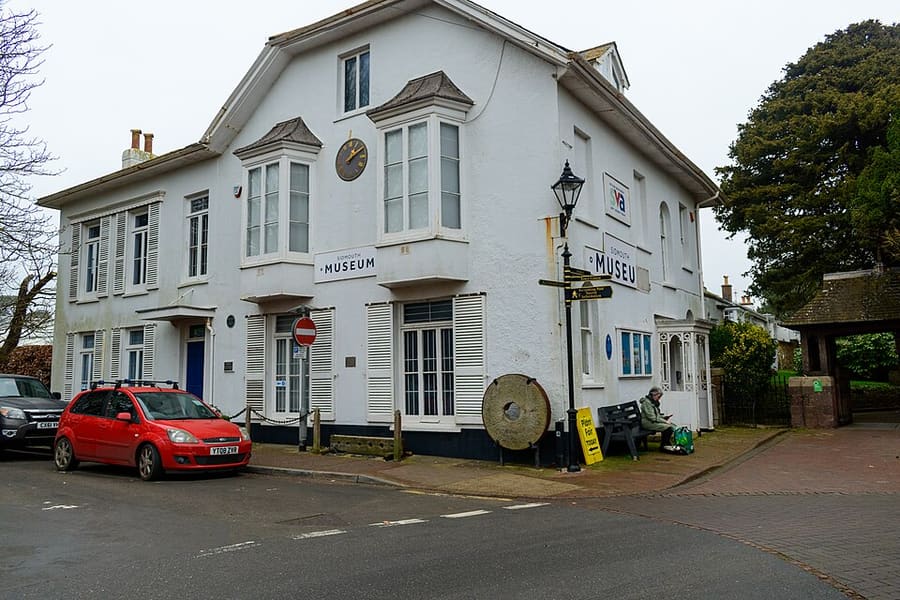
For a dry day and a wet one: photos from our guide, with where to find each place.

The Jurassic Coast climate by month

Warmest month: August (highs about 20°C). Coolest: February (about 9°C). Wettest: November (99 mm). Driest: July (41 mm).

Station: Weymouth, Wyke Regis. Mean daily maximum and minimum, rainfall, days with 1 mm or more, sunshine hours and day length.
MonthMax °CMin °CRain mmRain daysSun hoursDaylight
January9.04.58413698 h 26
February8.94.16011969 h 54
March10.65.258914111 h 51
April12.96.652920213 h 48
May15.79.345823515 h 34
June18.112.046723516 h 28
July20.014.041724615 h 59
August20.314.455822614 h 27
September18.712.755817812 h 28
October15.510.4831212810 h 32
November12.27.49913858 h 52
December9.75.19213647 h 59

Source: Met Office, Weymouth, Wyke Regis, 1991-2020 averages (Open Government Licence v3.0). Daylight is calculated from the latitude of the Jurassic Coast for the 15th of each month. Weymouth, Wyke Regis is a coastal station near the middle of the Dorset part of the coast (about 2 km south-west of Weymouth centre) with a complete table. Other parts differ: Swanage (gbyxgmyfn) is wetter (853 mm a year against 770 mm) and the Isle of Portland (gbyr2jjpc) has cooler summer days (July average maximum 19.0 C against 20.0 C).

Pick a month

Choose a month for what to expect, what to pack and the bank holidays. Without JavaScript every month is listed below.

January in the Jurassic Coast

5–9°CTypical night to day
84 mmRain, 13 days
8 h 26Daylight
69 hSunshine in the month

What to expect

  • Days average 9.0°C at the warmest and nights 4.5°C at the coolest.
  • About 84 mm of rain falls over roughly 13 days with 1 mm or more.
  • Expect about 69 hours of sunshine in the month and 8 h 26 of daylight in the middle of the month.

Planning

  • Short days (about 8 h 26 of daylight): plan outdoor sights for the middle of the day and keep evenings for museums, food and shows.
  • Averaging about 69 hours of sunshine in the month, so keep an indoor back-up for each day (see our rainy-day guide).

What to pack

  • A warm coat, hat and gloves, with thermal or wool layers underneath.
  • A proper waterproof jacket and shoes that cope with wet pavements: this is one of the wetter months here (13 days with 1 mm or more).
  • Comfortable walking shoes: most sights are best reached on foot.

Bank holidays in Jan

  • Fri, 1 Jan 2027: New Year’s Day
  • Mon, 3 Jan 2028: New Year’s Day

February in the Jurassic Coast

4–9°CTypical night to day
60 mmRain, 11 days
9 h 54Daylight
96 hSunshine in the month

What to expect

  • Days average 8.9°C at the warmest and nights 4.1°C at the coolest.
  • About 60 mm of rain falls over roughly 11 days with 1 mm or more.
  • Expect about 96 hours of sunshine in the month and 9 h 54 of daylight in the middle of the month.
  • This is the coolest month on average.

Planning

  • About 9 h 54 of daylight: enough for a full day out, but check sunset if you plan a viewpoint or a long walk.

What to pack

  • A warm coat, hat and gloves, with thermal or wool layers underneath.
  • A light waterproof or a compact umbrella: about 11 days a month see 1 mm or more.
  • Comfortable walking shoes: most sights are best reached on foot.

Bank holidays in Feb

No bank holidays in England in February for the next two years.

March in the Jurassic Coast

5–11°CTypical night to day
58 mmRain, 9 days
11 h 51Daylight
141 hSunshine in the month

What to expect

  • Days average 10.6°C at the warmest and nights 5.2°C at the coolest.
  • About 58 mm of rain falls over roughly 9 days with 1 mm or more.
  • Expect about 141 hours of sunshine in the month and 11 h 51 of daylight in the middle of the month.

Planning

  • About 11 h 51 of daylight: enough for a full day out, but check sunset if you plan a viewpoint or a long walk.

What to pack

  • A warm jacket and a jumper or fleece you can take off indoors.
  • A packable waterproof, just in case: a drier month on average, but showers still happen.
  • Comfortable walking shoes: most sights are best reached on foot.

Bank holidays in Mar

  • Fri, 26 Mar 2027: Good Friday
  • Mon, 29 Mar 2027: Easter Monday

April in the Jurassic Coast

7–13°CTypical night to day
52 mmRain, 9 days
13 h 48Daylight
202 hSunshine in the month

What to expect

  • Days average 12.9°C at the warmest and nights 6.6°C at the coolest.
  • About 52 mm of rain falls over roughly 9 days with 1 mm or more.
  • Expect about 202 hours of sunshine in the month and 13 h 48 of daylight in the middle of the month.

Planning

  • About 13 h 48 of daylight: enough for a full day out, but check sunset if you plan a viewpoint or a long walk.

What to pack

  • A warm jacket and a jumper or fleece you can take off indoors.
  • A packable waterproof, just in case: a drier month on average, but showers still happen.
  • Comfortable walking shoes: most sights are best reached on foot.

Bank holidays in Apr

  • Fri, 14 Apr 2028: Good Friday
  • Mon, 17 Apr 2028: Easter Monday

May in the Jurassic Coast

9–16°CTypical night to day
45 mmRain, 8 days
15 h 34Daylight
235 hSunshine in the month

What to expect

  • Days average 15.7°C at the warmest and nights 9.3°C at the coolest.
  • About 45 mm of rain falls over roughly 8 days with 1 mm or more.
  • Expect about 235 hours of sunshine in the month and 15 h 34 of daylight in the middle of the month.

Planning

  • Long days (about 15 h 34 of daylight): there is time for an early start and a late walk.

What to pack

  • Light layers: a jumper or fleece over a T-shirt, and a light jacket for the evening.
  • A packable waterproof, just in case: a drier month on average, but showers still happen.
  • Sunscreen, sunglasses and a hat for long days outdoors.
  • Comfortable walking shoes: most sights are best reached on foot.

Bank holidays in May

  • Mon, 3 May 2027: Early May bank holiday
  • Mon, 31 May 2027: Spring bank holiday
  • Mon, 1 May 2028: Early May bank holiday
  • Mon, 29 May 2028: Spring bank holiday

June in the Jurassic Coast

12–18°CTypical night to day
46 mmRain, 7 days
16 h 28Daylight
235 hSunshine in the month

What to expect

  • Days average 18.1°C at the warmest and nights 12.0°C at the coolest.
  • About 46 mm of rain falls over roughly 7 days with 1 mm or more.
  • Expect about 235 hours of sunshine in the month and 16 h 28 of daylight in the middle of the month.

Planning

  • Long days (about 16 h 28 of daylight): there is time for an early start and a late walk.

What to pack

  • Light layers: a jumper or fleece over a T-shirt, and a light jacket for the evening.
  • A packable waterproof, just in case: a drier month on average, but showers still happen.
  • Sunscreen, sunglasses and a hat for long days outdoors.
  • Comfortable walking shoes: most sights are best reached on foot.

Bank holidays in Jun

No bank holidays in England in June for the next two years.

July in the Jurassic Coast

14–20°CTypical night to day
41 mmRain, 7 days
15 h 59Daylight
246 hSunshine in the month

What to expect

  • Days average 20.0°C at the warmest and nights 14.0°C at the coolest.
  • About 41 mm of rain falls over roughly 7 days with 1 mm or more, the driest month of the year here.
  • Expect about 246 hours of sunshine in the month, the sunniest of the year and 15 h 59 of daylight in the middle of the month.

Planning

  • Long days (about 15 h 59 of daylight): there is time for an early start and a late walk.

What to pack

  • Light, breathable clothes.
  • A packable waterproof, just in case: a drier month on average, but showers still happen.
  • Sunscreen, sunglasses and a hat for long days outdoors.
  • Comfortable walking shoes: most sights are best reached on foot.

Bank holidays in Jul

No bank holidays in England in July for the next two years.

August in the Jurassic Coast

14–20°CTypical night to day
55 mmRain, 8 days
14 h 27Daylight
226 hSunshine in the month

What to expect

  • Days average 20.3°C at the warmest and nights 14.4°C at the coolest.
  • About 55 mm of rain falls over roughly 8 days with 1 mm or more.
  • Expect about 226 hours of sunshine in the month and 14 h 27 of daylight in the middle of the month.
  • This is the warmest month on average.

Planning

  • About 14 h 27 of daylight: enough for a full day out, but check sunset if you plan a viewpoint or a long walk.

What to pack

  • Light, breathable clothes.
  • A packable waterproof, just in case: a drier month on average, but showers still happen.
  • Sunscreen, sunglasses and a hat for long days outdoors.
  • Comfortable walking shoes: most sights are best reached on foot.

Bank holidays in Aug

  • Mon, 30 Aug 2027: Summer bank holiday
  • Mon, 28 Aug 2028: Summer bank holiday

September in the Jurassic Coast

13–19°CTypical night to day
55 mmRain, 8 days
12 h 28Daylight
178 hSunshine in the month

What to expect

  • Days average 18.7°C at the warmest and nights 12.7°C at the coolest.
  • About 55 mm of rain falls over roughly 8 days with 1 mm or more.
  • Expect about 178 hours of sunshine in the month and 12 h 28 of daylight in the middle of the month.

Planning

  • About 12 h 28 of daylight: enough for a full day out, but check sunset if you plan a viewpoint or a long walk.

What to pack

  • Light layers: a jumper or fleece over a T-shirt, and a light jacket for the evening.
  • A packable waterproof, just in case: a drier month on average, but showers still happen.
  • Sunscreen, sunglasses and a hat for long days outdoors.
  • Comfortable walking shoes: most sights are best reached on foot.

Bank holidays in Sep

No bank holidays in England in September for the next two years.

October in the Jurassic Coast

10–16°CTypical night to day
83 mmRain, 12 days
10 h 32Daylight
128 hSunshine in the month

What to expect

  • Days average 15.5°C at the warmest and nights 10.4°C at the coolest.
  • About 83 mm of rain falls over roughly 12 days with 1 mm or more.
  • Expect about 128 hours of sunshine in the month and 10 h 32 of daylight in the middle of the month.

Planning

  • About 10 h 32 of daylight: enough for a full day out, but check sunset if you plan a viewpoint or a long walk.

What to pack

  • Light layers: a jumper or fleece over a T-shirt, and a light jacket for the evening.
  • A proper waterproof jacket and shoes that cope with wet pavements: this is one of the wetter months here (12 days with 1 mm or more).
  • Comfortable walking shoes: most sights are best reached on foot.

Bank holidays in Oct

No bank holidays in England in October for the next two years.

November in the Jurassic Coast

7–12°CTypical night to day
99 mmRain, 13 days
8 h 52Daylight
85 hSunshine in the month

What to expect

  • Days average 12.2°C at the warmest and nights 7.4°C at the coolest.
  • About 99 mm of rain falls over roughly 13 days with 1 mm or more, the wettest month of the year here.
  • Expect about 85 hours of sunshine in the month and 8 h 52 of daylight in the middle of the month.

Planning

  • Short days (about 8 h 52 of daylight): plan outdoor sights for the middle of the day and keep evenings for museums, food and shows.

What to pack

  • A warm jacket and a jumper or fleece you can take off indoors.
  • A proper waterproof jacket and shoes that cope with wet pavements: this is one of the wetter months here (13 days with 1 mm or more).
  • Comfortable walking shoes: most sights are best reached on foot.

Bank holidays in Nov

No bank holidays in England in November for the next two years.

December in the Jurassic Coast

5–10°CTypical night to day
92 mmRain, 13 days
7 h 59Daylight
64 hSunshine in the month

What to expect

  • Days average 9.7°C at the warmest and nights 5.1°C at the coolest.
  • About 92 mm of rain falls over roughly 13 days with 1 mm or more.
  • Expect about 64 hours of sunshine in the month and 7 h 59 of daylight in the middle of the month.

Planning

  • Short days (about 7 h 59 of daylight): plan outdoor sights for the middle of the day and keep evenings for museums, food and shows.
  • Averaging about 64 hours of sunshine in the month, so keep an indoor back-up for each day (see our rainy-day guide).

What to pack

  • A warm coat, hat and gloves, with thermal or wool layers underneath.
  • A proper waterproof jacket and shoes that cope with wet pavements: this is one of the wetter months here (13 days with 1 mm or more).
  • Comfortable walking shoes: most sights are best reached on foot.

Bank holidays in Dec

  • Fri, 25 Dec 2026: Christmas Day
  • Mon, 28 Dec 2026: Boxing Day
  • Mon, 27 Dec 2027: Christmas Day
  • Tue, 28 Dec 2027: Boxing Day

Holidays and busy periods

Bank holidays for England come from GOV.UK, listed for the next two years in each month above. Many Britons travel on bank holiday weekends, so book transport and rooms early.

School holidays are set by each local council, so we do not list dates here. Check School term and holiday dates (GOV.UK).

From our the Jurassic Coast guide

Wikipedia says about 30 per cent of Lulworth Cove’s roughly half a million visitors a year come in July and August, and Visit Dorset says fossils are most plentiful on the Charmouth and Lyme Regis beaches after winter storms. Storms also make cliffs less stable, so weather and cliff advice matters in every season. Many attractions have a summer and a winter pattern, so check each website.

  • Spring (March to May): Charmouth Heritage Coast Centre lists a separate March opening pattern from its summer pattern, and many attractions begin their season in spring. Check each place’s site.
  • Summer (June to August): Beaches, harbours and the Lulworth car parks are at their busiest. Book parking, tables and rooms early and arrive at popular places early in the day.
  • Autumn (September to November): Seasonal sites close or shorten their hours: Beer Quarry Caves say on their site that they are open until 31 October 2026. Autumn storms can close paths and some attractions.
  • Winter (December to February): Some attractions close for winter, including Lulworth Castle, which closes from 24 December until 1 February 2027 according to its site. Visit Dorset says winter storms bring fossils onto the beaches, and also make cliffs less stable. Check current advice before fossil hunting or walking below cliffs.

We do not publish crowd or price seasonality: none of the sources used for this page states it.

How we work this out

  • Temperatures, rainfall, rain days and sunshine are the Met Office 1991-2020 monthly averages for one weather station (Weymouth, Wyke Regis). They describe a typical month, not a forecast. We never call a live weather service for this page.
  • Packing: warm coat below 10°C highs, warm jacket below 15°C, light layers below 20°C. A full waterproof when a month has 12 or more days with 1 mm of rain or at least 80 mm; a light waterproof from 9 days; sunscreen and a hat from May to September. Shoes with grip when typical nights are 3°C or colder.
  • Daylight is the astronomical day length, including the usual allowance for atmospheric refraction, on the 15th of the month at the latitude of the Jurassic Coast.

All regions Rainy-day ideas