 English (UK)
 English (US)
 Français
 Deutsch
 Español
 Italiano
 Nederlands
 简体中文
Stay safe
Scams and tourist traps: what to watch for in the UK
The tricks that catch visitors, and what the official bodies say to do about each. Most of Britain is a safe place to visit; a few habits make it safer.
Fakten zuletzt geprüft am 1. Nov. 2026. Britlens ist unabhängig: Lesen Sie unsere Redaktionsrichtlinie.

Copycat ETA and visa websites
Search results for “UK ETA” can include sites that are not the government’s. GOV.UK says an ETA costs £20 when you apply online or through the UK ETA app, that other websites may charge more, that you cannot get a faster decision by applying through another website or app, and to avoid websites that imitate government services.[1] Start from gov.uk/eta and check that the address ends in gov.uk. Our ETA lookup links only to official pages.
Fake and resold tickets
STAR, the self-regulatory body for UK ticket sellers, advises buying only from the venue’s box office, the official promoter or agent, or a well-known reputable ticket site; avoiding bank transfers, especially to someone you do not know; and being wary of unsolicited emails, texts or adverts with unbelievably good deals.[2] Paying by credit card or a service such as PayPal gives you a better chance of getting money back, and you can check whether a seller is a STAR member.[2] For shows, start from the theatre’s own site (our theatre guide links each one), and for sell-out attractions see book ahead.

Unbooked minicabs and touts
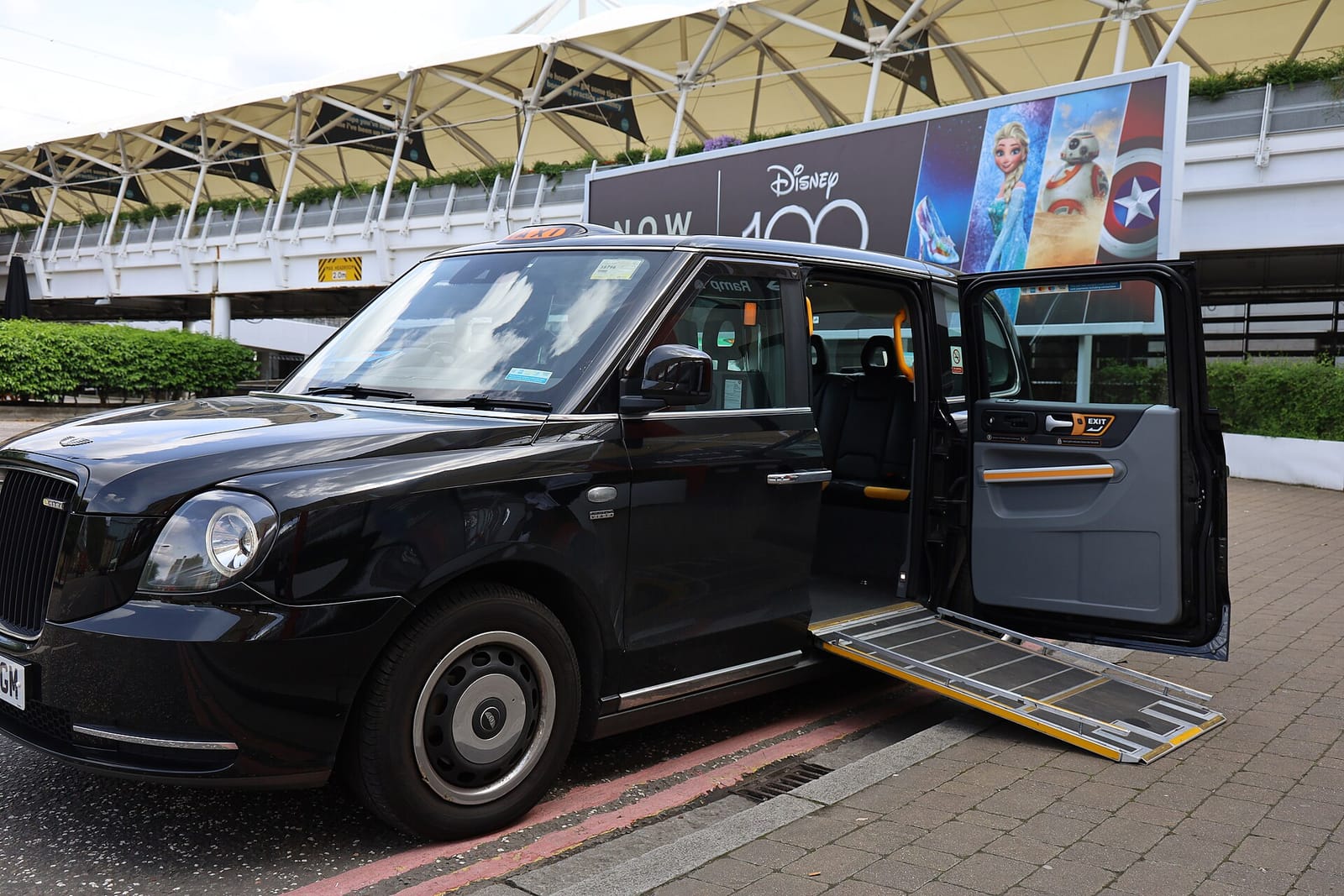
London has two kinds of cab. TfL says only black taxis (with the orange “taxi” light) can be hailed on the street or taken from a rank without booking.[3] A minicab must be booked. TfL is blunt about the alternative: unbooked minicabs are dangerous, illegal and uninsured for passengers, and a minicab is unbooked, even with a TfL licence sticker, if you approach the driver, the driver approaches you, or a bouncer takes you to one.[3]
When you book, TfL says you should get a confirmation with the number plate, the driver’s first name, their private hire licence number and a photo; if the car or driver does not match, do not get in.[3] TfL’s licence checker shows whether a driver, vehicle or operator is licensed.[4] The same check applies to ride-hailing apps: get in only if the car and driver match the app.
Getting home at night
TfL’s safer travel advice is to plan the journey home before you go out. It says the Night Tube and Night London Overground run on Fridays and Saturdays, some buses run 24 hours a day, every bus has CCTV, and Tube, Elizabeth line and London Overground stations are staffed from first train to last.[3] Outside London, check last buses and trains before you set out: getting around by region.

Scam texts, emails and calls
- Texts: forward suspicious texts free to 7726, so the network can investigate and block the sender.[6]
- Payment and parcel messages that rush you to pay or ask for passwords or PINs fit the signs below. Do not use links in the message; go to the company’s site yourself.[5]
Signs of a scam
Citizens Advice lists these warning signs:[5]
- You are not sure you are dealing with a real company, for example there is no postal address.
- You are asked to transfer money quickly, or to pay in an unusual way such as gift vouchers.
- You are asked for personal information such as passwords or PINs.
- You have no written confirmation of what was agreed, or the deal seems too good to be true.
We found no official UK page about street tricks aimed at tourists, such as unrequested “free” gifts followed by a demand for money, so we name no places and give no figures. The same rule applies: you never owe money for something you did not agree to buy. For exchange desks that advertise “no commission”, see money in Britain.
If you are scammed
- Contact your bank or card issuer straight away.
- Report it. The National Cyber Security Centre says to use Report Fraud (reportfraud.police.uk or 0300 123 2040) in England, Wales or Northern Ireland, and Police Scotland on 101 in Scotland.[6] Report Fraud’s own site refused our automated request, so we have not read it.[8]
- If the scammer is nearby, or you transferred money in the last 24 hours, Citizens Advice says to call the police on 101 immediately, and 999 if you feel threatened or unsafe.[7]
Lost cards or documents as well? See lost passport, cards and phone. Emergency numbers and the NHS are in health and safety.
Quick answers
Is it safe to apply for a UK ETA through another website?
GOV.UK says other websites may charge more, that you cannot get a faster decision through another website or app, and to avoid websites that imitate government services. Apply on GOV.UK or the official UK ETA app.
Can I hail a minicab in London?
No. TfL says only black taxis can be hailed on the street or taken from a rank without booking. Unbooked minicabs are dangerous, illegal and uninsured for passengers, even with a TfL licence sticker in the window.
How do I report a scam text in the UK?
Forward it free to 7726, says the National Cyber Security Centre. If you have lost money, report it to Report Fraud on 0300 123 2040 (England, Wales and Northern Ireland) or to Police Scotland on 101.
Quellen
Read on the dates shown. Rules, fees and services change: check the source before you rely on it. Pages marked “not read” refused automated access, so we state nothing from them.
- Get an electronic travel authorisation (ETA) to visit the UK (opens in new tab), GOV.UK, read 1 November 2026
- Buying tickets safely (opens in new tab), STAR (Society of Ticket Agents and Retailers), read 1 November 2026
- Safer travel at night (opens in new tab), Transport for London, read 1 November 2026
- Taxis and minicabs (opens in new tab), Transport for London, read 1 November 2026
- Check if something might be a scam (opens in new tab), Citizens Advice, read 1 November 2026
- Report a scam text message (opens in new tab), National Cyber Security Centre, read 1 November 2026
- Reporting a scam (opens in new tab), Citizens Advice, read 1 November 2026
- Report Fraud (opens in new tab), Report Fraud (police) (not read: access refused)